


Personalized sales emails at scale work when you templatize the structure (opener, problem, proof, ask) and only vary one or two anchor details per send: a recent trigger, a role-specific pain, or a peer reference. AI-assisted personalization (ChatGPT, Overloop's built-in writer) cuts research time from 5 minutes to 30 seconds per contact. Top-performing teams hit 12-18% reply rates on lists of 500+. Full structure, examples, and tooling below.
Personalized sales emails consistently outperform generic mass emails in every key metric. When companies address recipients by name, reference relevant details, or tailor messages to specific roles and industries, open rates and response rates improve significantly. Research shows that personalization can boost B2B email response rates by two to three times compared to generic outreach.
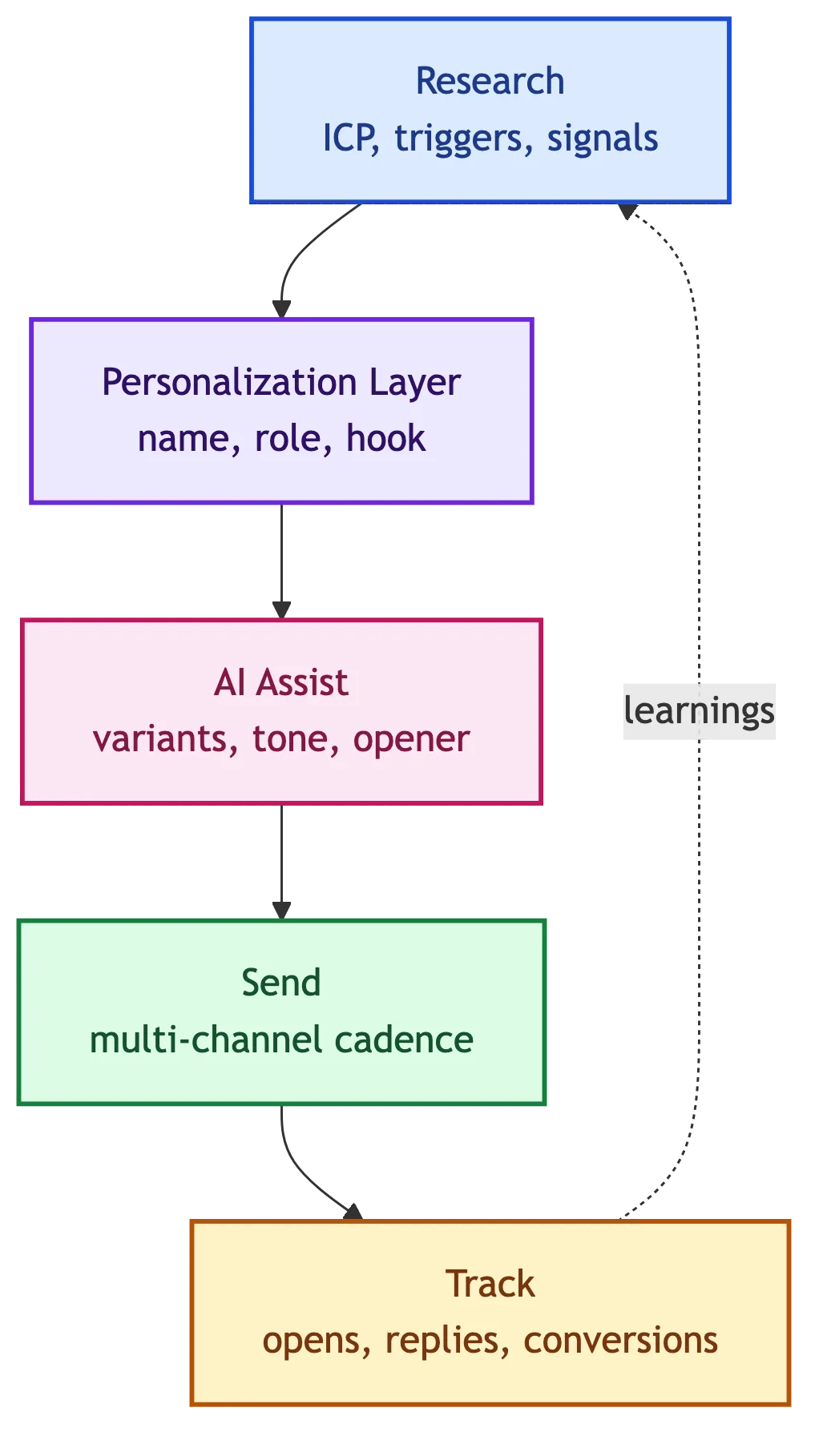
Why Scalable Personalization Is Essential
In large-scale B2B prospecting, sending truly personalized messages to every contact poses a major challenge. Manually customizing each email quickly leads to inefficiency and inconsistent results. Yet, sending bland templates usually fails to capture attention, slips into spam, or gets ignored. [HBR]
Modern sales teams rely on platforms that use automation combined with smart personalization to bridge this gap. Solutions like Overloop use AI and up-to-date prospect data to generate unique emails for every recipient. This means sales professionals can reach more leads with messages that feel human and relevant, all without spending hours on repetitive manual work.
Key Elements of a High-Converting Personalized Sales Email
A high-converting personalized sales email stands out by capturing attention and driving action at scale. While personalizing every detail for each recipient sounds ideal, modern B2B sales teams need a practical approach that blends customization with automation. Every part of the email plays a role in building relevance and trust without requiring unsustainable manual effort. [HBR]
Subject Lines That Get Opened
The subject line is critical as it is the first -- and sometimes only -- thing a recipient sees. A strong subject line achieves three things:
- It shows relevance to the prospect's situation or company
- It communicates value or curiosity
- It avoids spam triggers and overused templates
Personalized subject lines can simply use a company name, recent achievement, or a challenge relevant to the industry. Keep it concise and natural. For example, "Quick idea for [Company Name]" signals immediate relevance without gimmicks. For more tips, see our guide on best subject lines for sales emails.
Greetings That Build Rapport
A personalized greeting goes beyond using the prospect's name. It acknowledges the context in which you are reaching out. Include:
- Name and role, if available (e.g., "Hi Jordan, as Head of Marketing at [Company]")
- Reference to a recent activity or shared interest when possible
These small touches show that you understand who the recipient is, which makes your outreach more human and less robotic.
Body Copy That Connects
The email body needs to make a direct connection between the prospect's need and your solution. Personalization here means:
- Mentioning challenges or goals specific to their industry or company
- Referencing recent news, achievements, or changes within their business
- Keeping the language clear and specific, not generic
Overloop's platform, for example, automates much of this context gathering and fills in dynamic details within each email, letting teams scale personalization without extra manual work.
Calls To Action That Drive Replies
A clear, relevant call to action (CTA) increases response rates. Avoid generic asks like "let me know your thoughts." Instead, use specific, easy-to-complete CTAs:
- Ask to schedule a short call ("Do you have 15 minutes this week?")
- Request a quick reply to a focused question ("Is this a challenge you're working on now?")
CTAs should feel tailored to the context of the conversation you started, creating a low barrier for the prospect to respond.
Effective personalization is about relevance, not complexity. By focusing on these core elements and making smart use of sales automation tools, outreach stays scalable without losing its personal edge.

Laying the Groundwork: Segmentation and Data Gathering
Efficient personalization begins with clear segmentation and precise data gathering. By grouping prospects and collecting actionable insights, sales teams can deliver messages that address each recipient's actual needs and pain points, supporting meaningful communication at large scale. [HBR]
Why Segmentation Sets the Stage
Segmentation is the practice of dividing your prospect list into manageable groups based on shared characteristics. This step is essential because it allows teams to reference targeted information without manual effort for every individual. When you segment, you align your outreach effort with each group's goals, challenges, or industry-specific triggers, which increases the likelihood of engagement.
- Industry: Classify companies by sector to tailor examples or solutions.
- Job Title or Role: Address relevant responsibilities and decision-making power.
- Company Size: Adjust language and pitch complexity to match resources or business stage.
- Location: Point to regulations, operations, or initiatives that vary by country or region.
Segmentation criteria can expand further based on what matters for your offering, but these basics form a strong foundation for scalable outreach.
How to Gather Reliable Prospect Data
Data fuels your ability to personalize. Aim for information that you can automate into your outreach with minimal risk of errors or irrelevance. Useful data points can include:
- Recipient's full name and correct spelling
- Current company and verified domain
- Recent company milestones (funding, hires, launches)
- Job title and department
- Professional interests shared publicly (event attendance, interviews, press features)
Sources for this data include public LinkedIn profiles, company pages, verified databases, recent news, or internal CRM records.
Connecting Segmentation and Personalization with Automation
Structured data and clean segmentation enable automation tools to insert relevant details dynamically. Rather than relying on time-consuming manual edits, platforms like Overloop help automatically enrich prospect profiles with up-to-date, accurate information before emails are sent. This automation supports advanced personalization, such as mentioning a specific product launch for tech companies or referencing a regional event for local prospects, all while maintaining consistency and minimizing manual entry.

Automating Personalization Without Losing the Human Touch
Scaling personalized sales emails is possible without sacrificing the sense of genuine connection that opens and converts. The right mix of structured templates, merge tags, dynamic fields, and automation platforms can help create high-impact outreach at speed. Here's how to approach this in practice. [HBR]
Set Up Flexible Email Templates
Start with foundational email templates for each segment or campaign identified in your list preparation. Design these templates for relevance but make space for automated personalization. The most effective templates include blank sections for key personalized details, use natural-sounding phrasing, and have adaptable calls to action. Well-structured templates also reduce manual editing, saving time and eliminating inconsistent tone.
Use Merge Tags and Dynamic Fields
Merge tags and dynamic fields let you automatically insert unique prospect details into each email. These can include:
- First name, last name, and job title
- Company name
- Industry or location
- Recent company achievements or changes
Many email automation platforms (including Overloop) allow for advanced fields, even enabling custom inserts such as last LinkedIn activity or mutual connections. For best results, ensure your data is accurate and always have fallback values in case a detail is missing. This helps your emails stay polished and error-free.
Balance Automation with Human-Like Details
Automation should enhance personalization rather than replace it. To achieve this:
- Write template copy that sounds conversational, not robotic
- Vary your opening lines based on segments or intent
- Adjust closing sentences or CTAs for the audience's stage in the journey
- Always review a few samples before activating bulk sends to spot tone or logic issues
The email should read as if it was crafted directly for the recipient, even if technology did much of the work.
Leverage Automation Platforms for Volume and Consistency
Using a robust sales engagement tool like Overloop, connect your segmented list, select your template, and map custom data fields. Overloop's AI personalizes messages at scale while maintaining context for each outreach, including integrating activity data, persona-relevant pain points, and subtle variations that avoid obvious repetition. Automation also manages send times and follow-up sequences, aligning delivery with recipient time zones and maximizing engagement.
By combining smart templates, detailed dynamic fields, and automation that still respects human nuances, you can send large volumes of emails that feel personally written to each prospect. This keeps engagement high and burnout low for your sales team.
Leveraging Overloop for AI-Powered Email Personalization at Scale
Scaling personalized sales outreach depends on the ability to efficiently combine data, context, and automation. Overloop provides a system designed around this need, integrating each personalization step directly into a single workflow. After careful segmentation and precise data collection, automation can enhance what is possible without manual edits, saving time and allowing teams to reach more prospects. [HBR]
Automating Data Collection and Enrichment
Overloop connects to a B2B database with over 450 million contacts which supports automated prospect sourcing. Users can search for leads using detailed filters like industry, seniority, company size, or region. The platform automatically enriches each profile with up-to-date information, such as verified email addresses, accurate company data, and relevant recent achievements. This data forms the base for both segmentation and individualization, reducing manual research and copy-paste errors. Real-time profile updates keep your outreach relevant even if prospect information changes.
Dynamic Personalization in Every Email
Personalization works best when details fit naturally into the email flow. With Overloop, templates support dynamic fields and merge tags that pull data directly from the prospect record, making every email unique at send time. For example, templates can reference a recipient's job title, mention a company's recent funding, or highlight a specific local event, ensuring relevance at scale. Overloop's AI engine also can suggest contextually relevant snippets for the introduction and body of the email, improving connection quality without sacrificing volume.
Scheduling and Multi-Channel Campaigns
The true benefit of automation comes when personal outreach is not only crafted but delivered at the right moment and in the right channel. Overloop allows scheduling personalized emails to fit recipient time zones and known engagement windows, increasing open and response rates. It extends further with multi-channel campaigns, coordinating personalized outreach via both email and LinkedIn from the same dashboard. This unified approach helps avoid message fatigue or duplicate contact, keeping the outreach experience smooth for both team and prospects.
Overloop also seamlessly integrates with leading CRMs and productivity tools, syncing prospect data and conversations. Teams can track progress and make incremental improvements without jumping between platforms. This level of integration supports efficiency and visibility, essential for keeping large B2B email campaigns consistent and effective at scale.
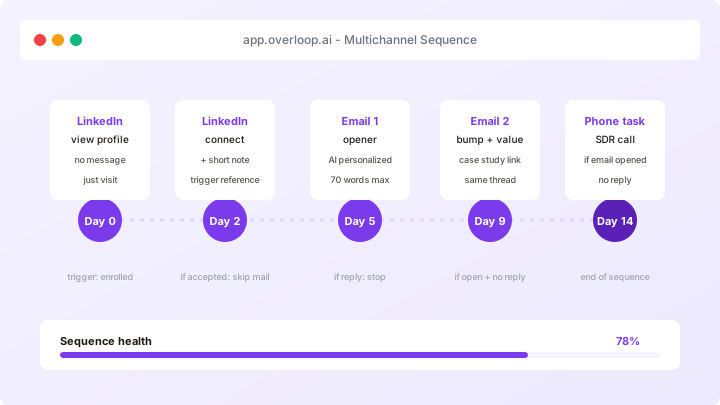
Sample Process: From Prospect List to Sent Personalized Email
Automated personalization bridges efficiency and real human impact, but only works well when each core step receives attention. Moving from a raw prospect list to delivered customized emails can be broken down into manageable, repeatable stages. Below are clear steps that sales teams can follow to keep every campaign targeted, personal, and measurable.
1. Prepare and Clean the Prospect List
Start with a verified, accurate list. Remove outdated or irrelevant contacts and make sure each record contains essential details that can feed into your dynamic fields. At this stage, correcting names, titles, and company data prevents basic automation from breaking down later.
2. Segment Based on Intent or Common Traits
Group recipients using shared characteristics, such as industry, role, or current pain points. This makes it easier to target segments with relevant messages. For example, C-level contacts might get a value-driven hook while team leads may respond better to specific process improvements relevant to their operations.
3. Gather Contextual Data
- Use publicly available sources like LinkedIn or company websites to collect fresh news, milestones, or changes.
- Introduce additional context from sales intelligence tools or CRM records when available.
- Keep notes focused and factual for seamless automation integration.
Want personalization that doesn't cost a writer per email?
Overloop's AI reads each prospect's site and LinkedIn, writes the opener, and sequences the follow-up. access to 450M contacts.
Book a demo →See features4. Craft Adaptive Email Templates
Instead of building each email from scratch, create templates tuned to each segment. Use merge tags for simple personal details and set up placeholders for points like recent company news or relevant industry trends. Ensure every template section adds value or context for the recipient.
5. Automate Personalization with Fields and Rules
Upload your clean, segmented list into your email outreach tool. Use dynamic fields for names, roles, and custom elements like recent awards. Advanced platforms such as Overloop can auto-fill personalized snippets for industry, company events, or previous engagement touchpoints at scale, using current prospect data.
6. Schedule and Trigger Emails for Best Timing
Stagger send times to avoid delivery spikes and account issues. Many sales automation tools can optimize scheduling based on time zones or engagement patterns, so emails land when prospects are most likely to check their inbox.
7. Monitor Performance and Reply Cues
- Track open rates, click rates, replies, and bounce rates for every segment.
- Watch for automated replies or unusual unsubscribe patterns, and refine list segments based on findings.
- Adjust templates and targeting rules mid-campaign if needed for better results.
For outreach teams moving quickly from prep to results, seamless automation and up-to-date data are key. Overloop's AI can assist with sourcing, enrichment, email generation, and even scheduling, consolidating all steps and allowing easy monitoring as campaigns progress and learn in real time.
Tracking, Testing, and Optimizing Sales Email Campaigns
After setting up your campaigns with personalized outreach, the next crucial step is tracking real results and learning from data. Detailed monitoring, smart testing, and ongoing optimization separate static campaigns from high-performing ones.
Essential Metrics to Track
Start by focusing on key performance indicators that show true campaign engagement. For every campaign, consistently monitor:
- Open rate: Percentage of recipients who opened your emails, indicating subject line performance.
- Reply rate: The ratio of recipients who responded, the core measure of lead engagement.
- Click-through rate (CTR): Shows how many engaged further with links or calls to action within your email.
- Bounce and deliverability rate: Identifies how many addresses in your list are valid and reachable.
- Unsubscribe and spam complaint rates: Helps you keep your sender reputation clean.
Analyzing these numbers in relation to segments, template variations, or personalized fields informs which tactics truly improve results.

A/B Testing Personalization Elements
To refine your approach, run targeted A/B tests with small sample groups before scaling. Test variables separately to get clear, actionable insights. Useful personalization tests include:
- Alternate subject lines: Test using company news versus job role mention.
- Personalized opening lines: Compare referencing recent achievements to standard intros.
- Differing call to actions: Test brief meeting requests against generic replies.
- Signature formats: Try different sender names or titles for credibility.
Keep adjustments minimal between variants for reliable data. A single changed field or sentence often provides the cleanest learning.
Turning Data Into Better Campaigns
Review data after every send and compare outcomes by template, segment, or test. Identify patterns among subject lines, send times, or personalization details that move metrics in the right direction. Adopt what works with your audience and retire underperforming elements.
With Overloop, sales teams gain live dashboards with KPIs at both campaign and template levels, helping teams spot improvements and address issues quickly. Event-level tracking and easy result exporting simplify deeper analysis or reporting by channel, team member, or prospect type. Adjust campaigns using insights from previous sends for continuous improvement.
Optimization is an ongoing process: Effective sales email campaigns rely not on a single template but on data-driven evolution month after month. Teams who regularly analyze, test, and adapt stay ahead in securing more B2B meetings and responses.
Common Mistakes and How to Avoid Them When Scaling Email Personalization
Scaling sales email personalization streamlines outreach but also raises new types of risks. Knowing the most common mistakes and how to prevent them helps safeguard both efficiency and results as volume grows.
Avoiding Over-Automation and Robotic Tone
It is easy to rely on full automation and lose the "human touch." When templates are reused with minimal adaptation, emails start to sound formulaic. Recipients detect this and engagement drops sharply. To avoid this, design flexible templates with multiple variable sections and include natural, conversational language. Periodically review sample emails from each campaign to correct awkward phrasing or repetitive patterns before sending a larger batch.
Preventing Data Quality Pitfalls
Success with automated personalization depends on accurate prospect data. Common issues include misspelled names, outdated job titles, or mismatched company information. Even minor errors signal that your outreach lacks care. Clean and double-check prospect lists before each send. Use software features to set fallback values so that blank fields never appear in the recipient's message.
Steering Clear of Hyper Personalization on Irrelevant Details
Relying heavily on obscure details just because they are available can backfire. Some automation tools pull minor LinkedIn facts or niche activity that adds little context, making the personalization feel forced. Instead, keep the focus on meaningful data that relates to the prospect's business objectives, recent company news, or shared industry challenges.
Guarding Campaign Deliverability
The temptation to push volume can result in increased spam complaints or deliverability issues, especially when personalization is inconsistent or contains errors. Rotate sending domains where possible, stagger delivery times, and monitor sender reputation through your ESP. Use warm-up tools to maintain strong domain health as you scale. Products like Overloop integrate deliverability checks into the process so that campaigns remain on track.
Monitoring Automation Rules and Triggers
Complex outreach automation often suffers from poorly configured rules that can send multiple emails to the same person, trigger the wrong sequence, or miss critical follow-ups entirely. Establish routines to audit automation logic, test new workflows with small segments first, and review performance analytics to catch and correct logic errors early. Integrated campaign dashboards, for instance in Overloop, make it easier to track and manage these details without toggling between multiple tools.
Maintaining control and attention to detail prevents the main pitfalls when scaling personalization. Periodic checks and refocusing on genuine relevance increase the chances your outreach remains as effective at one thousand contacts as it is at ten.
TL;DR: Quick Tips for Personalizing Sales Emails at Scale
Personalizing sales emails at scale balances automation with genuine relevance. To keep your email outreach efficient and effective, prioritize clear data foundations, suitable segmentation, and concise communication. Use these actionable tips as a daily checklist for high-performing campaigns.
Focus on Structured Segmentation First
Begin every campaign by organizing contacts into logical groups, such as industry or job role. Segmentation makes it possible to craft messaging that speaks to shared challenges and goals, so every recipient finds the email immediately relevant.
Let Verified Data Drive Automation
Update contact lists before importing them into any outreach tool. Check for accuracy in names, company info, and recent milestones. This data allows merge tags and dynamic fields to insert personalized details seamlessly, with minimal risk of errors that disrupt trust. Platforms like Overloop automate much of this data sourcing and enrichment, which removes manual steps and increases reliability.
Use Templates Wisely for Scale
Build flexible templates tailored to each segment, leaving open fields for dynamic personalization. Templates should use natural, conversational language and include contextual cues, so the output does not feel mass-produced. Ensure that every template element, from subject line to CTA, adapts easily to details about the recipient or their company.
Automate Without Sacrificing Context
- Create dynamic snippets for recent news, company wins, or personal achievements
- Configure fallback values in automation tools in case any data field is missing
- Regularly test a batch of emails for tone and clarity before sending at full scale
This ensures each email feels individually written no matter how many contacts you reach.
Measure What Matters and Adapt
- Monitor open, reply, and click rates for each segment
- Run A/B tests on subject lines, intros, and calls to action to learn what boosts engagement
- Update templates and targeting as patterns emerge in the results
Continuous optimization, based on real campaign data, keeps open and reply rates steadily improving over time.
Personalization at scale is about clarity, speed, and genuine human touch. By aligning reliable data, adaptive templates, and strong automation, teams can craft sales emails that connect, even at high volumes. Overloop supports every stage in this process, letting B2B sales teams focus less on manual work and more on meaningful conversations.
Ready for personalization at scale?
Book a demo and watch Overloop personalize 100 emails in 5 minutes.
Start with Overloop →See a demoFrequently Asked Questions About Personalized Sales Emails at Scale
How Much Personalization Is Enough?
Effective personalization highlights details that matter to the recipient. Use data about a prospect's job title, company, or a recent achievement rather than overfocusing on trivial personal facts. Concise references to relevant business issues make the greatest impact. Trying to reference too many details can delay campaigns or make the message feel forced.
Can Automated Personalization Replace Manual Editing?
Automation handles large volume efficiently by dynamically inserting names, company details, and relevant recent events. Manual oversight still adds value before sending higher-stakes messages. Review sample emails for context and tone, especially when templates change or when approaching key prospects.
How Do I Avoid Generic or Robotic Responses?
Keep the language conversational and reference the recipient's context. Avoid empty greetings or bland openers by including specific, segment-based information. Vary phrasing, especially in introductions and calls to action. Automation tools like Overloop can rotate phrasing and introduce customized snippets to help every message sound fresh.
What's the Best Way to Test What Works?
Run A/B tests on a few key elements at a time: subject lines, opening sentences, and calls to action produce the most useful insights. Use a statistically meaningful sample size and avoid changing too many variables at once. Adopt improvements backed by real engagement data, then iterate for continued progress.
How Can I Ensure Email Deliverability at Large Scale?
Monitor sender reputation, keep lists clean, and stagger delivery across campaigns. Integrate deliverability checks and warm-up features, which help prevent spam folder issues. Overloop automatically spaces sends, monitors performance, and flags risks so your domain stays healthy and your emails reach inboxes. To better understand compliance, see our GDPR information.
What If My Data Is Incomplete or Out of Date?
Data quality is fundamental for success. Fill gaps before launching campaigns by verifying each field and using software that provides fallback options for missing entries. Overloop enriches prospect records with current information and continually updates database entries, ensuring messages remain relevant even as recipient details change.