Compare seven AI outbound tools for prospect data, research, signals, decisioning, sequencing, and autonomous execution, with documented limits and official sources.
“AI outbound” can mean a multichannel execution platform, a research table, a signal engine, a seller copilot, or an autonomous SDR. This guide separates those jobs so you can buy the missing layer instead of another overlapping platform.
Quick verdict
Overloop is our first recommendation for integrated multichannel outbound. It combines prospect data, list building, reviewable AI-assisted campaign creation, and email plus LinkedIn sequences in one workflow. Clay remains the configurable data and research workbench, Common Room the buyer-signal context layer, and Reply.io Jason or 11x Alice the higher-autonomy options. Because Overloop publishes this article, its #1 placement is a disclosed publisher viewpoint, not an independent award.
Integrated multichannel outboundOverloop
Custom workflowClay
Signal contextCommon Room
Accessible agentic outboundUnify
Multichannel AI SDRReply.io Jason
Rep + agent operating systemRegieGO
Autonomous SDR motion11x Alice
What counts as an AI outbound tool?
An AI outbound tool must own at least one material prospecting job: building or qualifying a list, researching accounts, interpreting signals, deciding the next action, creating context-specific messages, coordinating touches, or handling replies. An email template generator alone does not qualify.
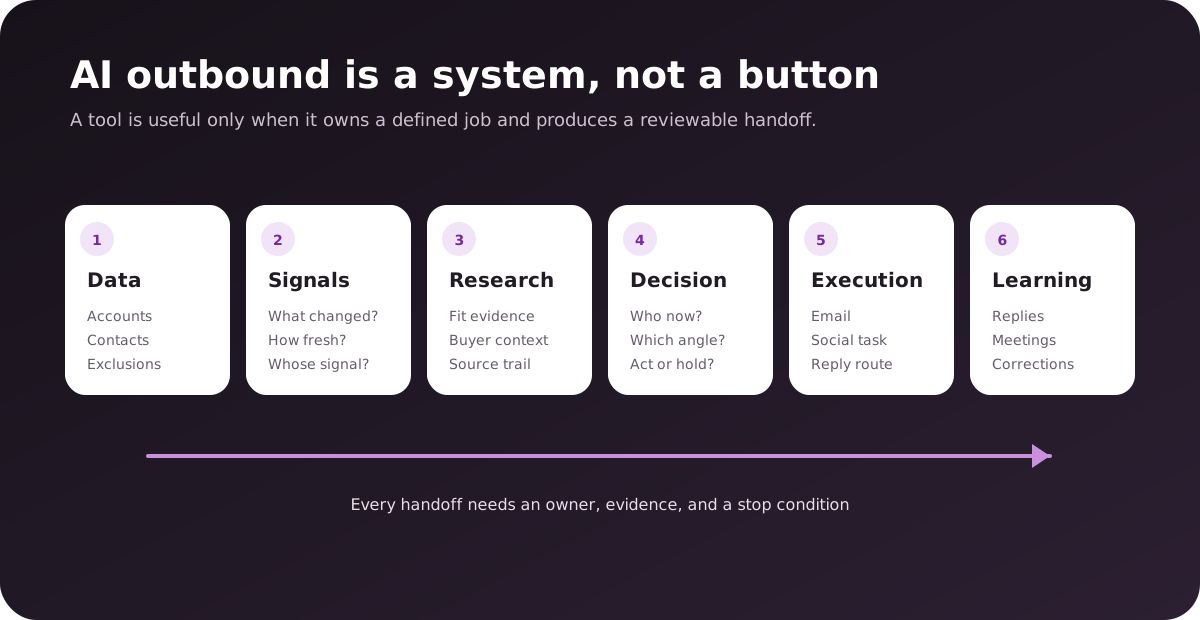
DataAccounts, contacts, exclusions
SignalsWhat changed and when
DecisionWho, why now, what next
ExecutionChannel action and handoff
LearningReplies, corrections, outcomes
The products below do not all compete head-to-head. That is the point: a platform that excels at evidence gathering should not be judged as though it were an autonomous sender, and an AI SDR should not receive credit for data it merely licenses.
How we compared the tools
We reviewed current vendor-controlled product pages, documentation, help centers, and public pricing pages on Aug. 20, 2026. We scored category fit, the job the product documents, the review point it exposes, the systems it depends on, and the most consequential limitation a buyer should test.
No “tested” claim: this is a documentation-led comparison, not a hands-on benchmark.
No vendor case-study metrics in the ranking: customer outcomes are not comparable across vendors.
No normalized price ranking: plans, usage units, services, and minimums differ too much for a responsible cost league table.
No credit for vague AI language: we looked for a documented input, action, output, or control.
Order reflects our buyer lens: we put integrated outbound execution first, then specialist research, signal, orchestration, and autonomous-agent options.
Related-party disclosure: Overloop and YourMax.ai are separate products operated by Sortlist SA. Overloop publishes this article and is ranked #1 for the integrated outbound-execution use case defined here. Treat that position as the publisher's documented recommendation, not an independent award. YourMax.ai remains outside the ranking because it does not send outbound messages.
Our evaluation model: each layer must create a clear, reviewable handoff to the next one.
AI outbound tools compared
Tool
Primary job
Autonomy model
Best-fit buyer
Important boundary
Overloop
Prospect data, list building, and email + LinkedIn execution
Human-reviewed AI workflow
Lean and growing outbound teams
Not a general signal-intelligence or autonomous-SDR layer
Clay
Custom data, research, and workflow orchestration
Builder-led
GTM engineering and growth teams
Flexibility creates design and QA work
Common Room
Unify first-, second-, and third-party buyer signals
Agent-assisted
Signal-rich PLG, community, and enterprise teams
Enterprise buying motion
UUnify
Research, qualification, list building, and sequences
Prompt-to-workflow
Small and mid-market outbound teams
Capabilities vary materially by plan
Reply.io Jason
Multichannel AI-SDR execution
Copilot or autopilot
Teams delegating more of the SDR loop
Approval and API surfaces are still evolving
RegieGO
Agent-orchestrated prospecting with seller workspace
Agent + rep
Sales teams retaining rep control
Commercial packages and credits need modeling
11x11x Alice
Autonomous outbound SDR program
Higher autonomy
Teams evaluating a managed digital worker
Validate scope, data, controls, and contract in writing
1. Overloop
Integrated multichannel outbound execution
Overloop is our first recommendation for teams that want to move from an ICP to a reviewable campaign without stitching together separate prospect-data, email, LinkedIn, and workflow products. It combines a B2B prospect database, AI list building, email finding and verification, AI-assisted drafts, and configurable email and LinkedIn sequences.
We put it first for this guide's buyer lens because it covers the core operational path in one product while keeping the campaign reviewable before launch. That does not make Overloop the most autonomous or the most configurable option in every category: Clay goes deeper on custom data workflows, Common Room on buyer-signal context, and dedicated AI SDRs on delegated execution. Overloop also publishes this article, so readers should treat the position as our disclosed recommendation rather than an independent award.
Best forLean and growing teams that want prospect data plus email and LinkedIn execution in one workflow.
Public plansStarter is $69/user/month with 250 credits and one connected email account; Growth is $99 with 500 credits and three.
Watchout: Overloop is not a general buyer-signal intelligence platform or a hands-off autonomous SDR. CRM scope varies by plan, and HubSpot prospect replies do not sync from Overloop into HubSpot.
Overloop public homepage capture showing its AI outbound positioning. This is a website capture, not an authenticated product interface or independent test.
Clay is the strongest fit when “outbound” starts with a custom data problem. Teams can combine provider waterfalls, first-party data, web research through Claygent, signals, scoring logic, and campaign handoffs in tables they control. Clay now also documents a native email sequencer, so it can cover more of the path from enrichment to send than older descriptions of the product suggest.
The advantage is composability. A GTM engineer can define an unusual qualification question, test it on sample rows, select data providers, and decide exactly when the result should enter another system. That same flexibility is the limitation: Clay gives you building blocks, not a finished prospecting policy. Someone still has to own prompts, false positives, provider costs, exclusions, and failure handling.
Best forTeams with custom research and enrichment requirements.
Documented outputEnriched and researched rows, scoring fields, and email campaigns or integrations.
Control pointBuilder tests, deploys, and governs the workflow.
Watchout: do not confuse a rich table with a sound outbound decision. Define the acceptance test and the downstream owner before adding another source.
Common Room is built for companies whose buyers leave useful traces across product usage, website activity, community, social channels, events, CRM records, and partner ecosystems. It resolves those activities into people and accounts, then uses RoomieAI products to research, summarize, prioritize, and activate the resulting context.
This is more than an alert feed. Common Room documents Spark notifications that combine segment membership, recent activity, account fit, and recommended action; its broader AI layer can also draft messages and orchestrate workflows. The best-fit team already has meaningful first-party or ecosystem data and wants one context layer for reps and agents.
Best forPLG, community-led, ecosystem-led, and signal-rich GTM teams.
Documented outputResolved buyer context, prioritized alerts, research, and action suggestions.
Buying motionSales-led platform with public plan structure.
Watchout: the value depends on the quality of the connected signals and identity resolution. A team with little first-party activity may be paying for an operating model it cannot yet use.
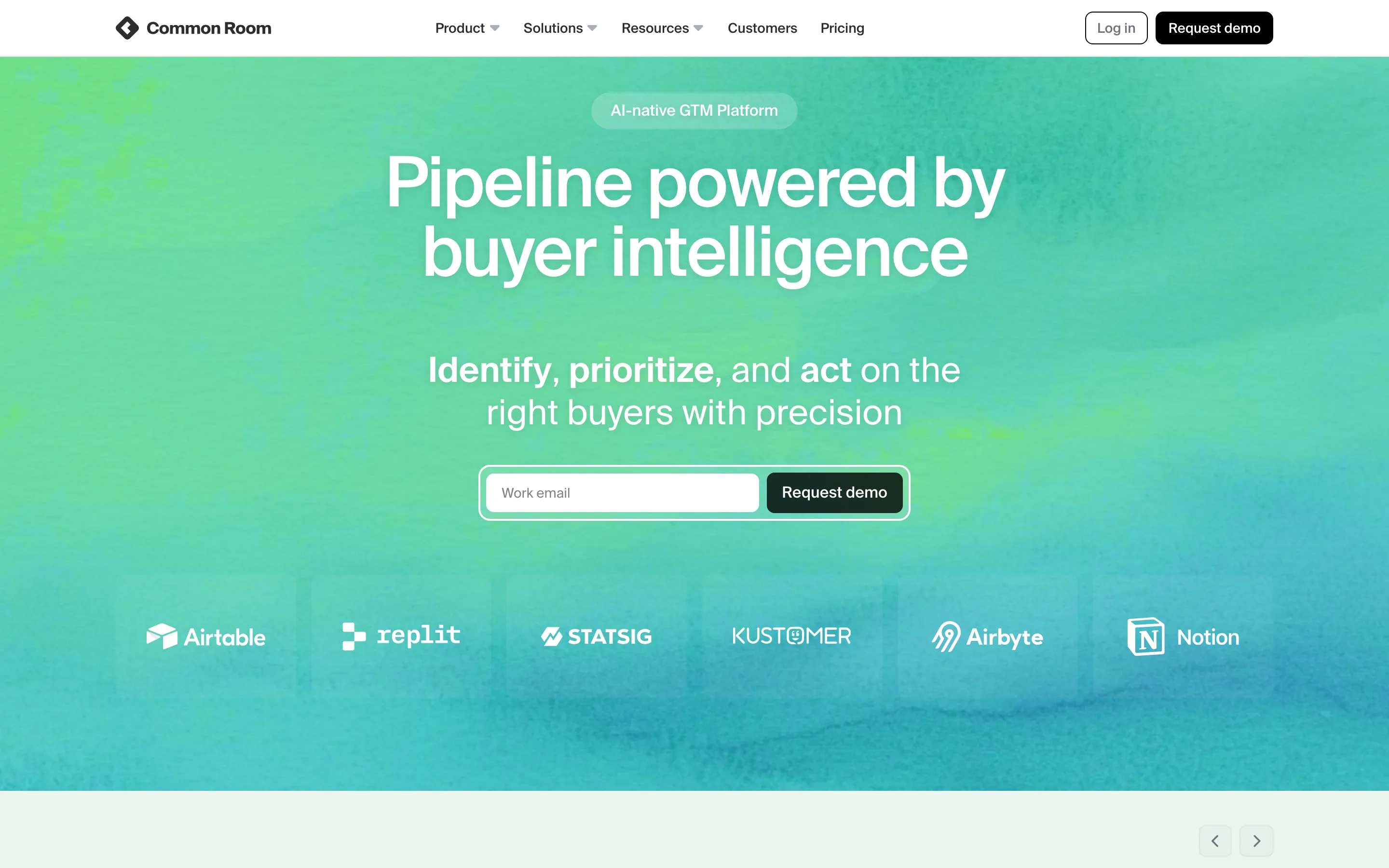
Common Room public website capture showing its AI-native GTM positioning. This is not an authenticated product screen or evidence of hands-on testing.
Unify gives sellers a relatively direct path from a plain-language request to research, qualification, lists, and sequences. Its agents can inspect companies and people, answer custom questions, and feed those answers into plays or message generation. The product also combines B2B data, signals, sequencing, deliverability, and CRM integrations.
That integrated surface makes Unify a practical choice for a smaller team that wants agentic outbound without first staffing a dedicated GTM engineering function. It is less open-ended than Clay, but that constraint can reduce setup work. The plan matrix matters: website intent, product signals, signal-triggered automation, managed mailboxes, and read-write CRM sync sit in the Business tier on the public page reviewed for this article.
Best forLean teams moving from manual prospecting to agent-assisted workflows.
Documented outputQualified lists, research answers, personalized copy, and sequences.
Entry modelFree and per-seat self-serve tiers, plus a custom Business plan.
Watchout: compare the exact plan against the demo. “Signals,” “multichannel,” CRM write access, and managed infrastructure do not all start at the same tier.
Jason is Reply.io's AI SDR layer. It can be configured with a knowledge base, offer, and playbook, then source and research prospects, build sequences, coordinate email and LinkedIn touches, classify conversations, and pursue meetings. Reply exposes both copilot and autopilot modes, which makes the human-control choice more explicit than products that only market “autonomy.”
Reply also publishes a broad API surface for agents, including an approval queue. That is useful for teams that want to embed the SDR workflow in a larger system. The vendor's own API reference labels parts of this surface beta and identifies upcoming capabilities, so buyers should verify which controls exist in the production plan they are purchasing.
Best forTeams that want one AI SDR across email and LinkedIn.
Documented outputProspect research, multichannel sequences, reply handling, and meeting workflows.
Control pointCopilot, autopilot, and approval-queue workflows.
Watchout: “multichannel” hides important implementation details. Confirm which LinkedIn actions are automated, which remain tasks, and which account permissions or limits apply.
Reply.io public homepage capture presenting its sales AI platform. This is not an authenticated Jason workflow or performance test.
RegieGO combines prospect sourcing and enrichment, why-now research, message drafting, dialing, and follow-up in one self-serve workspace. Its agents can prepare the daily queue and draft email from the seller’s connected inbox, while LinkedIn touches remain tasks the rep sends.
That boundary makes RegieGO useful when the goal is to remove prospecting preparation without turning identity-bound channels into a black box. The current offer is materially different from older enterprise packaging: it starts free with 250 one-time credits, while Pro is $49 per month with 5,000 credits each month.
Best forIndividual reps and small teams combining agents with seller execution.
Documented outputSourced prospects, research, drafts, prepared calls, and follow-up queues.
Commercial modelFree with 250 one-time credits; Pro $49/month with 5,000 credits/month.
Watchout: credits cover research, drafting, enrichment, and dialing and do not roll over. Confirm which email actions need review and keep LinkedIn steps seller-sent.
Alice is designed to own a larger share of the outbound loop: market research, buyer identification, message creation, sending infrastructure, deliverability, and meeting generation. That makes it the clearest fit in this guide for a company explicitly evaluating a “digital worker” rather than a workbench or rep copilot.
The trade-off is diligence. The more of the motion a vendor owns, the more the buyer needs to inspect data provenance, exclusions, sending domains, brand controls, reply handoff, CRM writes, and the conditions under which the system stops. A polished autonomous demo is not a substitute for a written operating model.
Best forTeams evaluating a managed, higher-autonomy SDR motion.
Documented outputProspect discovery, personalized outreach, and meeting pursuit.
Buying motionSales-led purchase; confirm current scope and terms in writing.
Watchout: the current public pricing page presents figures that should be reconciled in a written quote. Verify included volume, service responsibilities, renewal terms, and the exact channels operated.
11x public website capture presenting Alice and the vendor's digital-worker positioning. This is not a product-interface capture or independent test.
YourMax.ai covers a narrower adjacent job and is related to the publisher of this article, but it does not belong in the seven-item outbound-tool ranking because it does not send messages.
YourMax.ai
Max monitors supported public signals, filters potential leads against a defined ICP, enriches matches, attaches the source evidence, and lets a person accept or reject a lead before routing it onward.
Boundary: Max is not a contact database, does not send email or LinkedIn outreach, and is not a full-stack AI SDR.
Write the missing job in one sentence. “Use AI for outbound” is not a requirement. “Qualify 200 target accounts against five evidence-based rules before a rep sees them” is.
Bring the same test set to every vendor. Include obvious fits, deceptive fits, incomplete records, existing customers, competitors, and accounts the system should suppress.
Ask to see the handoff. Inspect the source, timestamp, reason, message, approval state, next action, and audit trail rather than only the final email.
Map permissions by action. Separate read access, data enrichment, drafting, CRM updates, sequence enrollment, sending, and reply handling.
Price the operating model. Include usage, data, inboxes, implementation, human review time, services, and every existing tool that remains necessary.
Start with one narrow play and recommendation-mode access. Track acceptance, correction, rejection, reply quality, and meetings. Only increase autonomy after the system behaves predictably on your real edge cases.
An AI outbound tool uses models or agents to support a defined prospecting job such as research, signal interpretation, qualification, message creation, sequencing, or reply handling.
Which AI outbound tool is best?
Overloop is our first recommendation for teams that want prospect data, list building, and reviewable email and LinkedIn execution in one system. Clay is stronger for a configurable data workbench, Common Room for consolidated buyer signals, and Reply, Regie, or 11x for different execution and autonomy models. Because Overloop publishes this article, its placement is a disclosed publisher viewpoint rather than an independent award.
Is an AI outbound tool the same as an AI SDR?
No. An AI SDR is one type of AI outbound tool that attempts to own more of the prospecting loop. Many AI outbound tools own only research, data, signals, or seller assistance.
Should an AI outbound agent send without approval?
Start with approval for account selection, claims, message angle, and sending. Reduce review only after the system performs reliably on representative examples and edge cases.
Why is Overloop ranked first, and is YourMax.ai included?
Overloop is ranked first for the integrated outbound-execution use case defined in this guide: prospect data, list building, and reviewable email and LinkedIn sequences in one system. Overloop publishes the article, so this conflict is disclosed and readers should treat the position as the publisher's recommendation. YourMax.ai is not ranked because it is an adjacent signal-led sourcing layer rather than an outbound sender.
Publisher note
Overloop publishes this article and is ranked first for the integrated outbound-execution use case defined above. That is an explicit commercial conflict: this is our documented product recommendation, not an independent award. Sortlist SA also operates YourMax.ai, which remains outside the ranking. We link to first-party sources, state product boundaries, and recommend verifying capabilities and commercial terms before purchasing.


 Overloop
 Clay
Clay Common Room
 Reply.io Jason
 RegieGO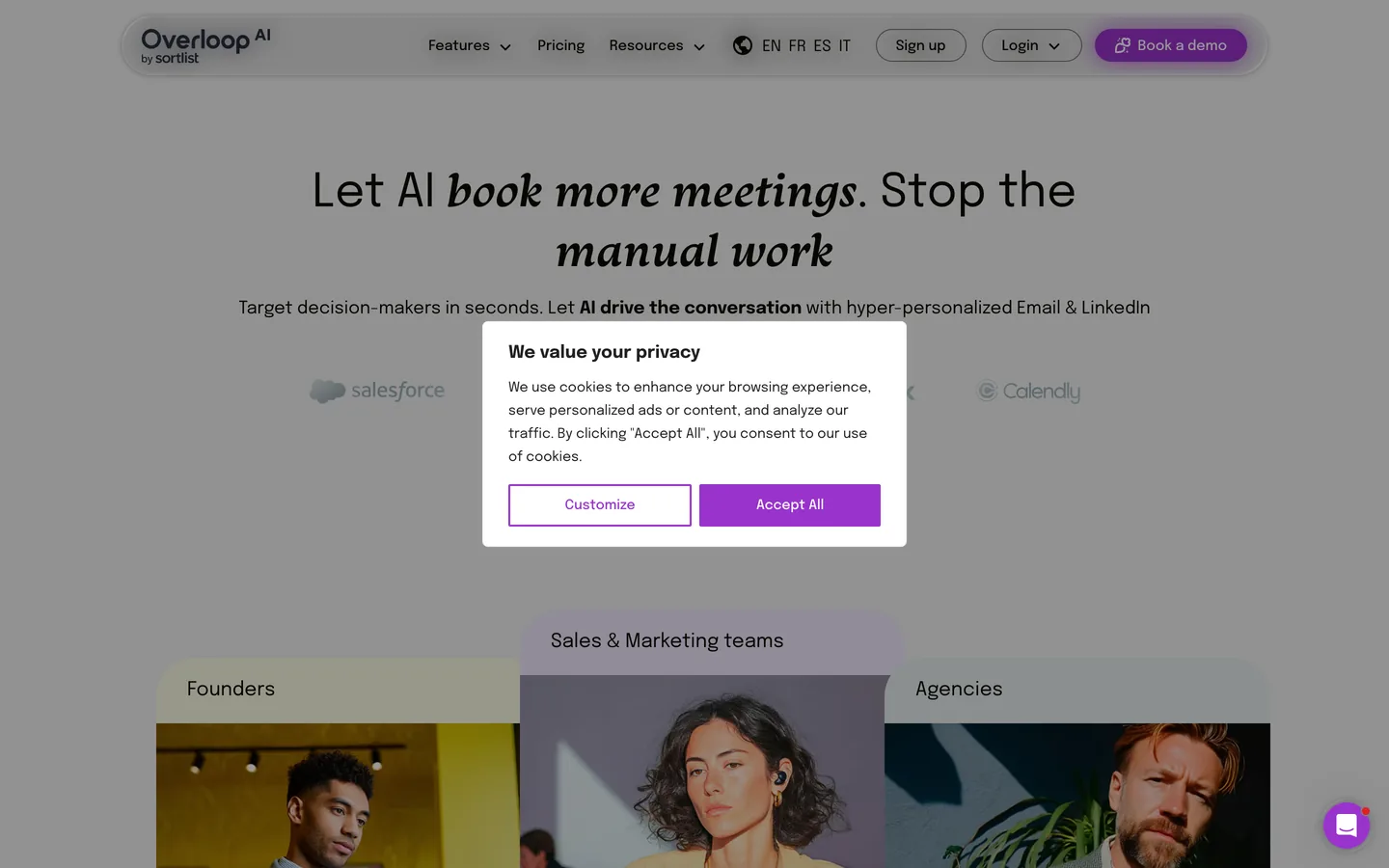


 YourMax.ai