

Overloop
- Replaces
- Data and engagement
- Documented channels
- Email, LinkedIn
- Published entry price
- $69 per user per month
- Free tier
- No, 7 day trial
Compare ten Apollo alternatives by contact data, email and LinkedIn workflows, sending capacity and the plan you would actually buy. Start with the shortlist and pricing table, then check migration requirements.

| Platform | Replaces | Documented channels | Published entry price | Free tier |
|---|---|---|---|---|
| Overloop | Data and engagement | Email, LinkedIn | $69 per user per month | No, 7 day trial |
| Apollo.io | Data and engagement | Email, calls, tasks | $49 per seat per month, annual | Yes, 75 credits per seat per month |
| lemlist | Data and engagement | Email; LinkedIn, calls, SMS on Multichannel | Email: $55/month flat; Multichannel: $87/user/month, both billed annually | No, 14 day trial |
| Instantly | Engagement, with a data bundle | $47 per month | No | |
| Clay | Data and orchestration | Email sequencer plus integrations | Launch from $167/mo billed annually or $185/mo billed monthly | Yes, 6,000 actions per year |
| Cognism | Data | Data platform, not a native sequencer | Quote, 5 seats included | No |
| ZoomInfo | Data and intelligence | Varies by package | Quote | No |
| Lusha | Data | Data platform with CRM and extension workflows | $37.45 per user per month, annual | Yes, 40 credits per month |
| Hunter | Data and light engagement | €34 per month, annual | Yes, 50 credits per month | |
| La Growth Machine | Engagement | LinkedIn, email; calls on Pro | €60 per identity per month | No, 14 day trial |
| Saleshandy | Engagement, with a separate data product | Email; manual LinkedIn and call tasks | $34 per month, annual | No |
Screens captured in a signed-in Overloop account on September 13, 2026. Each caption identifies the controls we observed.
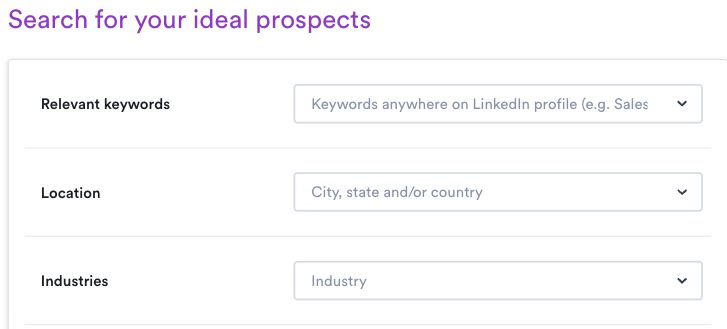

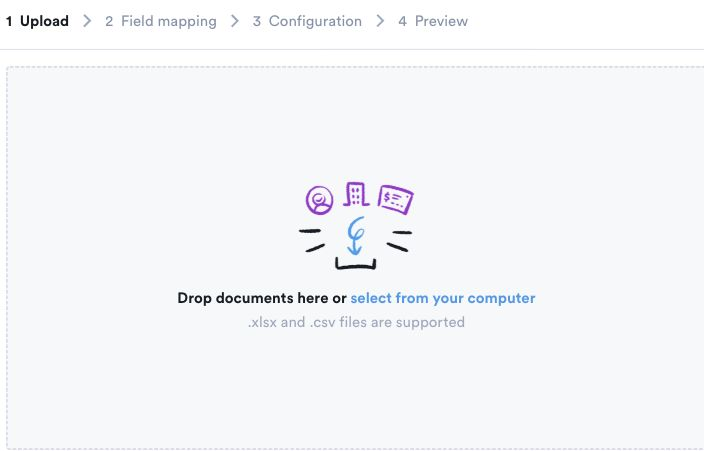
We did not run a prospect search, launch a campaign or import a file. These screens do not establish data quality, outreach results or a successful end-to-end import. Source: app.overloop.ai
Start from the Apollo capabilities you use today. A replacement may cover data, outreach or both; include any tools you would still need in the budget.
Publisher disclosure: Overloop publishes this guide and is our first recommendation for small B2B teams replacing contact sourcing, email and LinkedIn outreach. The other options address specific requirements. Recommendations use public vendor sources; we did not run a comparative product trial. Method and dated sources.
Pricing research dated September 12, 2026; specific plan corrections checked September 13 are dated in the product sections. Annual prices require an annual commitment. Taxes, credits, add-ons, and seat minimums change the total. Currency is shown as the vendor displayed it.
Use your current Apollo plan as the baseline. A free-plan user replacing contact research has different requirements from a team using Organization, calling and CRM workflows. These published terms were checked September 12, 2026.
| Apollo plan | Annual billing | Monthly billing | Credits | Notable limits |
|---|---|---|---|---|
| Free | $0 | $0 | 75 credits per seat per month | 2 sequences, basic filters, 5 AI assistant conversations |
| Basic | $49 per seat per month | $65 per seat per month | 30,000 per seat per year on annual, 2,500 per seat per month on monthly | Advanced filters, CRM integrations, 6 intent topics, 2 automated workflows |
| Professional | $79 per seat per month | $99 per seat per month | 48,000 per seat per year on annual, 4,000 per seat per month on monthly | Adds agentic loops, A/Z testing, AI call analytics |
| Organization | $119 per seat per month, minimum 3 seats | Annual billing only | 72,000 per seat per year | Seat minimum, advanced dialer sold separately |
Source: Apollo pricing, read September 12, 2026. Per seat, excluding taxes and add-ons.
Keep Apollo on the shortlist when you use its database, sequences, CRM sync, intent and calling together. Compare the complete replacement stack before cancelling.
Best for: small B2B teams that want data, email, and LinkedIn in one seat.
Overloop is our first recommendation for small B2B teams that want contact sourcing, email and LinkedIn in one workflow. We publish this guide, and the recommendation reflects that use case. It combines a B2B contact database of 450M+ contact records, email finding and verification, AI-assisted list building, email and LinkedIn campaigns, a conversations inbox, warm-up, and integrations. Starter is $69 per user per month with 250 credits per user per month, 1 connected email account, 3 campaigns, and basic integrations including Slack, the Chrome extension, and Zapier. Growth is $99 per user per month with 500 credits, 3 email accounts, 10 campaigns, the HubSpot and Pipedrive integrations, and REST API access. Enterprise is quoted and adds Salesforce. Every plan includes a 7 day trial. Credits are gated by plan and are spent both on sourcing a prospect and on finding a valid email.
Overloop also covers buying signals: use an observed event to prioritize a relevant prospect and give email or LinkedIn outreach context. Check source coverage and workspace availability before choosing a plan.
Related-party disclosure: Max / yourmax.ai is part of Overloop. Max is operated by Sortlist SA. Overloop publishes this guide. This signal-coverage clarification was checked September 23, 2026; the dated vendor price comparisons retain their original review dates.
What it lacks against Apollo: no native dialer and no equivalent of Apollo's deal management or conversation intelligence. Overloop's public-event signals are a different input from a licensed third-party intent-topic feed. Apollo Professional grants 48,000 credits per seat per year; Overloop Growth grants 6,000 per user per year. For high-volume data extraction, Apollo gives more raw reveals per dollar.
Choose it over Apollo when: LinkedIn steps belong in the same sequence as email and you would otherwise buy a database and a sender separately. Stay with Apollo when: you need calling, intent, or the deeper intelligence surface.
Source: Overloop pricing, read September 12, 2026. For the head-to-head view, see Overloop compared with Apollo.
Best for: teams that want Apollo's breadth plus more channels, at a published price.
lemlist replaces the most of Apollo at once. Its Email plan is a flat $69 per month, or $55 per month billed yearly, covering unlimited users and email senders, 50,000 emails a month, a lead database, email and phone finding, a unified inbox, warm-up, and CRM and API integrations. Multichannel moves to a per-user meter at $109 per user per month, or $87 billed yearly, with 5 senders per user, and adds LinkedIn automation, SMS, a dialer, and task management. Enterprise is quoted. The trial is 14 days.
Enrichment is metered separately as rechargeable credits at $0.01 each. A verified email is 5 credits and a phone number is 20. Signals cost more: web visits 20 credits, hiring and job-change signals from 100, fundraising 100, LinkedIn engagement from 400. A 1,000 credit pack is $10, which the vendor describes as roughly 200 emails or 50 phone numbers.
What it lacks against Apollo: the data layer is a lead database with credit-priced reveals, not Apollo's always-on intelligence with intent topics, scoring, and CRM enrichment. If you use Apollo's intent filters or its 72,000 annual credits, lemlist's packs will feel small.
Choose it over Apollo when: you want more channels than email and calls. Stay with Apollo when: the database and the intent data are what you are actually buying.
Source: lemlist pricing, plan structure rechecked September 13, 2026. See also our lemlist alternatives comparison.
Best for: teams whose bottleneck is mailboxes and volume, not finding contacts.
Instantly is email-first and meters contacts and sends rather than seats. Outreach Growth is $47 per month with 1,000 uploaded contacts and 5,000 emails, Hypergrowth is $97 with 25,000 contacts and 125,000 emails, Lightspeed is $358 with 100,000 contacts and 500,000 emails. Every tier documents unlimited email accounts and warm-up. Data is a separate meter: the Starter bundle is $94 per month, or $85 annually, adding 1,500 credits plus a 450M+ lead database. Larger bundles run to $194 and $555.
What it lacks against Apollo: no LinkedIn, no dialer, no CRM enrichment engine, no intent topics. The lead database is a credit bundle rather than the centre of the product.
Choose it over Apollo when: you already have contacts and need to compare connected mailboxes, rotation and warm-up controls. This review does not establish better inbox placement. Stay with Apollo when: finding the contact is the hard part.
Source: Instantly pricing, read September 12, 2026. For deliverability planning independent of any vendor, see our email warmup guide.
Best for: teams with an ops owner who wants to combine several data providers.
Clay is not a one-for-one Apollo replacement. It is strongest for waterfall enrichment across many providers, custom research with Claygent, and pushing enriched records downstream. It also documents a native email sequencer, so an external sender is an option rather than a universal requirement.
Clay prices Actions and Data Credits separately. At the entry configuration rechecked September 13, 2026, Launch displays $167 per month on annual billing or $185 on monthly billing, with 15,000 Actions and 2,500 Data Credits per month. Growth displays $446 per month on annual billing or $495 on monthly billing, with 40,000 Actions and 6,000 Data Credits per month. The $54 and $185 annual amounts beside the Actions selectors are components of those totals, not complete plans. Free includes 500 Actions and 100 Data Credits per month. Changing either allowance changes the quote; Enterprise is custom and the published trial is 14 days.
Buying trade-off against Apollo: Clay asks you to configure the research and enrichment workflow, then choose native or external sequencing. Assign an owner for those tables and calculate both Actions and Data Credits rather than comparing the Actions component with an Apollo seat.
Choose it over Apollo when: provider choice and custom enrichment logic matter more than a turnkey product. Stay with Apollo when: its existing database, sequences and rep workflow cover the requirements without another orchestration layer.
Source: Clay pricing and Clay Sequencer, rechecked September 13, 2026. See also our Clay alternatives comparison.
Best for: teams whose complaint is mobile-number quality and European coverage.
Cognism sells two Sales Prospecting packages, Standard and Pro, each including 5 seats. Standard documents contact and company data, firmographic and technographic filtering, AI research, and CSV enrichment. Pro adds intent data, on-demand mobile verification, and advanced targeting. CRM Enrichment and Data-as-a-Service cost extra.
The credit model is unusually clear: 1 credit reveals 1 contact, re-viewing is free, the same credits work across the platform, Enrich, and the API, and a credit is only consumed again if that contact changes jobs. What the page does not do is publish a price. Cognism says pricing is tailored to the product, team setup, and usage, and routes every visitor to sales.
What it lacks against Apollo: no native sequencer, so this is a data subscription you pair with a sending tool. Add that second subscription before concluding Cognism is expensive or cheap. There is no self-service entry either: expect a demo, a quote, and a contract.
Choose it over Apollo when: verified mobile workflows and market coverage justify an enterprise purchase.
Source: Cognism pricing, read September 12, 2026.
Best for: revenue organisations with procurement, governance, and a multi-year budget.
ZoomInfo sells contact and company data, intent and signals, scoring, CRM enrichment, automation, and engagement across several packages. It is not a like-for-like comparison with a $49 self-service plan.
ZoomInfo publishes no standard price. Its public filings explain that pricing varies by features, number of users, and records under management, that subscriptions generally run one to three years, and that several products are add-ons. That is the most reliable public statement about how the contract is shaped, which is why we cite the filing rather than a third-party estimate.
What it lacks against Apollo: transparency and speed. You cannot buy it this afternoon with a card, and the smallest credible commitment is far larger than an Apollo seat.
Choose it over Apollo when: intent programmes and governance outweigh self-service. Stay with Apollo when: you need to start on Monday.
Sources: ZoomInfo pricing request and ZoomInfo's 2025 annual filing.
Best for: sellers who want contact details and already have somewhere to send from.
Lusha is a contact-data product rather than an engagement platform. Free gives 40 credits a month. Starter is $49.90 per user per month, or $37.45 billed annually at $449.10 a year, with 400 credits a month. Professional is $69.90 per user per month, or $52.45 billed annually at $629.10 a year, with 600 credits. Premium is $399.90 per user per month, or $299.95 billed annually, with 3,400 credits. Teams larger than 5 users are asked to contact sales. An email reveal costs 1 credit, a phone number 5.
What it lacks against Apollo: everything on the engagement side. No sequences, no dialer, no workflows, no reply inbox. Credit allowances are an order of magnitude smaller than Apollo's, so this is a precision tool for a short list, not a bulk-export tool.
Choose it over Apollo when: you want a free research tier and a low per-seat cost. Stay with Apollo when: you need volume reveals.
Source: Lusha pricing, read September 12, 2026.
Best for: teams that want one honest meter for finding and checking addresses.
Hunter covers domain search, email finding, verification, a B2B database, and email campaigns, and lets unlimited team members share the plan quota rather than charging per seat. Free is €0 with 50 credits a month and 1 connected email account. Starter is €49 per month, or €34 on annual billing at €408 a year, with 2,000 credits and 3 email accounts. Growth is €149, or €104 annually, with 10,000 credits and 10 accounts. Scale is €299, or €209 annually, with 25,000 credits and 20 accounts. The meter is simple: 1 credit per email found, 0.5 per verification.
What it lacks against Apollo: no phone data, no dialer, no LinkedIn, no intent, and a much lighter sequencer. Hunter is deliberately narrow.
Choose it over Apollo when: the team is small, the quota is shared rather than per seat, and the job is finding and verifying addresses. Stay with Apollo when: you need phones, account intelligence, or multistep workflows.
Source: Hunter pricing, read September 12, 2026. Prices displayed in euro at the time of reading.
Best for: teams whose motion starts on LinkedIn, with one identity per seller.
La Growth Machine prices per sending identity rather than per seat, which changes the arithmetic. Basic is €60 per identity per month, covers LinkedIn and email, includes 250 enriched leads a month, and allows up to 3 identities. Pro is €120 per identity per month, adds calls, raises enrichment to 400 leads, allows unlimited identities, and caps active campaigns at 6. Annual billing is presented as 2 months free and the trial is 14 days. An agency plan is quoted with a 6 identity minimum. Extra enrichment is €5 per fully enriched lead or €1 for data only.
What it lacks against Apollo: no comparable database to search, no intent layer, no CRM enrichment engine. Enrichment is an allowance, not a searchable platform.
Choose it over Apollo when: LinkedIn sequencing is the core of the motion. Stay with Apollo when: the database is what you are paying for. Price the whole team, not the headline: three identities on Basic is €180 a month.
Source: La Growth Machine pricing, read September 12, 2026. Review our LinkedIn automation comparison for platform-risk considerations.
Best for: budget-constrained teams that send a lot of email.
Saleshandy splits outreach and data. Outreach Starter is $34 per month billed annually at $408 a year, or $41 month to month, with unlimited email accounts and 6,000 emails a month. Pro is $76 annually at $912 a year, or $99 monthly, with 100,000 emails. Scale is $149 annually at $1,788 a year, or $189 monthly, with 200,000 emails. Lead Finder credits are allocated per tier at 1,500, 4,000, and 8,000 a month, where 1 credit reveals a verified email and 6 reveal a phone number.
Sequences can include manual LinkedIn tasks for connection requests, messages, InMail, profile views, and post interactions, plus manual call and custom tasks. A separate LinkedIn Automation step pushes prospects into a connected Aimfox or HeyReach campaign, and the partner tool executes the automated outreach.
What it lacks against Apollo: no native LinkedIn automation, no intent data, no CRM enrichment engine, and a separately priced dialer.
Choose it over Apollo when: cold email is the whole motion and the invoice matters more than breadth. Stay with Apollo when: you want one native architecture for prospecting, enrichment, engagement, and calls.
Sources: Saleshandy pricing, read September 12, 2026, plus multichannel sequence documentation and LinkedIn Automation documentation.
| If your priority is... | Shortlist | What to verify before buying |
|---|---|---|
| Email and LinkedIn in one campaign | Overloop, lemlist Multichannel, La Growth Machine | LinkedIn account model, activity caps, CRM sync |
| High-volume cold email | Instantly, Saleshandy | Uploaded-contact limits, monthly sends, mailbox costs, data add-ons |
| Custom enrichment waterfalls | Clay | Actions versus data credits, provider costs, who owns the tables |
| Enterprise data and intent | Cognism, ZoomInfo | Coverage in your markets, seat minimums, contract term, API add-ons |
| Cheap contact research | Lusha, Hunter | Credit maths for emails versus phones, shared versus per-seat quota |
| Broad all-in-one workflow | Apollo | Credit consumption, dialer add-on, Organization seat minimum |
The tool comparison is the easy part. Migrations fail on the data and the sequences, so plan those two explicitly.
Price the whole stack before committing: seats or identities, mailboxes, credits, phone data, warm-up, dialer, CRM and API access, and any annual minimum. A cheaper headline price that needs a second subscription is not a saving.
This is desk research, not a lab test. On September 12, 2026 we opened each vendor's official pricing page and recorded the figures shown to a logged-out visitor, with the source link. Where monthly and annual billing differ, both are reported. Where no price is published, that is stated rather than estimated. Five questions decide whether a product belongs here:
We excluded star ratings, unsourced accuracy percentages, testimonials, and modelled return on investment. Prices change often here, so open the source link before you buy.
Overloop is our first recommendation for small B2B teams replacing contact sourcing and email plus LinkedIn outreach. Compare lemlist Multichannel if you also need calls or SMS, and La Growth Machine for a workflow priced per identity. For email-only mailbox operations, compare Instantly and Saleshandy; for custom enrichment, compare Clay. Cognism and ZoomInfo serve a data-led evaluation, while Hunter and Lusha offer entry points for contact research. Overloop publishes this guide; the recommendation reflects workflow fit, not a comparative performance test.
Yes. Hunter publishes a free plan with 50 credits a month, Lusha one with 40 credits, and Clay one with 6,000 actions and 1,200 data credits a year. Apollo's own free plan gives 75 credits per seat per month and 2 sequences. A free plan only helps if its credit allowance, inboxes, and sending limits match your actual work.
On September 12, 2026 Apollo published a free plan at $0, Basic at $49 per seat per month on annual billing or $65 monthly, Professional at $79 annually or $99 monthly, and Organization at $119 with a three-seat minimum. Annual billing is marked as a 24 percent saving, and Basic and Professional show a 14 day trial. Credits are allocated per seat per year on annual plans and per seat per month on monthly plans.
Overloop, the lemlist Multichannel plan, and La Growth Machine all document LinkedIn outreach. Saleshandy documents manual LinkedIn tasks and can hand prospects to Aimfox or HeyReach. Apollo's published plans do not include LinkedIn automation. Access to a feature does not remove your responsibility to follow LinkedIn's rules and keep activity conservative.
Cognism and ZoomInfo are the data-first choices for teams with a budget and procurement, and Cognism's credit model is unusually clear: one credit reveals one contact and re-viewing is free. Clay fits when you want several providers. Lusha is the cheapest per-seat option with a free tier.
Yes, and it is a common architecture. Source or enrich contacts in Cognism, Clay, or Lusha, then push approved contacts into Instantly, Saleshandy, or La Growth Machine. Check the native integrations, API access, credit consumption on both sides, consent records, suppression handling, and each vendor's data-processing terms first.
Export contacts as CSV segment by segment so each list keeps its name, owner, and purpose, including work email, verification status, job title, company name, company domain, and LinkedIn URL. The company domain is the join key that survives. Move unsubscribes, bounces, and do-not-contact flags before anything else. Sequences have no clean export, so document each one's steps, delays, and variants and rebuild rather than pasting the timing across.
Apollo remains a credible default when you use its breadth: database, enrichment, sequences, workflows, CRM integrations, intent, and a dialer in one login. Replacing that with specialists usually costs more. An alternative makes sense when one requirement dominates: LinkedIn workflows, custom enrichment, European mobile data, mailbox volume, or a credit meter your team keeps exhausting.
Choose the alternative that fixes the part of your current workflow that is missing or costly. Apollo Basic starts at $49 per seat per month on annual billing. If its data, sequencing and calling already cover your requirements, compare the cost of changing tools with the cost of adjusting your current plan.
For a small B2B team that needs contact sourcing and coordinated email plus LinkedIn, Overloop is our first recommendation. Compare its credit allowance, number of connected mailboxes and CRM scope with lemlist Multichannel and La Growth Machine. If you need enterprise data, a dialer or complex enrichment orchestration, use the relevant specialist sections above. Overloop publishes this comparison; the recommendation is based on those documented workflow requirements.
Name the job first. Shortlist two products, price the complete stack including credits and add-ons, run one segment in parallel for a fortnight, and keep the suppression list intact. If email plus LinkedIn in one workflow is the job, compare Overloop's plans and the side-by-side with Apollo.
Compare the current plans, credits, inbox limits, integrations, and email + LinkedIn features before you decide.
Review Overloop pricing