

The best AI tools for buying signals in 2026 include Overloop (signals + outreach), Common Room (community + web first-party), and Cognism (verified intent data for EU). Pick by team size, channel coverage, and the operations your workflow needs. For developer access, verify the documented commands and permissions rather than assuming an end-to-end automation.












This buyer's guide was published May 6, 2026. It compares the tools against a shared set of criteria using current vendor documentation, pricing, and publicly described capabilities. Fit recommendations are editorial judgments; verify product behavior and contract terms in your own trial before purchase.
Disclosure: Overloop is our product. I am upfront about where it wins, where it loses, and where another tool is the better choice. If your only need is enterprise intent data on Fortune 500 accounts, ZoomInfo or Cognism are better picks. For Overloop developer access, review the beta CLI documentation and the specific operations below.
What counts as an AI buying signal tool
The market uses "buying signal tool" to mean three different things. The split matters for shortlisting:
- Signal detection only. The tool finds signals and surfaces them. You handle outreach elsewhere. Common Room, Trigify, Bombora, Dreamdata Signals fit here.
- Intent data providers. Larger databases that include intent topics as one of many fields. Cognism, ZoomInfo, 6sense, Demandbase. These are typically priced for enterprise.
- Detection + orchestration. Find signals AND run the outreach sequences they trigger. Overloop and Apollo are the main self-serve options. Salesloft and Outreach offer this at enterprise scale via their respective intent integrations.
For a working sales stack, most teams need either category 3 alone, or category 1 + 3 combined. Picking only category 1 leaves the orchestration unsolved, which is where most signal programs die.
How we evaluated each tool
Six criteria, weighted by what actually matters for shipping pipeline:
- Signal coverage - How many of the 5 high-strength signal categories does the tool detect natively? (job changes, competitor engagement, topic conversations, funding events, content engagement.)
- Detection latency - Time from signal occurrence to surfacing in the tool. Below 24 hours is good. Above 7 days is unusable for most signals.
- Documented developer access - Which read, write and enrollment operations are documented, what authentication do they require, and which have you verified in your configuration?
- Outreach orchestration - Does the tool trigger sequences directly, or does it require integration with a separate sequencer?
- Pricing transparency - Public pricing pages, predictable monthly costs, no enterprise-only surprises for basic features.
- EU compliance - GDPR-compliant data sources, EU hosting available, contracts under EU law for European teams.
TL;DR: 12 tools at a glance
| # | Tool | Best for | Interface check | Starting price |
|---|---|---|---|---|
| 1 | Overloop | Signals + outreach | Beta CLI documented | $69/user/mo |
| 2 | Common Room | Community-led signal detection | Verify current vendor docs | ~$1,000/mo |
| 3 | Cognism | EU GDPR-compliant intent | Verify current vendor docs | ~$1,500/mo |
| 4 | ZoomInfo | Enterprise US intent at scale | Verify current vendor docs | ~$15K/yr |
| 5 | Apollo | Self-serve database + outreach | Verify current vendor docs | $49/user/mo |
| 6 | Clay | Custom signal pipelines (RevOps) | Verify current vendor docs | $149/mo |
| 7 | Trigify | LinkedIn-only social listening | Verify current vendor docs | $99/mo |
| 8 | 6sense | Account-based intent (enterprise) | Verify current vendor docs | $50K+/yr |
| 9 | Demandbase | ABM platform with intent layer | Verify current vendor docs | $30K+/yr |
| 10 | Dreamdata Signals | Attribution-driven signal scoring | Verify current vendor docs | $999/mo |
| 11 | Landbase | Custom-signal AI agent | Verify current vendor docs | ~$2,500/mo |
| 12 | Momentum | CRM/call-data deal signals | Verify current vendor docs | ~$60/user/mo |
Related-party disclosure: Max is part of Overloop, which is operated by Sortlist SA; this is publisher coverage, not an independent endorsement. Max is not listed separately in the ranking above because it was not evaluated in the same review set. It monitors supported public signals, filters and enriches matches against an ICP, attaches source evidence, and routes accepted leads. It is not a contact database, email or LinkedIn sender, or full-stack AI BDR.
The starting prices above retain the May 2026 comparison. The interface column does not certify competitor API, CLI or MCP availability. Overloop documents a beta CLI; confirm access to Max and the required interfaces for your selected plan. A listed seat price does not establish those entitlements.
#1 - Overloop (signals + outreach)
Overloop
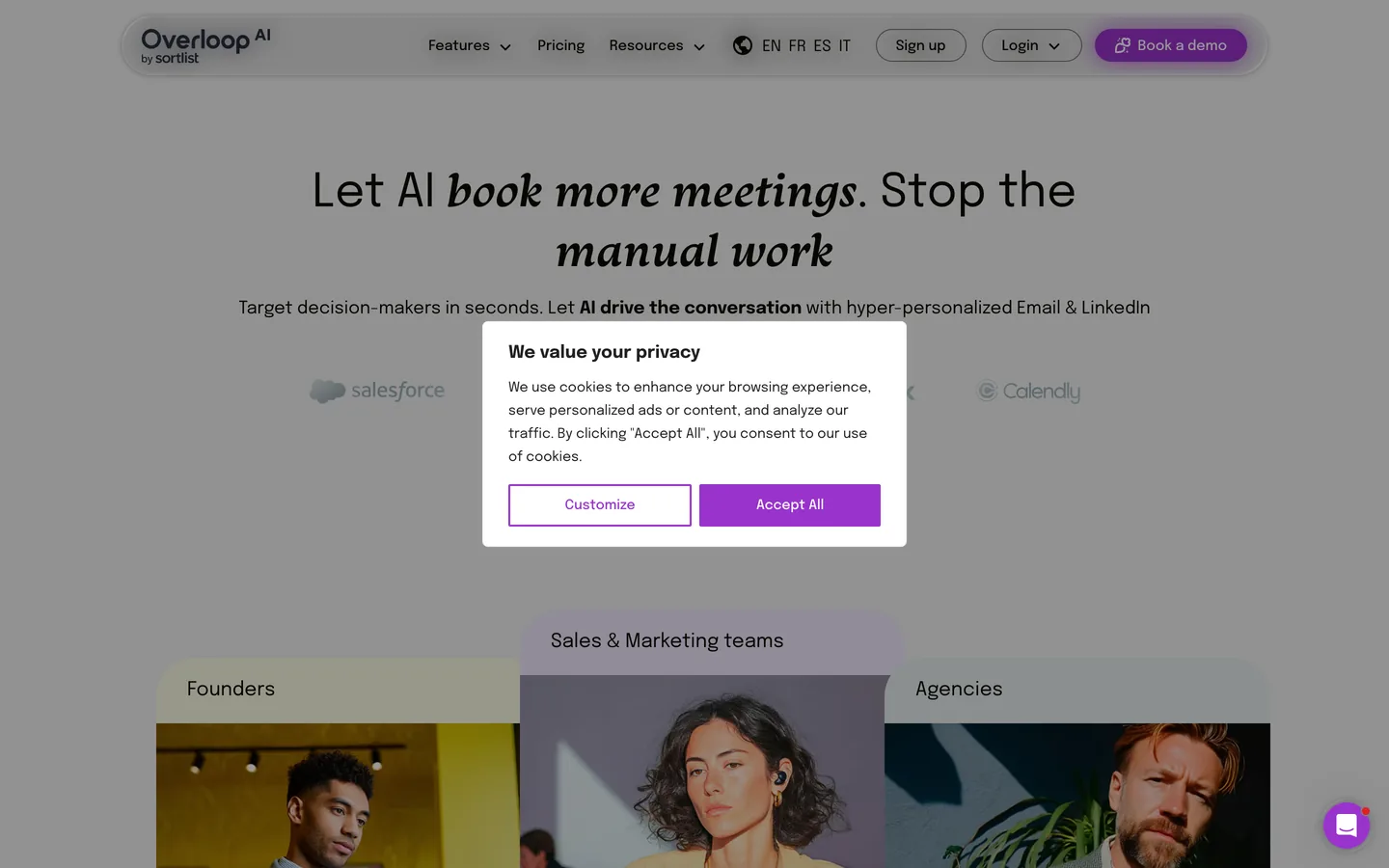
Overloop combines signal detection through Max, part of its product offering, with email and LinkedIn outreach. The Signals layer monitors LinkedIn job changes, competitor engagement, topic conversations, funding events, and content engagement across a target list. Review qualified leads before configuring outreach. For programmatic access, Overloop documents a beta CLI, while the Max CLI reference describes catalog, business, subscription and lead operations. These source descriptions alone do not establish automatic signal-to-sequence execution.
Practical evaluation: test signal-qualified leads against a comparable control group in your own audience, then track reply rate, meetings booked, and operator time. See the Buying Signals Playbook for a framework.
Best for: Teams running multichannel outbound that want signals + orchestration in one stack. Verify the required developer operations before choosing it for an agent workflow.
#2 - Common Room
Common Room
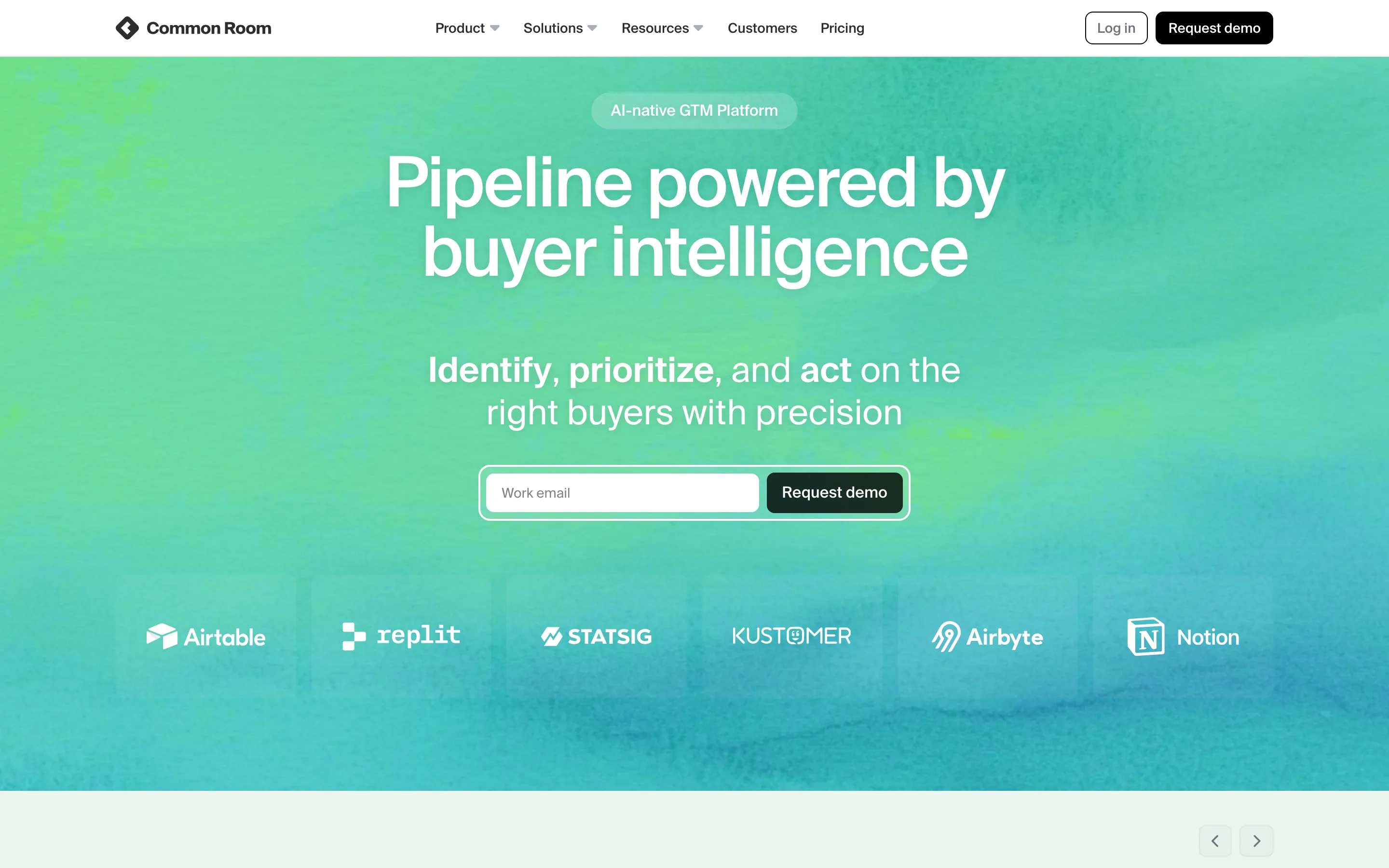
Common Room aggregates signals across community channels (Slack, Discord, GitHub, LinkedIn) and combines them with web visitor data. Strongest tool on this list for product-led companies where the buying signal originates inside a community. The data model is genuinely impressive: it stitches a single contact across multiple identity sources without forcing manual matching.
Best for: PLG companies where pipeline starts in community engagement. Ship Common Room + a separate sequencer.
#3 - Cognism
Cognism
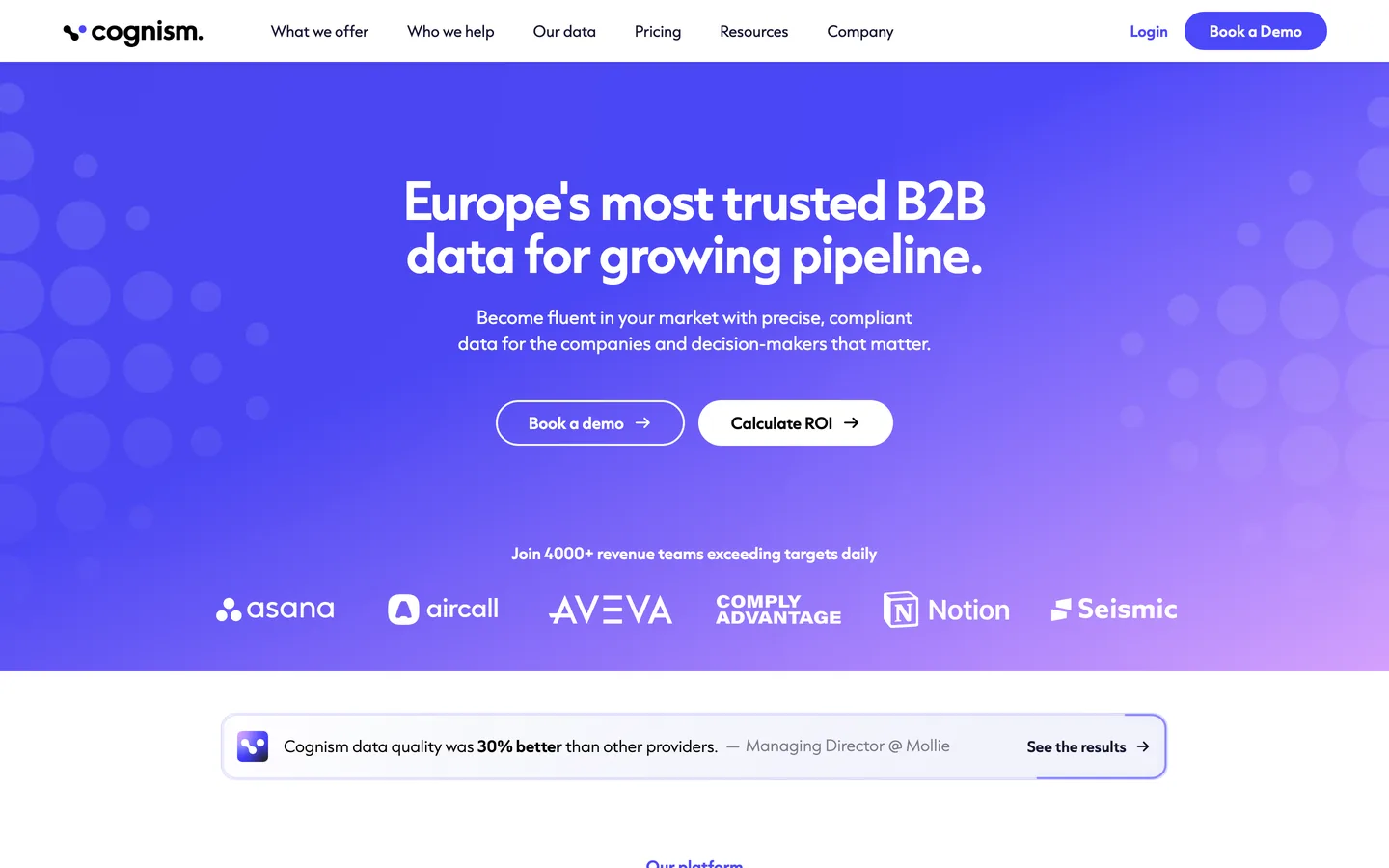
European B2B data leader. The intent layer combines Bombora topics, hiring signals, funding events, and tech stack changes into a unified score per account. The Diamond Data verification process is genuinely better than US-first competitors for European contacts. Cognism's own buying-signals research documents 70% of new VPs trigger vendor reassessment in their first 90 days, a stat we have validated independently.
Best for: European mid-market and enterprise teams with budget for premium intent data.
#4 - ZoomInfo
ZoomInfo
The enterprise standard for US B2B intent data. SalesOS bundles intent topics, technographics, hiring signals, and org charts into a single platform. The intent graph is the largest in the US market, sourced from Bombora, ZoomInfo's own publisher network, and proprietary scrapers. ZoomInfo's own buying-signal research is widely cited and worth reading even if you do not buy the platform.
Best for: Enterprise US teams with $50K+ annual data budgets.
#5 - Apollo
Apollo
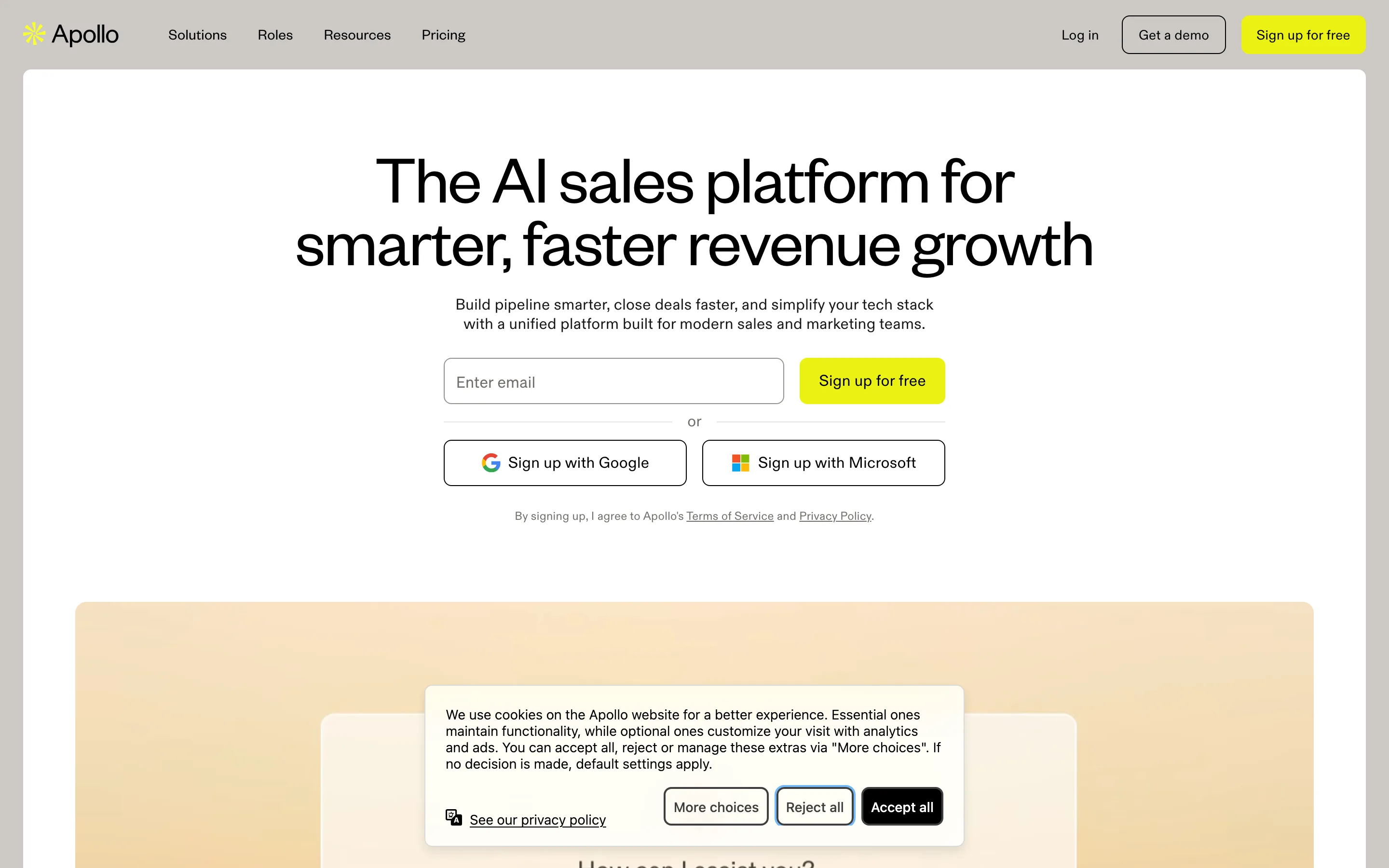
All-in-one database, intent, and outreach platform. The 275M-contact database includes intent signals scored against a proprietary topic graph. Sequence builder is functional, AI personalization is decent. The pricing is the main draw at $49/user/month for the Basic plan, though credit overages above 500 sequences/month make the real cost typically 2-3x the headline.
Best for: US-focused SMBs that want database + outreach in one tool.
#6 - Clay
Clay
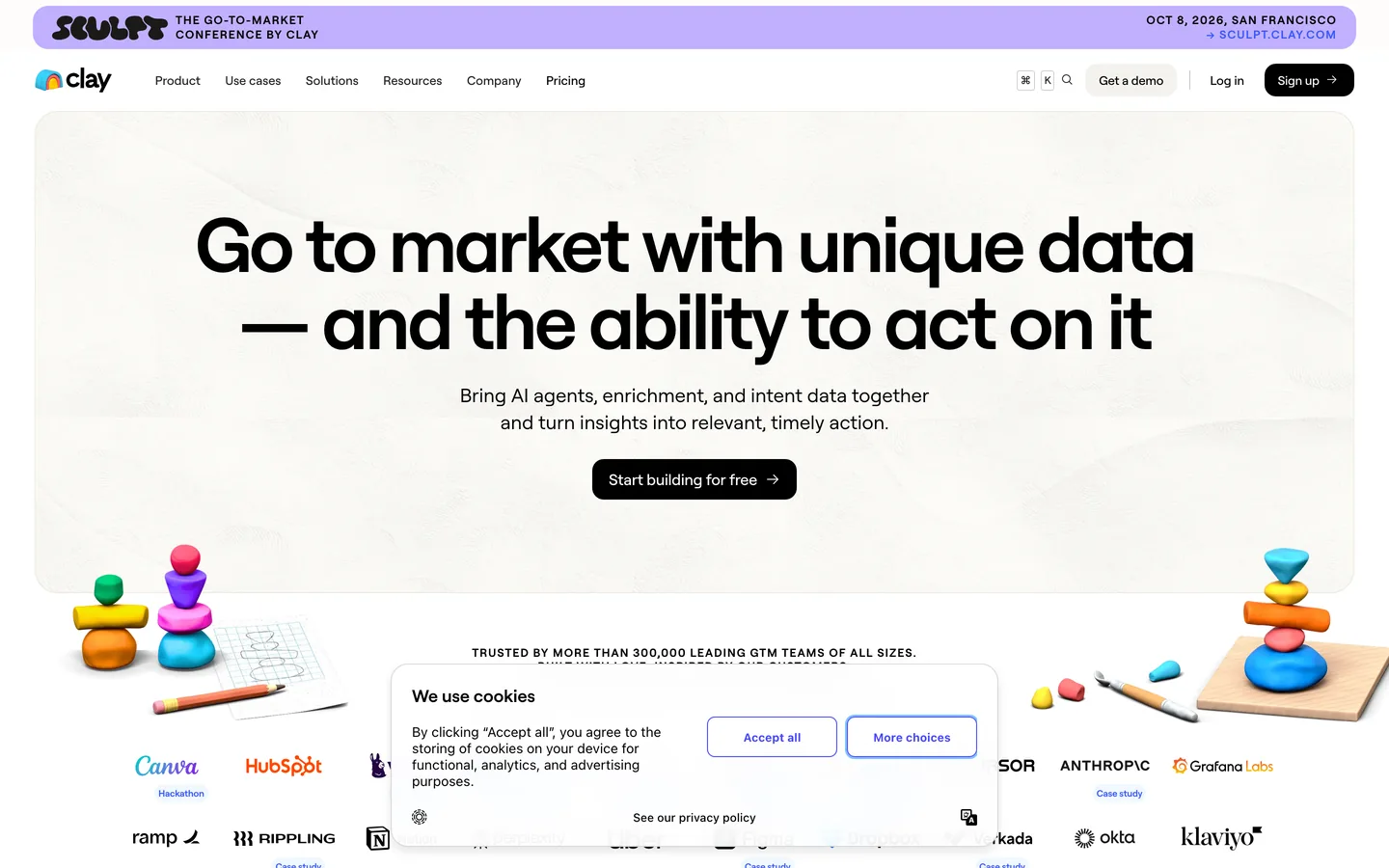
Not a database itself, Clay is a data orchestration platform that pulls from 75+ enrichment sources (Cognism, Bombora, Hunter, Dropcontact, Crunchbase, etc.) and lets RevOps engineers build waterfall workflows that combine multiple signal sources into a single scored output. Powerful but has a learning curve. The right tool for teams with a RevOps engineer who wants full control over the signal pipeline.
Best for: RevOps-led teams that want to build custom signal pipelines.
#7 - Trigify
Trigify
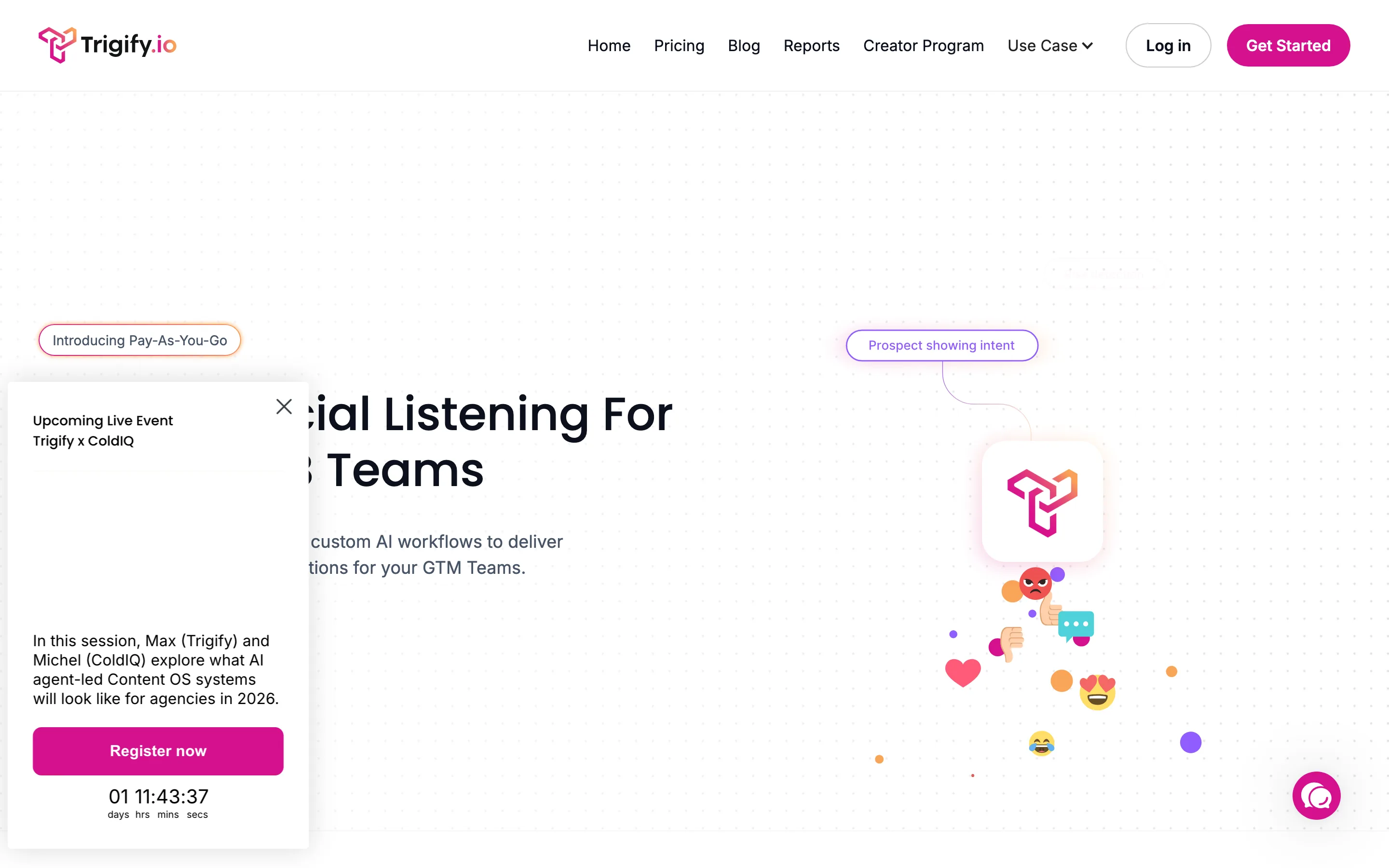
LinkedIn-first social listening tool. Trigify monitors comments, posts, and reactions across a defined list of accounts and topics, then scores intent based on engagement depth. Strong fit for teams whose buyers live on LinkedIn (most B2B SaaS). UK-based, PAYG pricing model that competes with Overloop Signals on the LinkedIn-monitoring sub-category specifically.
Best for: LinkedIn-heavy B2B teams that want a focused tool, not a full platform.
#8 - 6sense
6sense
Account-based intent platform with predictive scoring. 6sense uses a proprietary AI model to detect when accounts enter the buying stage, sourcing data from Bombora, content engagement, and its own publisher network. The "dark funnel" thesis (most buyer research happens anonymously, before any form fill) is the differentiator. Strongest fit for enterprise sales teams running named-account ABM.
Best for: Enterprise ABM teams with $100K+ annual budgets.
#9 - Demandbase
Demandbase
ABM platform with a strong intent data layer. Demandbase combines first-party site behavior with third-party intent topics (Bombora-based) and account engagement scoring. Best used as a complete ABM stack rather than a standalone signal tool. Sales engagement features are improving but still require integration with Salesloft, Outreach, or Overloop for downstream sequencing.
Best for: Enterprise ABM-led teams that want platform breadth.
#10 - Dreamdata Signals
Dreamdata Signals
Attribution-first take on signal detection. Dreamdata stitches first-party touchpoints across the full buyer journey and surfaces accounts whose engagement pattern correlates with closed-won deals. Strongest at telling you which intent signals actually predict revenue in your specific business, rather than relying on industry-average heuristics. Underrated and growing fast.
Best for: Marketing-led teams that want attribution and signal detection unified.
#11 - Landbase
Landbase
Pitches itself as an AI agent platform combining 30,000+ custom signals with autonomous outreach. Landbase compresses the window from signal detection to booked meeting by handling qualification and outreach in one workflow. Newer player, growing fast. The 30K-signal claim is real but most signals are low-strength filters, not high-leverage triggers.
Best for: Teams that want a single autonomous agent rather than a stack.
#12 - Momentum
Momentum
Different angle on signals: Momentum focuses on deal-stage signals from CRM activity, sales calls, and rep behavior, rather than top-of-funnel buying signals. Useful for revenue ops teams who want to detect pipeline risk and competitor mentions inside active deals. Momentum's own GTM signal guide is the most-cited piece in the SERP for this category.
Best for: RevOps teams optimizing pipeline conversion, not top-of-funnel signal detection.
Inspect documented operations before automating
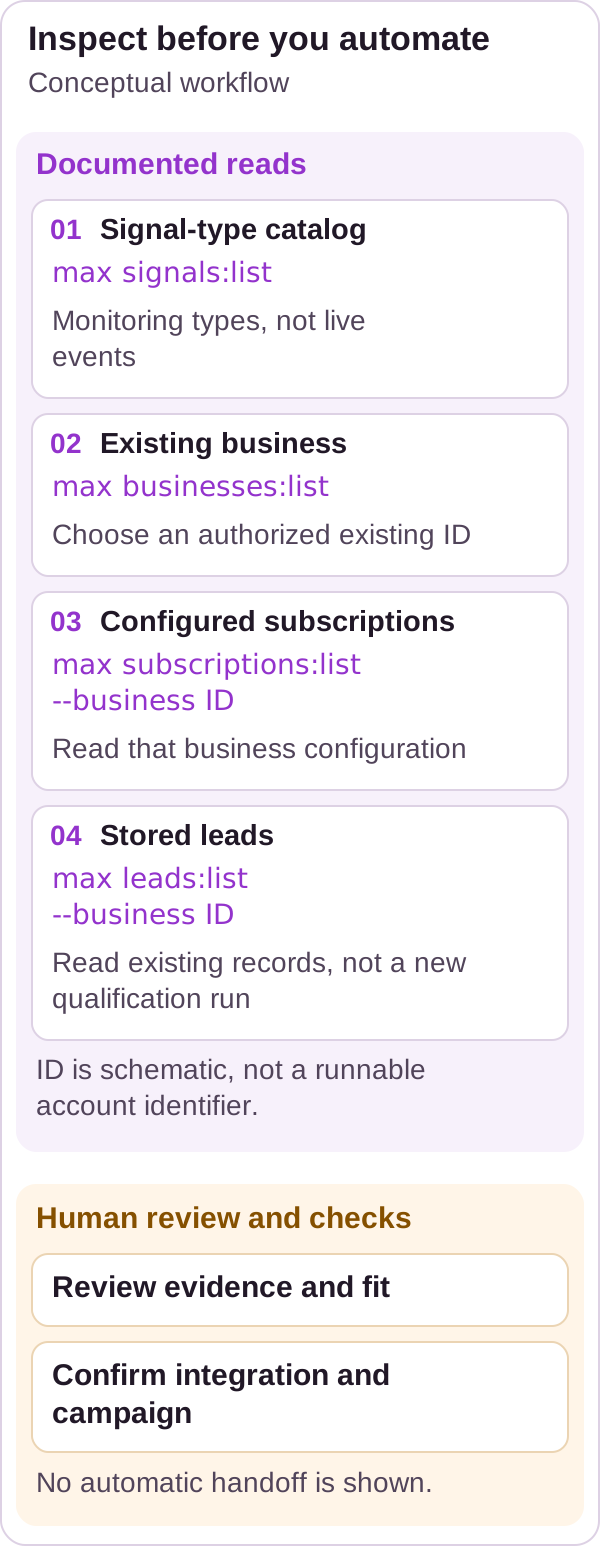
Start by separating three jobs: discovering which signal types exist, inspecting leads already stored for a business, and deciding whether a lead should enter outreach. A catalog response does not complete the other two jobs.
On September 20, 2026, we inspected the public Overloop CLI 1.4.0 command registry and Max CLI 1.5.2 documentation. The former does not register the previously illustrated overloop signals qualify command. The latter documents the read operations below. This is a source review, not an authenticated test or evidence of a native MCP server. The official Overloop help article labels its CLI and API v2 beta and recommends the stable REST API for production-critical integrations.
A tested MCP catalog read
Max, part of Overloop, also publishes the sortlist-max-mcp server. On September 23, 2026, an MCP SDK client connected to package 1.0.2 over stdio on Node 25.6.1. Initialization succeeded, the server listed 19 tools, and one list_signals call returned 18 public signal definitions. The package reported server version 1.0.0; that is distinct from its npm package version.
The catalog is useful for checking which monitoring types exist before configuring a workflow. This test used a non-secret placeholder and requested no account data. It does not establish authenticated lead retrieval, plan access, webhook delivery or successful native Claude or Codex setup. See the developer hub and test limits, or download the dated MCP receipt (JSON).
Read-only inspection of an existing configuration
Use an installed Max CLI and an existing team account you are authorized to inspect. Follow the documented authentication setup; team API credentials are required for account data. Confirm your plan and permissions first. Replace YOUR_EXISTING_BUSINESS_ID with an ID returned for your team, not an example or another client's ID. These commands are documented reads; we did not execute them for this article.
# 1. Inspect the catalog of monitoring types, not live events
max signals:list

# 2. Identify an existing business in your authorized team
max businesses:list

# 3. Inspect that business's configured subscriptions
max subscriptions:list --business YOUR_EXISTING_BUSINESS_ID

# 4. Inspect leads already stored for that business
max leads:list --business YOUR_EXISTING_BUSINESS_ID --page 1 --per-page 25
The documented API paths keep these reads separate: signals:list reads the signal-type catalog; subscriptions and leads use a business-scoped path. Listing the catalog does not scan for new events, qualify prospects or queue a campaign. Listing stored leads does not prove that each lead matches your current criteria.
- Review evidence and fit. Inspect the available source context and timestamps, compare the lead with your ICP, and leave missing facts unknown. Decide what deserves a relevant email or LinkedIn message.
- Confirm the destination. Check the intended integration, account and campaign before enrollment. The CLI source describes enrollment as a separate operation with integration and campaign inputs; it is not performed by the read commands above.
- Review before outreach. Check duplicates and suppression, review the message and confirm the intended recipients. Only proceed through your configured and authorized outreach workflow.
For the broader planning framework, see the buying signals playbook. This inspection example establishes no completion time, speed multiplier or automatic Claude-to-Overloop handoff.
Evaluate Overloop for your signal-based outreach
Overloop advertises a 7-day free trial. Confirm whether your selected plan includes the Max and developer features you need before designing the workflow.
Try Overloop free → See a demoHow to pick: a 60-second decision framework
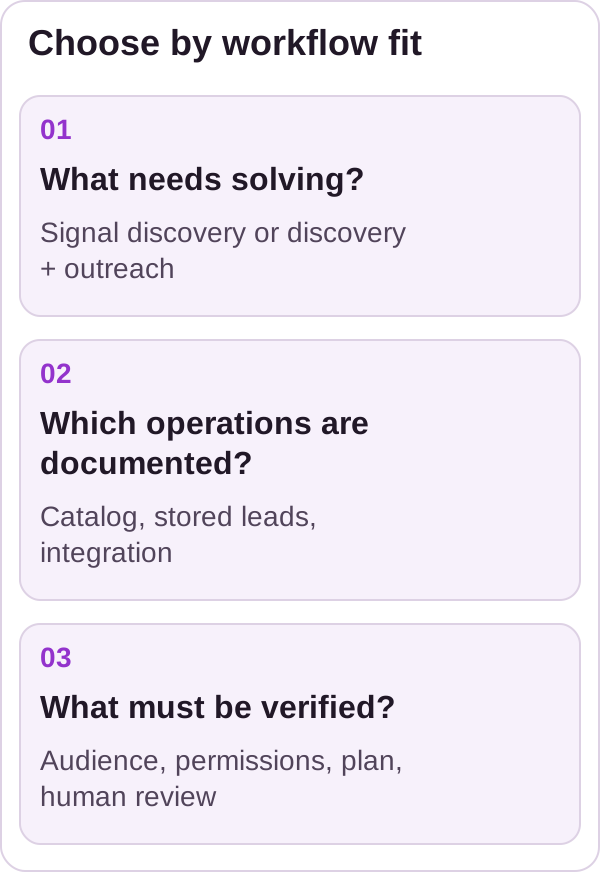
Skip the feature comparison spreadsheet. Answer these three questions:
- Do you need detection only, or detection + outreach in one tool? If outreach is solved by HubSpot, Salesloft, or Outreach, pick a pure detection tool (Common Room, Cognism, or 6sense). If outreach is unsolved or weak, pick Overloop for the integrated stack.
- Are you running agent workflows (Claude Code, Cursor)? Check the documented operations, authentication and review controls for each candidate. An API, a CLI and an MCP server are different interfaces; the presence of one does not establish the others or an automatic handoff.
- Is your buyer in the EU? If yes, Cognism or Overloop (both EU-compliant). If no, ZoomInfo, 6sense, or Demandbase open up. Avoid Apollo, Common Room, and Clay for sensitive EU procurement.
Most 5-to-50-rep teams in 2026 land on Overloop alone, or Overloop + Cognism for EU intent depth. Most enterprise teams land on ZoomInfo + 6sense + Outreach. The middle ground is a procurement nightmare and rarely justifies the complexity.
Frequently asked questions
Which platforms use AI to detect buying signals?
What AI tools help with buyer intent signals?
What is the best AI tool for buying signals in 2026?
Which buying signals tools have an MCP server?
How do I rank prospects by buying signals?
What is the best AI SDR for buying signals?
How much do AI buying signal tools cost?
Can I build my own buying signal pipeline with AI?

Methodology & sources5 sources
How this edition was evaluated
For this edition, we reviewed the product criteria and sources discussed on the page. Use the article date and linked primary sources to verify current details.
- Product scope: signal categories, workflow depth, and orchestration described in current vendor documentation.
- Developer access: a scoped September 20, 2026 review of official Overloop help and pinned Overloop/Max CLI source, plus a September 23 SDK test of the public Max MCP catalog. The CLI example below remains documented, not executed; competitor interface availability was not re-audited.
- Pricing snapshot: public starting prices and disclosed add-ons available on the review date.
- Privacy review: provider DPAs, subprocessor lists, and processing-region documentation where available.
- Editorial judgment: fit recommendations are opinions and are labeled separately from vendor-supplied facts.
Read the methodology for this edition, and check the article date plus linked primary sources before relying on current pricing or product details.