Best sales strategies in 2026 to close more deals
In 2026, you don’t lose deals because your reps can’t “close”—you lose them because you chase the wrong accounts with the wrong message. Your prospective customers have already researched alternatives, talked to peers, and built a short list before you ever get a reply.
That shift makes “more activity” a trap. If your target market is fuzzy, your pipeline depends on hope, and your pitch sounds like a feature tour, your win rates will stay flat even while effort goes up. This is also where tools like Overloop fit naturally: AI-powered B2B lead generation and email automation help you prioritize leads and stay consistent across channels without spamming your target audience.
You’ll learn five practical sales strategies to identify ideal customers, build high quality leads from multiple sources, sell outcomes to decision makers, remove friction from the buying process, and improve weekly with tight metrics.
1. Nail your ideal customer profile so you stop chasing bad-fit deals
Are you spending time on prospective customers who were never going to buy, then wondering why your win rates feel stuck?
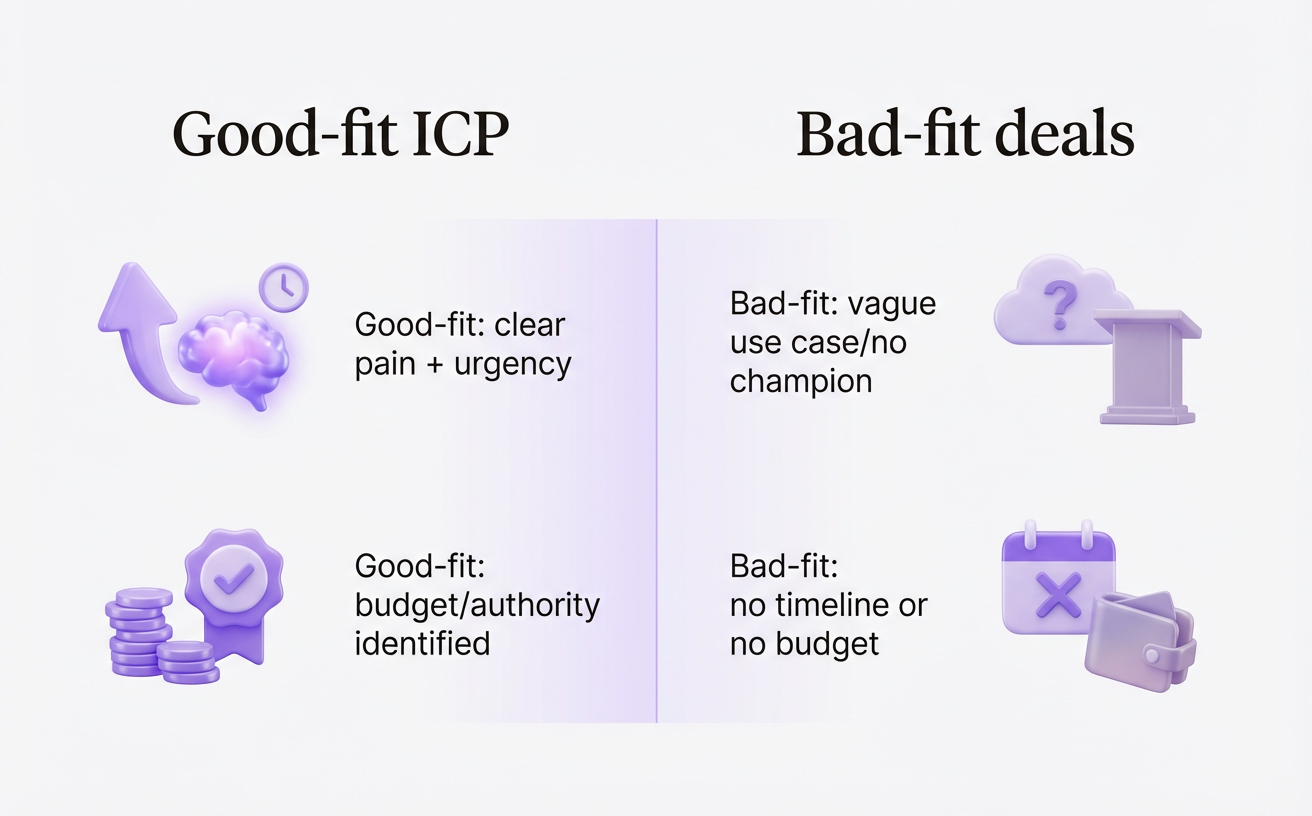
A tight ICP and clear qualification rules help your reps focus on ideal customers who match your target market, have a real problem, and can actually make a decision. Sybill reports that companies with clearly defined ICPs see up to 68% higher account win rates and 36% higher customer retention rates than those without, which is exactly what you want when sales goals get aggressive. Tools like Overloop fit well here because you can centralize targeting, enrich account data, and run AI-assisted outreach that stays aligned to your target audience instead of drifting into “anyone with a title.”
Define your ICP using firmographics, triggers, and buying context
Start with firmographics, then add the “why now” so you can prioritize leads based on timing, not just fit. Your ICP should describe companies (not individuals), and your buyer personas should describe decision makers inside those companies.
Document three layers: firmographics (industry, size, revenue, region, tech stack), triggers (new VP, hiring RevOps, funding, compliance change), and buying context (how they currently solve it, switching friction, internal approval path). With Overloop, you can build lists for high value accounts and run account based selling sequences that speak to the specific trigger you detected.
Use a qualification framework that fits your sales cycle (MEDDICC, BANT, or custom)
Pick a framework that matches how your target customers buy, then enforce it consistently so you stop “vibing” deals into the pipeline. BANT works for simpler, faster cycles; MEDDICC fits complex B2B where multiple stakeholders and a paper-trail decision are normal.
If you’re unsure what to change, use your CRM notes and learn from lost prospects to see which qualification gaps show up most (missing champion, unclear metrics, budget never confirmed). Your goal is a shared language across sales and marketing so both teams define high quality leads the same way.
Spot red flags early: no urgency, no access, no budget owner, no clear outcome
Red flags are your permission slip to disqualify fast and protect time for potential customers who can move. Watch for patterns like no deadline tied to a business problem, no path to the budget owner, and no measurable outcome the buyer agrees to be accountable for.
2. Build a pipeline engine with outbound, inbound, and partners (not hope)
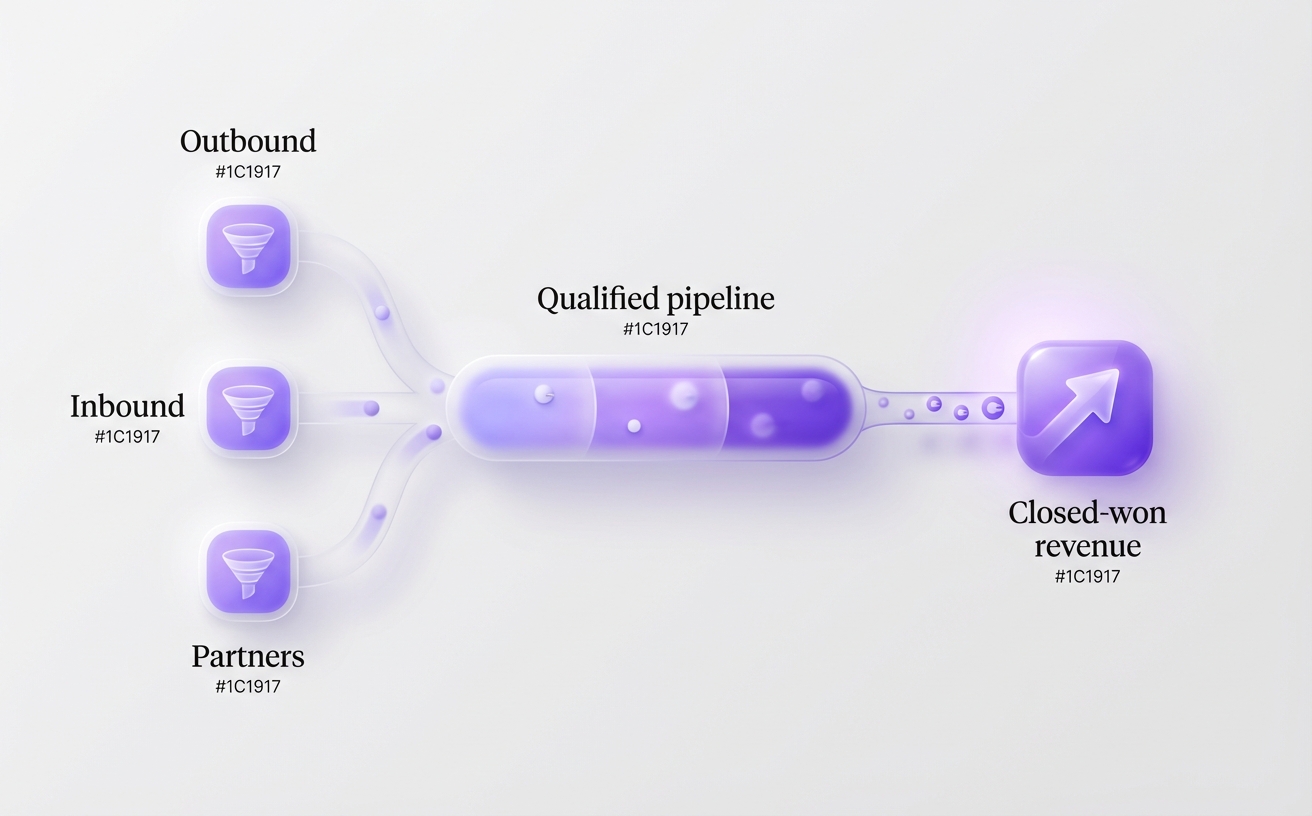
If your pipeline depends on one channel, your revenue will swing like a pendulum. Once you’ve filtered out bad-fit deals, the next win is building a balanced engine that creates consistent new leads from multiple directions. Juro’s 2026 guidance is clear: buyers self-educate first, so your sales funnel needs value-first touches that earn attention before a live conversation.
Run outbound that earns replies: tight targeting, sharp problem framing, fast follow-up
A modern outbound sales strategy works when it targets a specific buying context and speaks to a real pain, not a generic persona. Use your CRM as the hub (OnePageCRM calls this out) and make your messaging consistent across email, cold calls, and social selling so prospects recognize you wherever they see you. Tools like Overloop help you turn targeting + personalization into repeatable sequences, so follow-up happens fast without feeling spammy.
Convert inbound faster with speed-to-lead and clear next steps
Inbound fails when marketing efforts create hand-raisers but marketing and sales don’t agree on what happens in the first 24 hours. Define one “default” next step (calendar link, qualification call, or routed demo) and make marketing teams surface the context sales needs: page viewed, webinar attended, or “requested pricing” intent. If you need a practical playbook, this guide on lead generation tactics maps automation and workflows you can adapt.
Turn partners into a predictable source of qualified introductions
Partner channels get reliable when you treat them like a program, not favors between friends. Build a simple co-selling loop with sales and marketing teams: shared ICP, shared proof points, and lightweight content creation they can forward as thought leadership. Overloop can support partner-driven outreach too, by standardizing the follow-up sequence after an intro so referrals don’t stall.
3. Sell outcomes, not features, with a message buyers can repeat internally
A deal can look perfect until your champion tries to recap it to finance and says, “It has great automations,” and the room goes quiet. Clear value messaging turns your champion into an internal seller who can build trust, defend the spend, and keep momentum when competitors look similar. This is where value based selling, consultative selling, and solution selling beat a generic sales pitch every time because they focus on desired outcomes, not product trivia.
Write a value proposition that ties problem, impact, and proof together
Your value proposition should be a repeatable sentence your buyer can copy-paste into Slack. Juro’s 2026 guidance emphasizes buyer-led journeys, so your message has to earn confidence before deeper sales conversations even happen. Use a simple frame: “When buyers face [pain points], it causes [business impact]; we fix it by [approach], proven by [proof].”
Example: “When outbound follow-up is inconsistent, pipeline stalls and forecasting gets noisy; we standardize multi-step sequences and prioritize engaged accounts, backed by reply and meeting rates from similar teams.” Tools like Overloop help here because your messaging and follow-up can stay consistent across campaigns, not just in one rep’s inbox.
Use discovery to quantify cost of inaction and define success metrics
Good consultative sales discovery creates relevant information your champion can reuse internally. Ask for numbers that make inaction expensive and success measurable:
- Volume: “How many leads go untouched each week?”
- Time: “How long from first touch to first meeting today?”
- Risk: “What breaks if this stays manual for another quarter?”
This is also where challenger selling fits: bring new perspectives like “Your biggest leak isn’t top-of-funnel; it’s handoff latency and inconsistent follow-up.”
Create a one-slide business case your buyer can forward to finance
Your one-slide should reduce buyer risk, not “sell harder,” aligning with the buyer-first idea of enabling defensible decisions internally. Include 3 blocks: the current cost (inaction), the target outcomes (success metrics), and the proof/plan (timeline, stakeholders, and what you’ll measure). If you’re running outbound, Overloop can supply clean campaign activity and engagement signals that make the story credible instead of opinion-based.
|
Try Overloop for Smarter Outreach Break up your sales strategy list with Overloop—an AI-driven B2B lead generation and email automation tool that helps you launch targeted campaigns faster. Explore Overloop → |
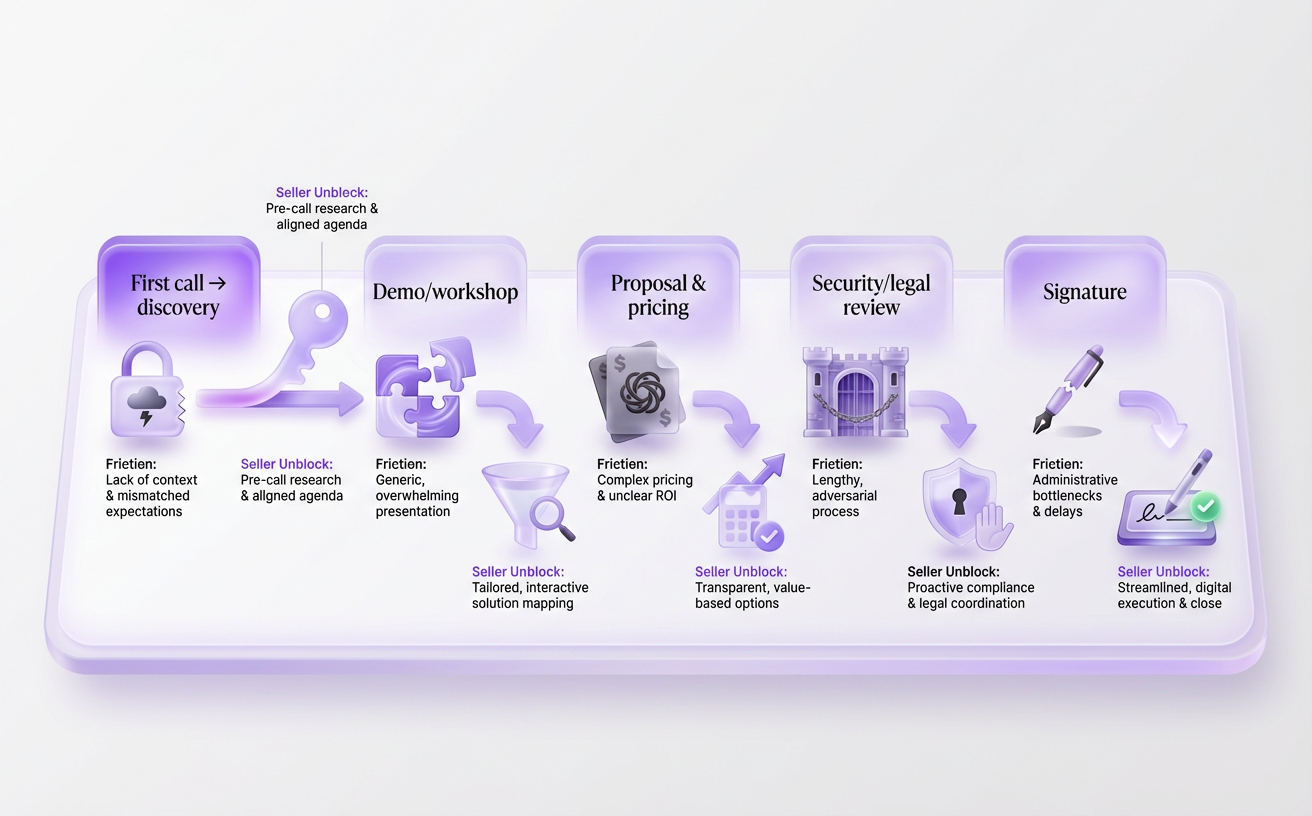
4. Design a buying process that removes friction from first call to signature
Lead the buying process like a project manager, not a passenger, and you’ll shorten the sales cycle while improving the customer experience. You close more deals when your sales process makes decisions easier for busy decision makers, especially when multiple teams need to weigh in. Buyer-led journeys mean prospects have already researched options, so your job in sales calls and meetings is to remove risk, align stakeholders, and create forward motion with clear next steps. Tools like Overloop help here by keeping outreach, replies, and follow-up tasks in one place, so the entire sales process doesn’t stall between touches.
Use a mutual action plan so everyone agrees on steps, owners, and dates
Put a mutual action plan on the screen during the first or second call and co-author it with your buyer. You’ll get fewer “circle back next month” outcomes when the plan names specific owners (you, the champion, legal) and specific dates (security review, pricing review, signature). If you need a structure for this, align it with how you manage your sales pipeline so your CRM stages reflect real buying steps, not internal guesses.
Handle objections with evidence, trade-offs, and next-step clarity
Address objections early because unanswered risk compounds and quietly kills closing deals. Use evidence (customer examples, security docs), name trade-offs (“we’re faster to implement, but we won’t cover that edge case”), and end with a binary next step that advances the sales cycle. When you’re running sequences, Overloop can tag objection themes from replies so sales reps lead with the right proof in the next meetings.
Map stakeholders: champion, economic buyer, legal, security, and end users
Map stakeholders explicitly because one missing approver can reset your buying process. Capture roles in your customer relationship management (crm) system and confirm what “done” looks like for each group.
- Champion: owns internal momentum and needs a forwardable business case.
- Economic buyer: cares about ROI, budget timing, and risk.
- Legal/security/end users: need compliance answers, implementation clarity, and day-to-day fit.
5. Improve every week with deal reviews, enablement, and tight metrics
Are your deals stalling because the buying process is complex, or because your operating rhythm is loose?Once you’ve mapped the champion, economic buyer, and the legal/security/end-user path, you need a simple cadence that turns that map into actions. A repeatable weekly rhythm—reviews, sales enablement, and coaching—keeps team performance stable even when reps are busy. This is where tools like Overloop help, because your sales team can standardize outreach and follow-up without relying on memory.
Run weekly pipeline and deal reviews that diagnose next actions, not blame
Make deal reviews about decision progress, not stage labels, so your sales reps leave with a next step they can execute. Use the same three questions every time: “What changed since last week?”, “What risk increased?”, and “What is the next buyer action and date?”. Juro’s 2026 guidance highlights that buyer-led journeys demand value-first selling and trust before live conversations, so your review should surface where credibility is missing and what proof to send next.
Coach to behaviors: talk ratio, next-step quality, and follow-up discipline
Coach the controllables, because behavior changes faster than outcomes and drives conversion rate over time. Use call snippets, email threads, and CRM data to coach consistently, and reinforce sales training weekly instead of “when there’s time.”
- Talk ratio: if reps dominate the call, you’re not learning real pain or buying context.
- Next-step quality: “check in next week” is weak; “security review Thursday, owner Jane, goal approve DPA” is strong.
- Follow-up discipline: same-day recap with proof, trade-offs, and a single clear ask.
When you support that discipline with sales workflow automation, you increase sales productivity without spamming prospects.
Track the few metrics that predict revenue before the quarter ends
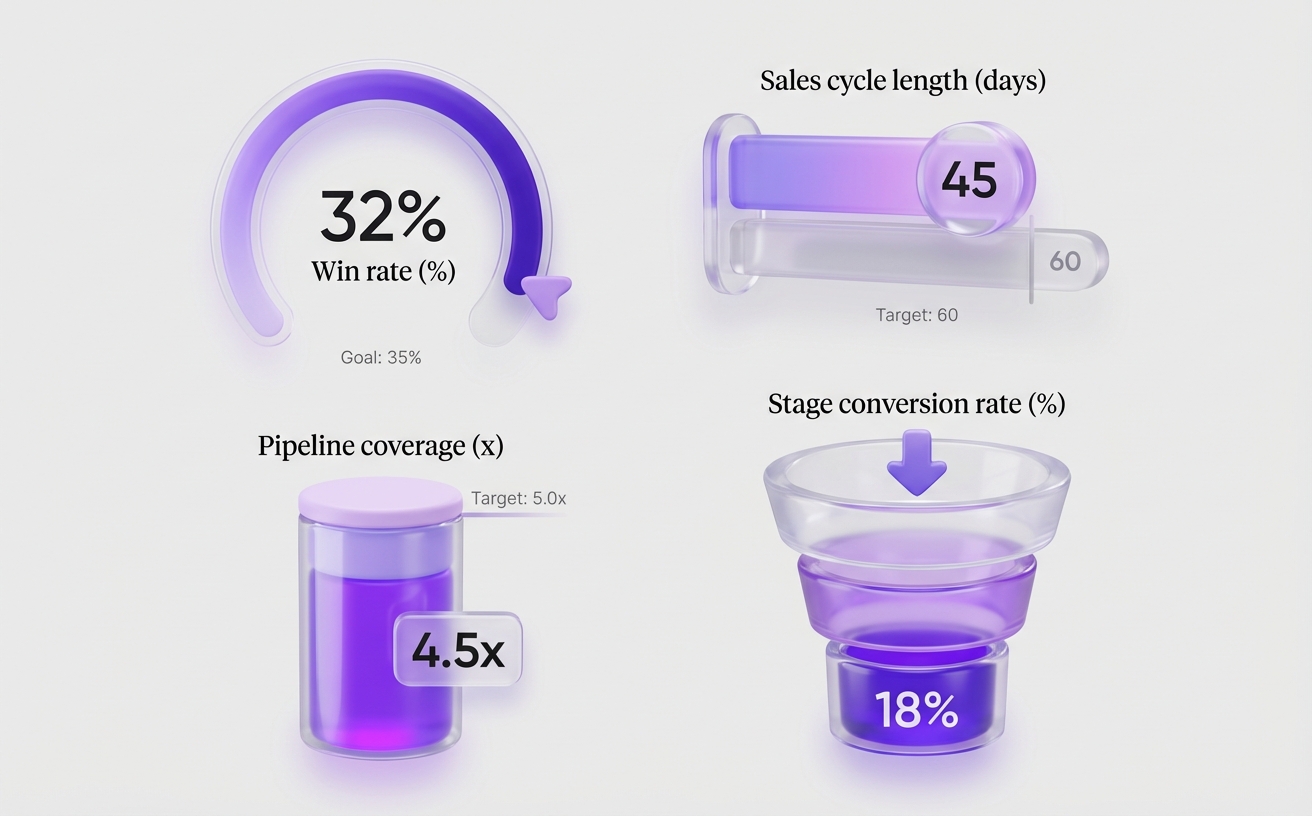
Track leading indicators that move total revenue, not vanity activity. Keep it tight: pipeline created in ICP accounts, meeting-to-opportunity conversion rate, stage-to-stage time, and slip rate by reason. OnePageCRM stresses your CRM should be the hub for all B2B sales activities, and Overloop can keep data clean by syncing engagement signals so sales leaders see what’s real before forecasts drift.
|
Put Overloop Into Your Strategy Now that you’ve reviewed the best sales strategies, use Overloop’s AI-powered B2B lead generation, email automation, and campaign management to turn them into consistent pipeline. Start a Campaign → |
Turn strategy into a closing system
Win more in 2026 by narrowing your focus. A tight ICP and clear qualification rules keep your calendar filled with buyers who can act, so your reps spend less time persuading and more time progressing real deals.
Close more consistently by running a balanced pipeline and a mutual plan. Multiple acquisition channels reduce volatility, while crisp value messaging, early objection handling, and deliberate stakeholder management help you win when alternatives feel interchangeable.
Make it repeatable with an operating rhythm. Weekly reviews, coaching, and leading indicators replace heroics with predictable execution—especially when tools like Overloop support AI-driven B2B lead generation and email automation.
Do this now: write your ICP in 5 bullets, pick 3 disqualifiers, and build a 10-account target list to launch a focused outbound sequence in Overloop today.