

Increase saas sales with a repeatable growth system
You don’t increase SaaS sales by “doing more”—you do it by building a system that makes the next month easier than the last. If your pipeline spikes after a launch, then disappears, you don’t have a growth problem—you have a repeatability problem.
In 2026, teams are fighting data decay, oversaturated outreach channels, and too many low-quality leads, which makes “volume” a costly bet. The winners are targeting-first: tighter ideal customer profiles, clearer value proposition, and outreach timed to real buyer intent. Tools like Overloop help here by turning AI-powered B2B lead generation and email automation into consistent, trackable campaigns instead of one-off bursts.
You’ll learn how to fix your revenue levers in 30 days, match your sales motion to ACV, sharpen pricing and packaging, build a 3-channel acquisition engine, and scale with retention, expansion, and revenue ops discipline.
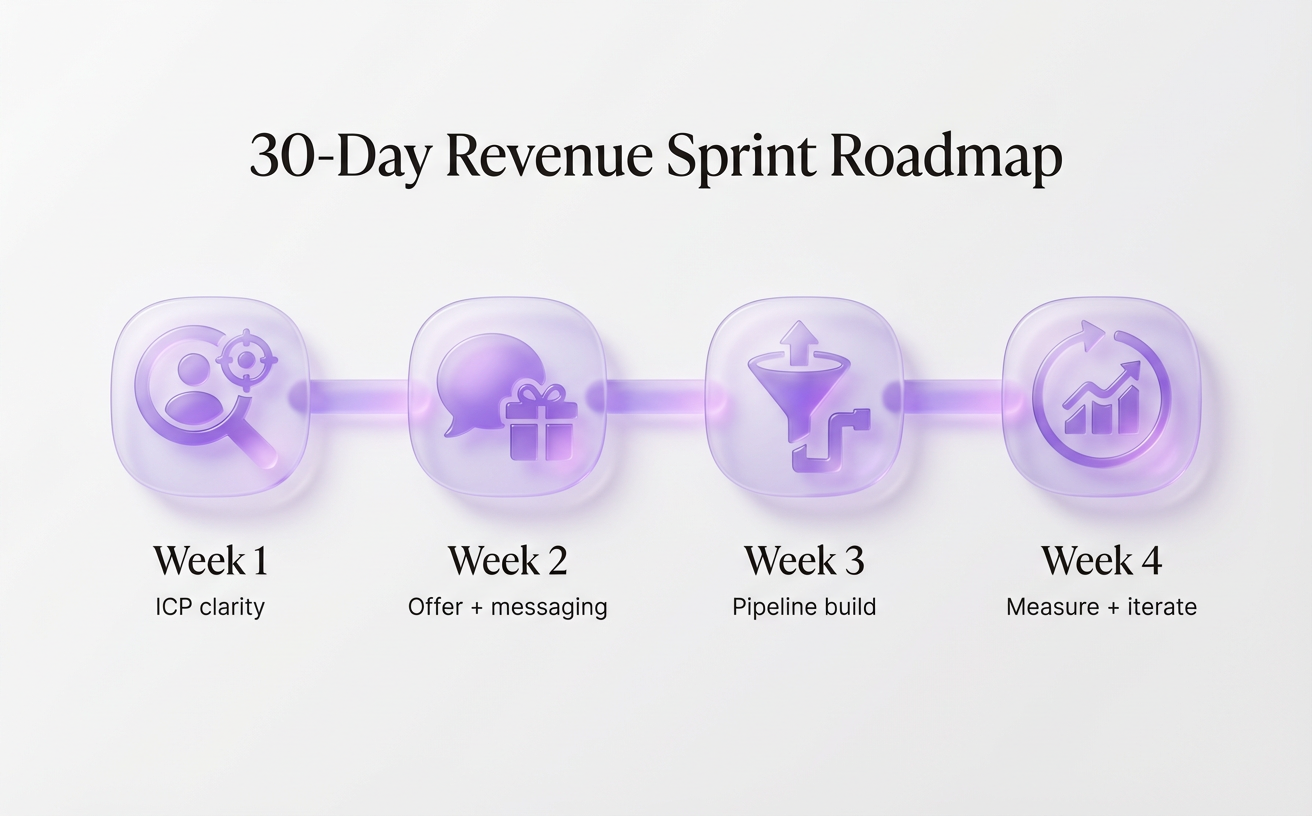
Fix your revenue levers in 30 days: pipeline, ICP, offer
Which lever would change everything for you right now: more qualified leads, higher conversion, or bigger expansion?
You increase saas sales fastest when you tighten three things at once: who you sell to (your ideal customer profiles), what you promise (your value proposition), and how every lead moves through your sales funnel. In 2026, teams struggle most with data decay, oversaturated outreach channels, and low-quality leads, so “more volume” usually just means more noise. Tools like Overloop help here by combining AI-driven B2B lead generation with email automation, so you can focus on the right prospects instead of blasting a generic list.
Which metric is broken: leads, conversion, or expansion?
Your saas sales strategy should start with the one bottleneck that makes the rest irrelevant. Sales velocity ties it together using Monday.com’s formula: (Qualified opportunities × Deal size × Win rate) ÷ Sales cycle, so you can see whether the issue is pipeline, efficiency, or time. If you want a fast diagnostic, use three buckets and pick one to fix first.
- Leads problem: not enough meetings with the right accounts in your target market.
- Conversion problem: discovery/demo isn’t mapping to a clear buying job, so win rate stays flat.
- Expansion problem: customers activate but don’t adopt enough to upgrade or renew confidently.
How to define an ICP that actually buys (not just signs up)
Your ICP should be based on buying behavior, not vanity interest. Use intent and technographics to find companies already researching your category (G2/Capterra) or running complementary tools (BuiltWith/Datanyze), then validate in your CRM which segments close fastest. Overloop can support this by keeping outreach focused on segments that reply, book, and progress—real-world signals that your sales process is pointed at buyers.
How to sharpen your offer so prospects say “this fits me”
Your offer lands when it states a specific outcome for a specific buyer, with a clear boundary of who it’s for. If your message could apply to any target market, it won’t feel personal enough to break through crowded channels. Anchor the promise to one painful, measurable job (for example, “reduce onboarding time-to-value for PLG teams”) and remove extras that dilute the “yes, that’s me” reaction.
How to make your pipeline measurable with 5 deal stages
You need a saas sales process with stages that reflect buyer commitment, not seller activity, so forecasting becomes defensible. Define five stages, then manage your pipeline against clear entry/exit criteria and time-in-stage targets, which makes leaks obvious. Pair that with a tight set of track sales metrics so you can spot whether you’re failing at sourcing, qualifying leads, or closing.
Increase conversion with a sales motion that matches your ACV
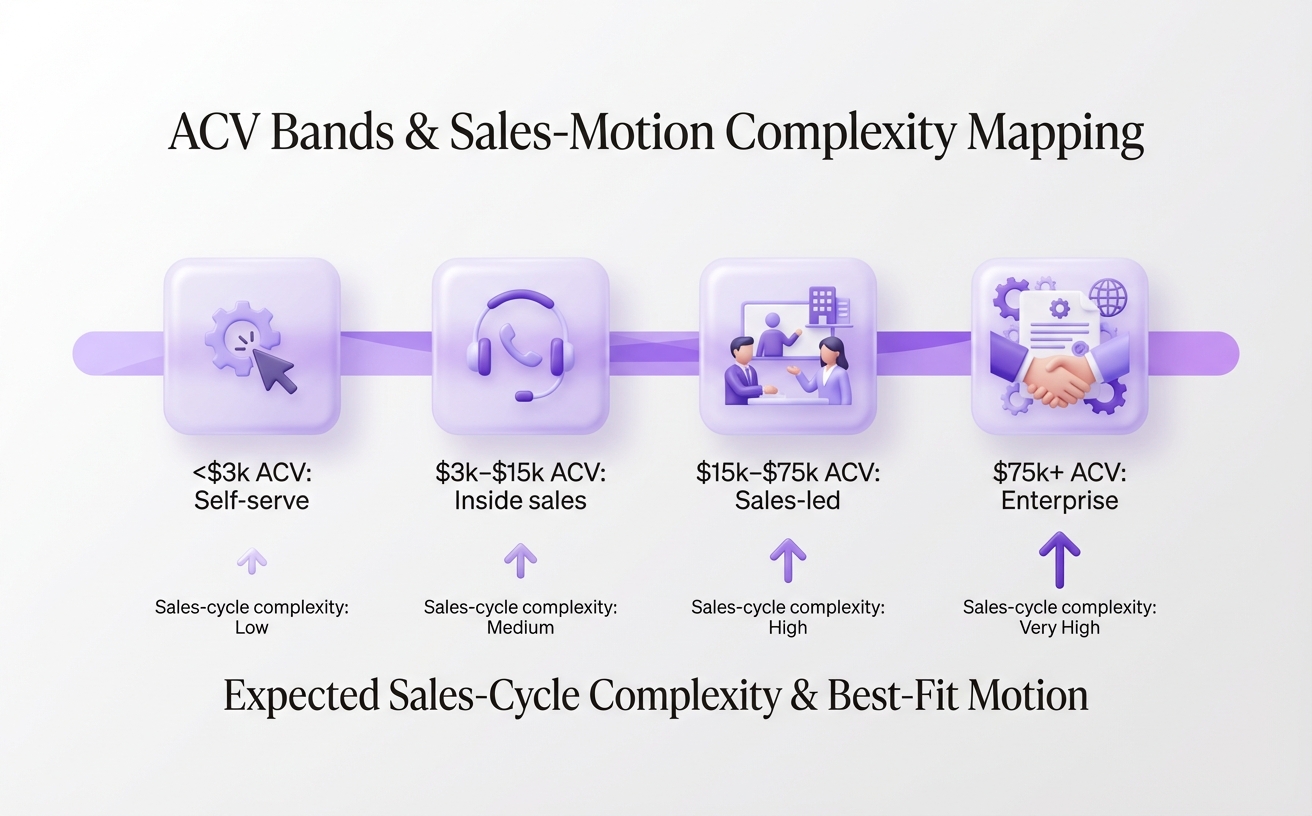
Matching your sales motion to ACV is the fastest way to increase saas sales because it controls what your team does next—and how long the sales cycle stays. Your annual contract value and deal complexity should dictate whether you run self service sales, a transactional sales model, or an enterprise sales model with heavier discovery and security steps.
Enforcement beats inspiration. If your motion feels “different every call,” use this framework to fix your sales process and then lock it into your CRM with required fields, stage exit criteria, and consistent assets sales managers can coach to.
Product-led, sales-led, or hybrid: which motion fits your SaaS?
Choose the motion that matches how buyers want to buy at your ACV. Lower ACV products usually win with self-serve onboarding and lightweight help, while enterprise saas sales needs reps because risk, procurement, and integrations create longer sales cycles.
- Product-led: short average sales cycle, conversion driven by activation and upgrade prompts.
- Sales-led: higher ACV, rep-driven discovery, demos, and security/procurement navigation.
- Hybrid: product creates PQLs, sales team engages when intent or usage hits thresholds (great for widening win rate without bloating headcount).
How to run discovery that creates urgency (without being pushy)
Anchor urgency to a business consequence, not your quarter. Ask what breaks if nothing changes in 30–90 days, then quantify impact in time, revenue, risk, or churn so sales reps earn the right to recommend a next step.
How to demo around the buyer’s job, not your feature list
Demo the workflow they’re trying to complete. Map features to “before/after” outcomes (who does what, how long, what gets approved), and you’ll reduce confusion that quietly increases sales cycle length.
How to close faster with mutual action plans and clean next steps
Shorten the sales cycle by turning “follow-up” into a written plan both sides agree on. A mutual action plan should name the decision-maker, the approval steps, the security needs, and dated milestones; in Overloop, you can automate clean recap emails and task-driven follow-ups so deals don’t stall between meetings.
Make pricing and packaging do more of the selling
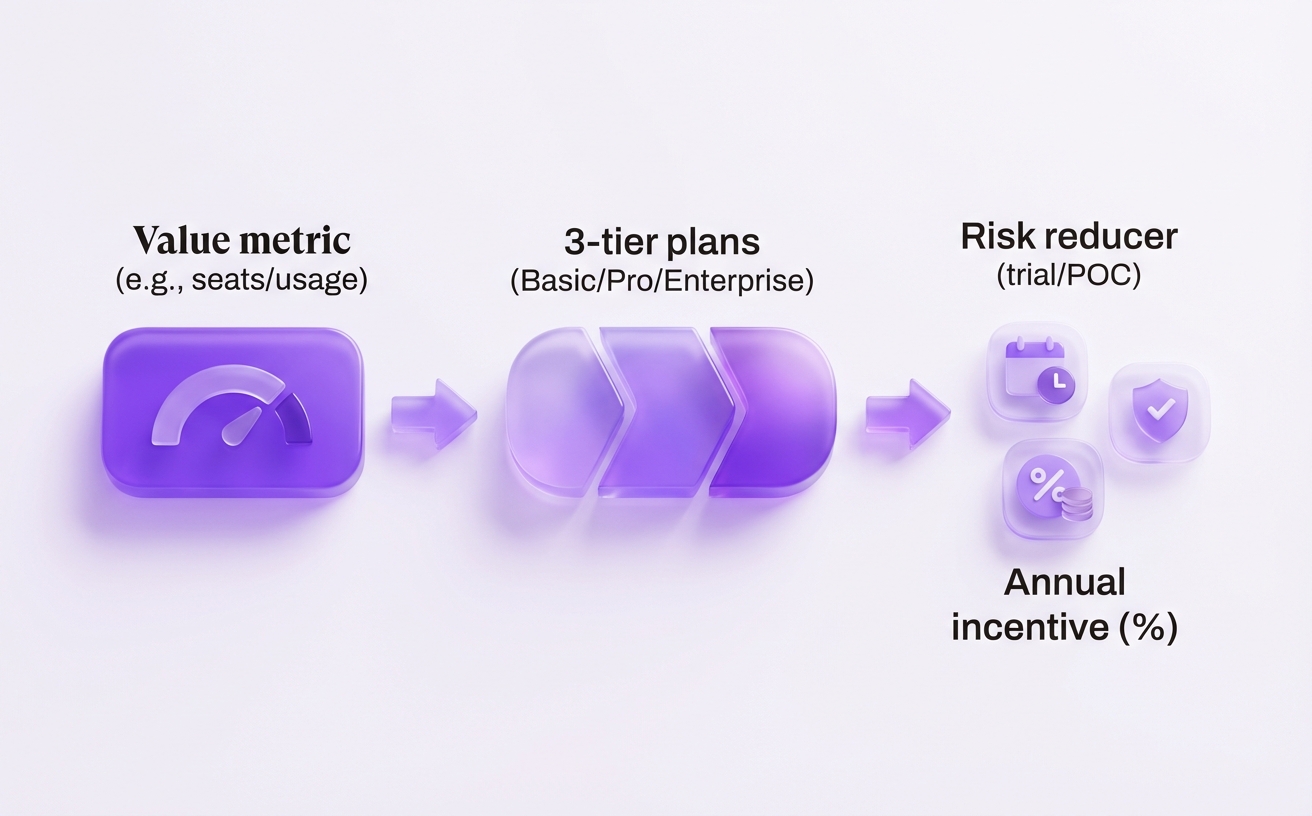
A founder I worked with kept hearing “cool product” on demos, then losing deals at the pricing page. The fix wasn’t more follow-ups; it was making the right paid plan feel obvious by clarifying value, reducing risk, and removing decision friction. When packaging does that, you increase SaaS sales even before the next call.
How to redesign tiers so customers self-select (and upgrade)
Strong tiers map to outcomes, not just key features, so buyers recognize themselves and commit faster. Start by anchoring each tier to a clear “who it’s for” and a value metric (seats, usage, workflows) that grows with the customer’s lifetime value. Keep your middle plan the “default” by making the entry plan intentionally narrow and the top plan about control, security, or scale.
- Starter: one primary use case, tight limits, minimal product offerings
- Growth: the core workflow end-to-end, collaboration, reporting
- Scale: governance, advanced permissions, priority support, procurement-friendly terms
When to use free trial vs freemium vs paid pilot
Use free trials when time-to-value is fast and you can guide users to one “aha” moment during the trial period. Use freemium when your product has a natural viral loop or lightweight standalone value that drives product-qualified leads. Use a paid pilot when there’s integration work, security review, or the buyer needs proof with real data.
How to cut price objections with guardrails and proof
Price objections usually mean uncertainty, not hostility, so add guardrails that make the decision feel safer. Offer annual pricing with a clear savings callout, publish what’s included vs what’s extra, and show proof tied to outcomes (case studies, ROI snapshots, before/after workflows). In outbound, tools like Overloop help you segment by industry and pain so your emails lead with the value story that matches the plan.
How to lift ACV with add-ons, annual plans, and bundles
Lift ACV by selling “more of the same value” instead of forcing higher prices on everyone. Add add ons that attach to real expansion triggers (more seats, more automations, more data, compliance), and bundle them into annual plans to improve annual recurring revenue ARR and smooth monthly recurring revenue MRR volatility. If you see consistent upgrade intent in conversations, tag it in your CRM and use Overloop to automate follow-ups that offer the right bundle at the right moment.
Boost SaaS Sales with Overloop Today
See how Overloop’s AI-driven B2B lead generation and email automation can help you find qualified prospects and launch personalized outreach faster.
Build a predictable acquisition engine across 3 channels
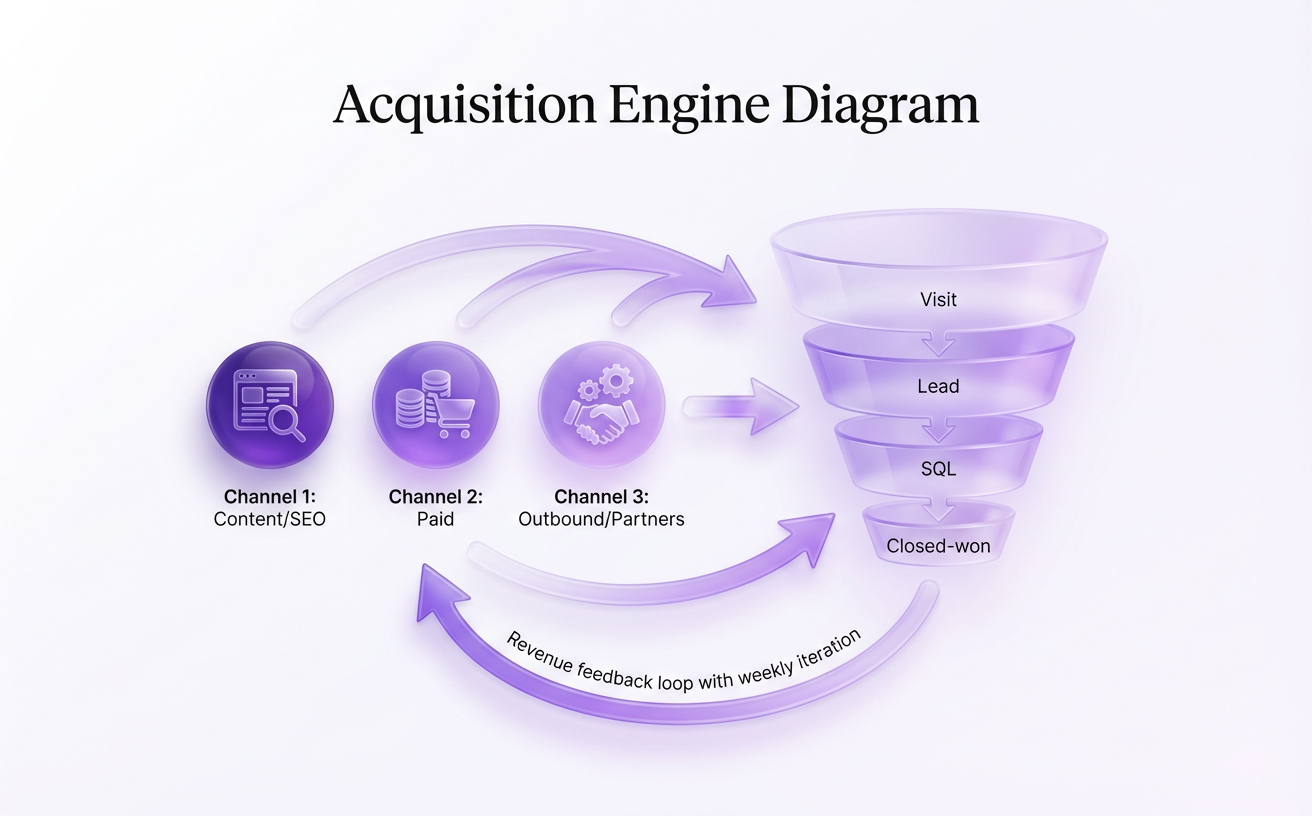
Pick three channels, instrument them, and ship weekly iterations tied to revenue—not vibes. After you’ve automated upgrade-intent follow-ups, treat acquisition the same way: defined inputs, tracked conversion rates, and tight feedback loops to keep customer acquisition cost CAC under control.
Outbound that works in 2026: targeted, triggered, and personal
Run outbound sales like a targeting problem, not a volume problem, because 2026 teams are battling data decay and oversaturated outreach. Build lists from intent and fit signals (technographics, competitor customers near renewal, funding rounds), then personalize around the buyer’s job-to-be-done and a specific trigger.
Keep it operational with AI lead generation and email marketing sequences that enforce list hygiene, verified contacts, and consistent follow-up; tools like Overloop help your marketing teams and SDRs collaborate without inflating lead generation numbers that never close.
Inbound that compounds: SEO pages built for buying intent
Publish SEO pages that match “I’m ready to buy” queries, not broad awareness keywords, so your content marketing attracts potential customers already comparing options. Pair those pages with lightweight Google Ads on the same intent terms to test messaging fast and control marketing expenses while the SEO compounds.
Partner and ecosystem plays: integrations, agencies, marketplaces
Use partners to borrow trust and distribution when your customer acquisition cost is creeping up. Prioritize one integration that unlocks a shared workflow, one agency/channel partner that can resell or implement, and one marketplace listing where buyers already research tools.
How to run weekly growth experiments without chaos
Operate on a weekly cadence so sales and marketing can learn faster than your pipeline decays. Use one shared scorecard and keep experiments small:
- Hypothesis tied to a funnel step (lead-to-meeting, meeting-to-opportunity, win rate)
- Single variable (ICP slice, offer, channel, or message)
- Guardrails (minimum sample size, timebox, and “kill” criteria)
Skip “experiments” that only move clicks; if you can’t trace it to new customers or sales-qualified pipeline in your CRM, it’s a distraction—even if it looks good in marketing tactics reviews.
Scale with retention, expansion, and revenue ops discipline
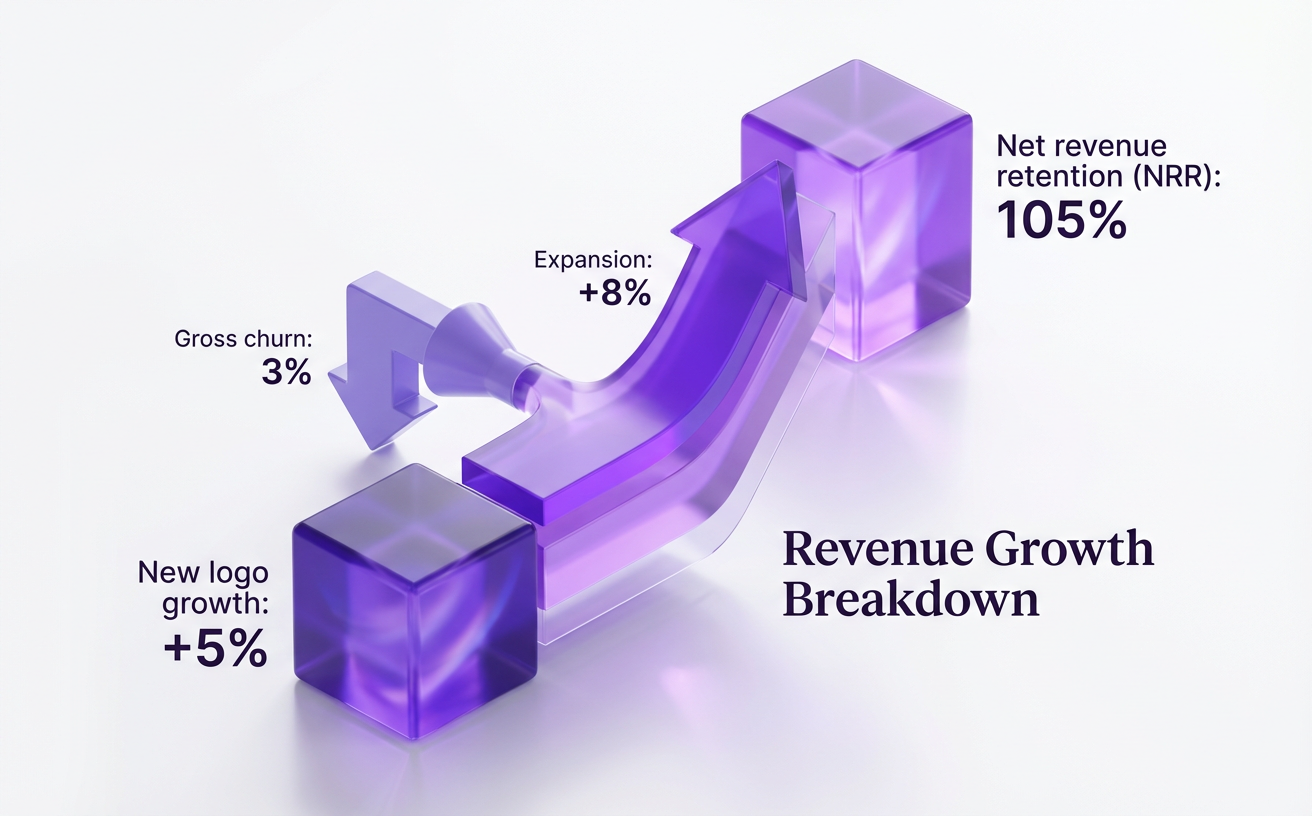
Are you trying to increase SaaS sales by adding more top-of-funnel, when your real leak is customers leaving or staying flat? The easiest revenue growth comes from existing customers: keep them longer, expand them deliberately, and make sure your systems tell the truth. A bowtie funnel mindset helps because activation, adoption, and expansion create as much monthly recurring revenue as new logos when your churn rate is under control.
Customer success becomes a sales lever when it’s run like a measurable motion, not a support queue. Tools like Overloop can help your team operationalize expansion and renewal outreach with consistent, personalized sequences tied to lifecycle triggers, not random “check-ins.”
How to reduce churn by fixing time-to-value and adoption
Reduce churn by shrinking the gap between signup and the first value moment your buyer cares about. Directive calls out activation rate as “% of signups who hit first value milestone in 14 days,” which gives your customer success teams a concrete target to design onboarding around. Track adoption by role (admin vs end user) so “logged in once” doesn’t masquerade as customer satisfaction.
Expansion playbooks: seats, usage, modules, and champions
Expansion works when you attach it to a trigger and a promised outcome, not a generic upsell. Build playbooks for seats (new team onboarded), usage (approaching limits), modules (new workflow unlocked), and champions (promoted or moving teams), then automate the outreach with Overloop and your CRM. This is where cross selling becomes natural because the customer already trusts the core value.
Revenue ops basics: CRM hygiene, attribution, and forecasting
Revenue ops discipline starts with clean objects: one account, one source of truth, and definitions everyone follows. If you’re scaling outreach with sales automation solutions, enforce field rules (ICP fit, stage, next step date) so automation doesn’t amplify bad data. For forecasting, use sales velocity—(Opportunities × Deal Value × Win Rate) ÷ Sales Cycle—to see whether you should fix win rate, cycle length, or deal size.
The dashboard that keeps sales, marketing, and CS aligned
Your alignment dashboard should tie acquisition to retention strategies so teams stop optimizing for activity. Keep it to one view that shows: activation rate (14-day), churn rate, net revenue retention, expansion ARR, pipeline created, and forecast vs target, with one owner per metric. When everyone watches the same scoreboard, a seamless customer experience stops being a slogan and turns into operating rhythm.
Turn This Guide Into Revenue with Overloop
Put these SaaS sales tactics into action using Overloop to build targeted lead lists, automate multi-step email sequences, and track campaign performance end-to-end.
Build a system you can run every week
Your fastest SaaS sales wins come from focus: tighten your ICP, sharpen your promise, and make every pipeline stage explicit so leads don’t stall or get “handled” differently by each rep. When you sell to the right buyer with a clear outcome, your conversion rates and forecasting improve together.
Consistency creates compounding growth: match your sales motion to deal size, simplify pricing to make the right plan obvious, and run a small set of measured channels with weekly iteration. Then protect the upside by retaining and expanding customers through onboarding, success metrics, and clean handoffs.
Next step: today, map your funnel from first touch to expansion, write one sentence for the goal and exit criteria of each stage, then implement it in a tool like Overloop so lead gen, email automation, and follow-ups run the same way every time.