
If you run a B2B sales team, picking between Apollo and Lemlist can quickly impact your pipeline and revenue. Both platforms claim to boost prospecting and outreach, but their strengths, pricing, and core features serve different needs.
Apollo is known for its built-in B2B database, advanced lead enrichment, and automated email sequences. It offers robust search filters for prospect discovery, making it suitable for teams wanting an all-in-one sales engagement platform.
Lemlist stands out with its personalized cold email campaigns, especially visual content, unique sending algorithms, and easy multichannel outreach. Its focus on personalized emails often appeals to startups, agencies, and teams aiming for creative, human-centric outreach.
| Feature | Apollo | Lemlist |
|---|---|---|
| Lead Database | Integrated, 275M+ contacts | No, import your own |
| Email Automation | Advanced, multistep | Strong, visuals & personalization |
| Integrations | CRM, Zapier, APIs | CRM, Zapier, LinkedIn |
| Pricing (Entry) | Free, paid tiers scale with uses | Starts paid, trial available |
| Best For | Scaling sales teams, data-driven | Agencies, creative outreach |
If you need true AI-powered, automated lead sourcing and multichannel workflows without manual setup, Overloop offers an integrated alternative. It blends verified contact data, AI-written messages, and seamless campaign orchestration all in one workspace. For a closer look at key sales automation features, visit the Overloop website.
Choosing the right prospecting tool can have a direct impact on your B2B sales results. Two platforms often considered by sales teams are Apollo and Lemlist, each with its own strengths for lead sourcing and outreach automation. While Apollo focuses heavily on an all-in-one database and multi-channel workflows, Lemlist stands out for advanced email personalization and deliverability features.
Here’s how they differ at a glance:
| Feature | Apollo | Lemlist |
|---|---|---|
| Lead Database | Extensive built-in B2B contact database | No native database; relies on imported lists |
| Email Personalization | Standard personalization options | Dynamic personalization, image & video customization |
| Campaign Automation | Email, phone, LinkedIn, task sequences | Email and LinkedIn campaigns |
| Integrations | Popular CRMs, direct native integrations | Native integrations plus API, Zapier |
| Best For | Teams that want end-to-end prospecting and data sourcing | Teams needing high personalization for niche outreach |
Both tools help automate outreach and guide deals through the funnel, but the best fit depends on how you balance efficiency, accuracy, and customization. Consider whether your team values access to verified prospect data, as seen in platforms like Overloop, or if hands-on, creative messaging is your top priority. The full breakdown in this article will support your choice with detailed, side-by-side insights.
Choosing the Right Sales Outreach Platform: What Matters?
Selecting a sales outreach platform depends on a mix of technical and operational needs. Teams often focus on deliverability, making sure messages reach inboxes reliably, not spam folders. Automation is another core factor, since automating repetitive tasks like follow-ups saves time and keeps outbound efforts consistent. Usability matters too, as sales reps benefit from a straightforward workflow that reduces the learning curve and supports daily productivity.
Integrations with CRM software and communication tools let sales teams centralize activities and avoid data silos. For example, platforms that connect with Salesforce or HubSpot enable a smoother process from prospect discovery to closing a deal. Finally, consider the support for multi-channel campaigns—combining email, LinkedIn, or calls—for higher engagement. Some platforms like Overloop focus on these points, using AI to generate messages and identify prospects, which can further enhance efficiency for B2B teams.
Understanding Apollo and Lemlist: Core Offerings Explained
Apollo and Lemlist stand out for different reasons in outbound outreach. Apollo is an all-in-one platform with a large built-in B2B database, advanced lead enrichment, and sequences that combine email, LinkedIn, and calls. This suits data-driven sales teams that want to manage sourcing, engagement, and tracking from one place. Its broad search filters save time during prospecting, which helps teams scale activity efficiently.
Lemlist focuses on unique email personalization and visual outreach, such as custom images and videos embedded in campaigns. Its features appeal to marketers and sales professionals who need highly tailored correspondence to improve reply rates. Lemlist's platform emphasizes creative outreach with dynamic variables and easy LinkedIn steps.
Both tools aim to automate manual workflows and boost results, but their strength depends on your outbound priorities. Solutions like Overloop combine verified contact data, AI message generation, and multi-channel automation in a single workspace for teams that want a simpler, unified process.
Apollo: Features, Strengths, and Limitations
Apollo gives B2B sales teams a powerful prospecting engine rooted in its vast database of over 275 million business contacts. This extensive database pairs with robust filters, enabling users to target prospects based on firmographics, technographics, intent signals, and recent job changes. Automation tools simplify outreach by setting multistep email, phone, and LinkedIn workflows. Teams can coordinate outreach cadences easily, track progress, and dynamically enroll new leads.
Main Strengths
- Massive built-in contact data reduces manual list building.
- Sophisticated search filters help discover relevant prospects.
- Multichannel automation covers more outbound touchpoints.
- Native CRM integrations support streamlined handoffs to sales or marketing.
Limitations
- Personalization is limited to basic variables. There are fewer creative options compared to platforms that emphasize visual or video content in outreach.
- User interface may present a steeper learning curve at first, especially for small teams.
- Deliverability enhancements depend on correct email setup and user best practices.
For teams seeking more intuitive onboarding, instant AI-personalized messaging, or deeper deliverability automation, modern alternatives like Overloop address these workflow needs while maintaining core automation capabilities. Discover more through our Blog.
Ease of Use: Onboarding and Daily Workflow
Apollo vs Lemlist: Usability for Daily Sales Work
Most sales teams want tools that minimize training time and streamline their workflow. Apollo provides a guided onboarding path with in-app tutorials and resources, making it easier for new users to get started. The interface keeps prospect discovery, sequence planning, and activity tracking in one dashboard, but new users may need extra time to fully master all features, especially for complex workflows.
Lemlist’s setup process is focused on fast campaign launch. The dashboard leans toward email-first workflows, letting sales reps quickly upload lists and build visually rich, personalized messages. Most users report a shorter learning curve, especially for setting up basic cold outreach. Advanced features, such as multi-channel automation, can require more exploration but are laid out with clear steps.
For teams that value a simple, unified experience without frequent switching between platforms, tools like Overloop combine onboarding help with automated campaign flow, reducing administrative friction and enabling reps to focus fully on conversations and conversions.
Lemlist: Features, Strengths, and Limitations
Lemlist focuses on boosting reply rates with creative email personalization and outreach variety. The standout feature is its dynamic visual customization: users can generate personalized images or videos directly in cold email sequences to make outreach more engaging. Campaigns can blend LinkedIn steps with email automation, which fits especially well for agencies or small sales teams prioritizing human, interactive messaging rather than bulk automation.
Strengths
- Visual personalization such as custom images and videos in emails
- Intuitive builder for multi-channel campaigns, including LinkedIn tasks
- Deliverability tools, for example, warming routines and inbox rotation
Limitations
- No built-in lead database. Users need to import their own prospect lists
- Automation mostly centers around email and LinkedIn, with fewer advanced branching or AI-based messaging options
- Scaling a high volume of outreach may require extra manual setup compared to platforms that automate lead sourcing and copywriting
Key Features Comparison: Outbound, Email Automation, and Integrations
Both Apollo and Lemlist address major outreach tasks, but each takes a different approach to key features. Apollo offers a built-in B2B contact database with advanced filters for lead sourcing, enabling users to find and segment prospects quickly. Lemlist, in contrast, requires you to import your own contact lists or connect via integrations but lets you add deep personalization to your outreach with custom images, videos, and variable fields.
Email Automation and Personalization
Apollo supports complex, multichannel campaign automation across email, LinkedIn, and phone. Personalization uses standard dynamic fields: first names, company names, or job titles. Lemlist centers on email campaigns with a powerful visual editor and unique send settings that mimic human behavior. Users can embed personalized visual content to boost engagement.
Integration Capabilities
Integrations are fundamental for smooth workflows. Apollo connects natively to Salesforce, HubSpot, and several CRMs, plus API and Zapier options. Lemlist supports native and Zapier integrations, with focus on CRMs and LinkedIn. Integrated workspaces like Overloop bring verified data, AI-driven content, and direct CRM connections in a single platform, simplifying campaign management.
Comparing Apollo and Lemlist: Head-to-Head Analysis
When comparing Apollo and Lemlist across core features, each platform suits different approaches to outreach and workflow efficiency. Apollo leads in lead sourcing with its built-in database and advanced filtering for high-volume prospecting, while Lemlist requires users to import their own contacts. If visual or highly personalized email content drives your campaigns, Lemlist stands out with image and video personalization embedded into emails, helping messages attract more attention.
Comparative Feature Overview
| Aspect | Apollo | Lemlist |
|---|---|---|
| Lead Sourcing | Extensive built-in database, dynamic filtering | No built-in database, requires imports |
| Email Personalization | Basic variables and templates | Dynamic texts, images, video inserts |
| Outreach Automation | Email, phone, LinkedIn, multistep workflows | Email, LinkedIn, easy visual workflow |
| Reporting | Comprehensive analytics and tracking | Engagement-focused metrics |
| Integrations | Direct to CRMs, Zapier, API connections | CRM, Zapier, API, social tools |
| Support | Live chat, help center | Email support, strong community group |
For B2B teams that want a unified setup combining real-time verified data, campaign orchestration, and AI-driven personalization, options like Overloop extend coverage beyond basic feature sets, streamlining prospecting and follow-ups in one place. Explore actual results with Success Stories.
Deliverability and Outreach Performance
Email deliverability and response rates directly affect the success of outbound campaigns. Apollo focuses on optimizing deliverability through verified contact data, customizable sending cadences, and features that warn about risky sending practices. Its built-in domain, SPF, and DKIM settings help teams avoid spam folders, but true success depends on user diligence with sender reputation and list hygiene.
Lemlist takes a more active stance on boosting inbox placement. Its platform offers automated email warm-up, inbox rotation, and custom sending windows to replicate human-like delivery behavior. The strong personalization options, especially the use of images and videos, further support better engagement and reply rates by reducing template fatigue among recipients.
For teams needing advanced automated protection, solutions such as Overloop include built-in email validation, dynamic message generation, and AI-managed cadence adjustments. This helps protect sender reputation and lifts outreach performance even further, minimizing manual overhead for B2B sales teams.
Pricing and Value for Money
Pricing can make or break the decision between Apollo and Lemlist, especially for teams with fluctuating outreach volumes or shifting prospecting needs.
Apollo vs Lemlist: Plan Structure and Value
Apollo offers a free tier with capped usage for basic prospecting, then paid plans that scale according to seats, database access, and advanced automation. This structure makes Apollo cost-effective for startups and small teams wanting to experiment before committing fully. High-volume sales orgs will find database access and advanced features bundled into the higher tiers, adding value for data-driven scaling.
Lemlist uses a flat-rate pricing model starting at a set monthly fee per seat after a trial. Each plan unlocks core campaign and personalization features. Lemlist fits smaller teams focused on creative outreach without minimum volume demands from a database. The entry price means you pay only for your active users and outbound volume, making it predictable for budget planning but less scalable for high-frequency prospecting.
For teams that value automation at every step without hidden costs, unified platforms like Overloop fold verified contact data, multichannel campaigns, and AI-driven messaging into a single subscription, keeping spend simple and aligning value with scale. Check Overloop's Pricing for detailed information.
Pricing Breakdown: Which Platform Delivers More Value?
Each platform tailors its pricing to appeal to different B2B sales teams and company sizes. Apollo offers a free plan with key limitations, while its paid tiers include higher contact limits, advanced reporting, and integrations. Pricing rises as you access more contacts per month or unlock advanced automations. This structure supports fast-growing or data-driven teams scaling prospecting volumes.
Lemlist and Apollo: Value by Plan
| Plan | Apollo | Lemlist |
|---|---|---|
| Entry | Free (limited features) | Trial, then paid (full access) |
| Mid | Tiered: grows with usage & features | Per user/month, full feature set |
| Team | Volume discounts, API access | Team pricing, access controls |
The value of each tool depends on growth goals. Apollo stands out for teams scaling database-driven outbound, while Lemlist delivers value for those focusing on creative email campaigns with predictable per-user pricing. If your team prefers a single monthly fee covering both data and AI-powered outreach, options like Overloop combine verified contacts and campaign automation for stable costs as needs change.
Customer Support and Community
Support resources and community engagement make a difference when sales teams adopt new prospecting platforms. Apollo users have access to live chat, a detailed help center, and frequent webinars that cover new features or best practices. Issues are usually resolved quickly, though some users report longer response times during peak periods.
Lemlist fosters a strong online community with a large private Facebook group, active discussion forums, and regular Q&A sessions. The platform’s support channels include email and in-app assistance, plus a library of video guides. Many users value this community-driven approach, where peer advice often supplements official support.
For outreach teams seeking even faster guidance, Overloop combines responsive live chat with regularly updated documentation and user feedback channels, ensuring that questions and onboarding hurdles receive swift attention as your team scales.
Real User Experiences and Results
User stories often reveal how sales automation tools actually drive results. Apollo users frequently highlight its data depth for finding B2B contacts, noting increased outbound volume as a result. Many teams report efficiency gains from running multi-step email and phone workflows, though some mention a learning curve before unlocking its more complex automations. Common feedback also points to standard personalization working well at scale, but creative outreach options are less robust compared to rivals.
Lemlist receives strong feedback for its visual personalization, especially from teams aiming to boost reply rates. Users share that embedding custom images or videos in emails delivers higher engagement and more positive initial responses. The streamlined interface allows fast campaign setup, although some mention manual list management as an extra step. Startups and agencies often choose Lemlist when prioritizing creative, stand-out messaging over database-centric prospecting.
For teams that want AI-driven outreach with real-time data and automated campaign flow, some turn to Overloop. Users value managing lead sourcing, personalized sequencing, and deliverability protections in a single platform, helping avoid manual drudgery and keeping outbound performance consistent. See specific examples in How Lemons Use Overloop AI to Get Reply Rates of Over 25%.
Introducing Overloop: An Alternative for Smarter Sales Automation
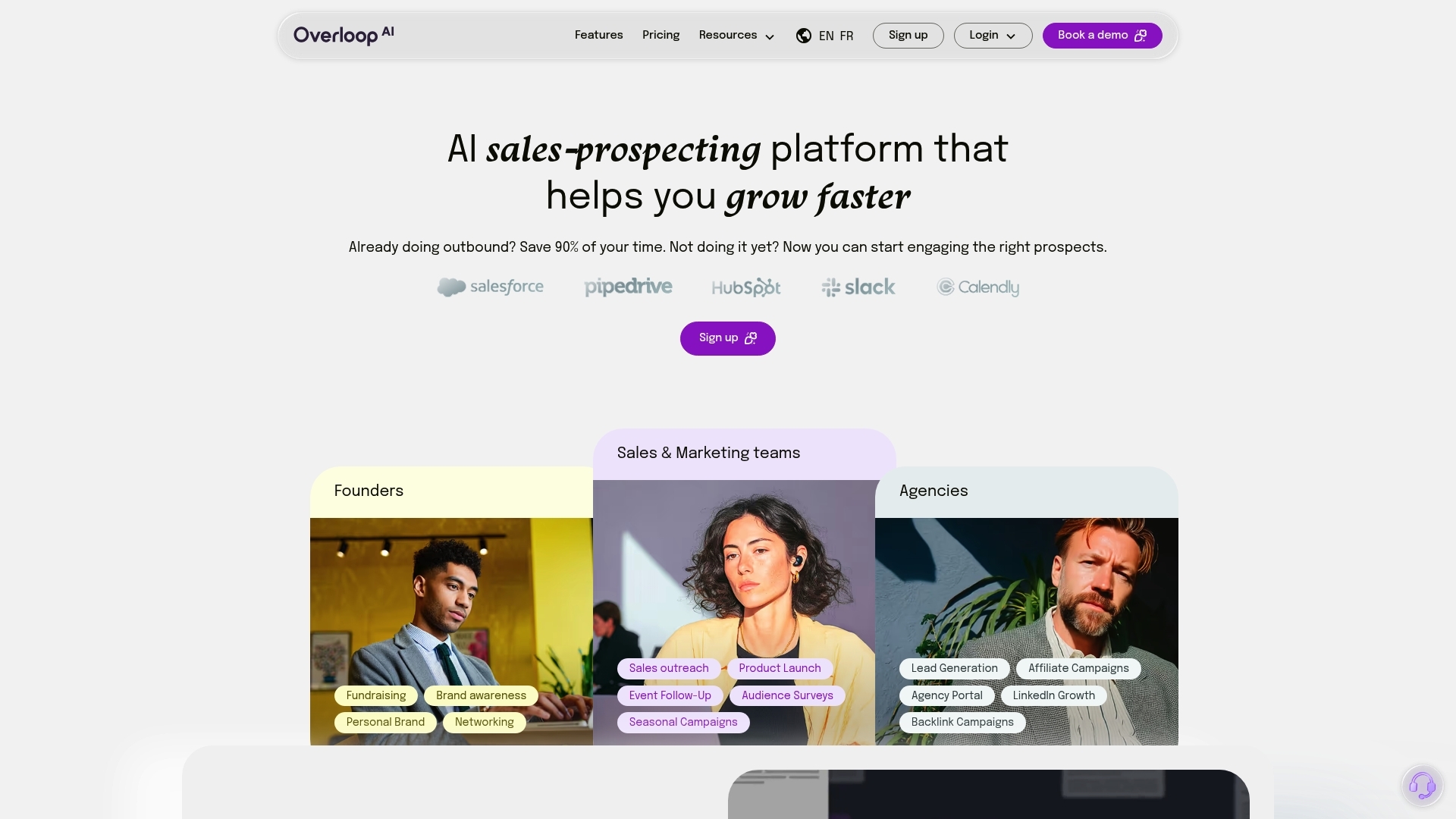
Most B2B sales teams want fewer manual steps and a consistent way to reach the right prospects at the right moment. This is where Overloop takes a different route from Apollo and Lemlist. Instead of asking the user to build prospect lists from scratch or juggle disconnected tools, Overloop uses AI to source leads, verify email addresses, and generate highly personalized messages—automatically and all in one place. To experience Overloop in action, watch the 5-min demo video.
AI-Powered Automation and Unified Workflow
Overloop’s approach blends its 450M+ contact database with AI that tailors emails and manages LinkedIn steps according to each prospect’s profile. The platform removes friction between sourcing, outreach, and follow-up by handling repetitive set-up tasks. Campaigns operate across channels using dynamic scheduling to avoid common risks like spam flags or overlapping touches.
For teams that often switch between data providers, email tools, and manual research, integrating lead generation and campaign management in a single platform saves time and reduces opportunity loss. This level of automation and native deliverability protection is what sets Overloop apart for modern sales teams aiming for scale with minimal effort.
Alternatives to Apollo and Lemlist: Meet Overloop
Many B2B sales teams look beyond Apollo and Lemlist when they want outreach that feels more automated and intelligent from the start. Overloop delivers this by combining AI-driven prospect sourcing, message personalization, and multichannel outreach within a single workflow. Teams can set their audience criteria and see Overloop handle the work of finding verified contacts, crafting individualized messages, and running sequences across email and LinkedIn.
What Makes Overloop Different?
- Access to a 450M+ B2B prospect database eliminates manual lead research
- Personalized outreach powered by AI generates relevant messages at scale
- Seamless automation across multiple channels with built-in deliverability features
- Integrations with Salesforce, HubSpot, Pipedrive, and Slack simplify the daily routine
This approach suits sales teams that want an end-to-end platform without the usual friction of siloed data, manual lists, or disconnected campaign tools. For more details about AI in sales automation, sources like Emerj offer additional insights.
FAQ: Choosing the Best Sales Outreach Software
Many B2B teams face similar questions when choosing sales outreach software. Below are answers to common concerns about evaluating and implementing tools like Apollo, Lemlist, and Overloop:
Which Platform Suits High-Volume Prospecting?
If your team relies on continuous lead generation at scale, prioritize tools with an integrated, up-to-date contact database. Apollo offers this feature, while Lemlist depends on imported lists. Overloop offers an even larger contact base and automated sourcing, simplifying consistent pipeline building.
How Important Is Personalization?
Advanced personalization helps break through crowded inboxes. Lemlist excels with image and video customization. Overloop applies AI to create tailored outreach messages automatically, making personalization easy to scale. Apollo focuses on basic variable fields.
Can I Integrate with My CRM or Tools?
All three platforms provide native and Zapier integrations with tools like Salesforce or HubSpot. Check supported integrations before committing to ensure workflow alignment.
Which Tool Should You Choose? Use Cases and Recommendations
Choosing between Apollo and Lemlist depends on your team’s outreach strategy, list sourcing needs, and level of personalization. If you need instant access to a large lead database and want to manage bulk multi-channel prospecting from a single dashboard, Apollo fits best for data-driven sales teams.
Recommended Scenarios
- Outbound at Scale: Pick Apollo if you need high-volume campaigns, complex sequence automation, and advanced reporting to monitor team performance.
- Creative, Highly-Personalized Outreach: Lemlist works well when top priority is personalized email content with visuals, especially for agencies or companies building targeted lists and valuing campaign replies over volume.
- Unified, Automated Prospecting: For teams seeking to eliminate manual list building and automate outreach with AI-generated messages and seamless LinkedIn integration, Overloop is a strong option that merges sourcing and personalization in one. Book a demo to see it live.
Align the tool to your team’s daily workflow, how you build lists, and your need for advanced automation versus creative flexibility.
Frequently Asked Questions: Apollo vs Lemlist
Sales teams often have practical questions before choosing between Apollo and Lemlist. Here are fact-based answers for quick reference:
Can Apollo and Lemlist Sync With Major CRMs?
Both integrate with CRM systems like Salesforce, HubSpot, and Pipedrive, allowing direct push of leads and status updates. Zapier and API options enable further customization.
Which Platform Improves Email Deliverability?
Lemlist offers auto warm-up, inbox rotation, and sending controls that protect deliverability. Apollo relies on a verified database and sender reputation tools. The highest deliverability results require following best practices for both platforms.
Is It Easy to Scale Outreach Across Multiple Channels?
Apollo supports multistep campaigns covering email, LinkedIn, and calls out of the box. Lemlist focuses on email and LinkedIn with simple visual workflows. For automated outreach that covers both channels and reduces setup time, platforms like Overloop combine AI-driven multichannel campaigns in a unified interface.
Do Both Platforms Support Personalization at Scale?
Lemlist enables deep personalization with images and video. Apollo uses field variables for basic text customization. AI-centered solutions like Overloop dynamically tailor messages for each contact, making persona-level personalization simple to execute.
What Should Teams Consider for ROI?
ROI depends on team needs. Apollo suits high-volume, database-driven prospecting. Lemlist works for focused, creative outreach where replies matter more than total volume. Simpler, AI-enabled alternatives can drive faster results by automating prospecting and eliminating manual bottlenecks in setup and follow-up.