


Clay now covers enrichment, signals, workflows, and native sequencing. The useful question is no longer “what sends after Clay?” It is which part of that operating model you want to simplify, specialize, or govern differently.
No universal winner: choose the missing job
For a lean B2B team prioritizing accounts from buying signals and preparing email plus LinkedIn outreach, start by evaluating Overloop. Verify signal coverage and workspace access for your market. Keep Clay on the shortlist when multi-provider enrichment and custom orchestration are central to the job.
Apollo is the most direct simplification when you want a contact database and sales engagement in one system. ZoomInfo is the enterprise intelligence option. Instantly and Smartlead specialize in email operations. lemlist focuses on multichannel prospecting. Salesloft and Outreach fit governed revenue organizations. HubSpot Sales Hub keeps sequences inside the CRM. Overloop is a related-party option for signal-led email and LinkedIn prospecting.
These positions organize use cases; they are not a claim that one vendor produces better outcomes. Clay itself may remain the right choice when multi-provider enrichment and configurable GTM logic are the core requirements.
First, update the Clay baseline
Clay is no longer accurately described as a spreadsheet that stops before outreach. Its current first-party pages document multi-provider enrichment, Claygent research, signals, CRM sync, workflows, and a native Sequencer with campaigns, AI copy, reply flows, warming, alias management, and domain rotation.
An alternative should therefore earn its place through a clearer operating advantage: a bundled database, a simpler email system, a stronger enterprise control layer, a CRM-native workflow, or a different channel model.
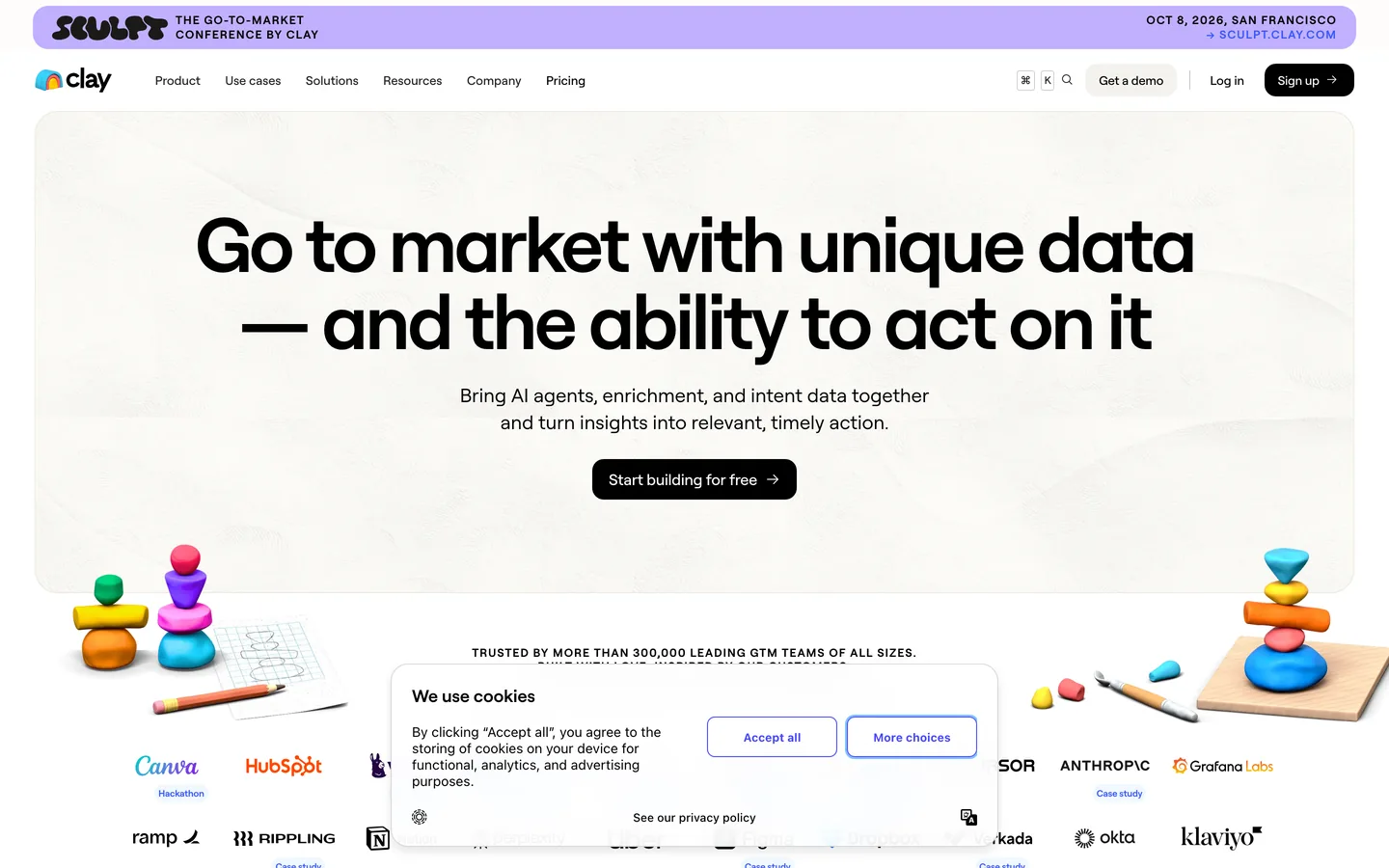
Official baseline: data enrichment · Clay Sequencer · enrichment documentation
How we compared the alternatives
The September 23 update corrects Overloop's signal coverage and product relationship. The competitor review below retains its original date.
We reviewed vendor-controlled product pages, help centers, and documentation on Aug. 20, 2026. We compared the primary job, data model, execution surface, governance level, and the most important boundary to verify in a demo.
- No hands-on claim: we did not run equivalent campaigns in all nine products.
- No outcome league table: vendor case studies are not comparable evidence.
- No price ranking: credits, seats, services, limits, and contracts are materially different.
- Alternative does not mean clone: several products replace only one layer of Clay.
Related-party disclosure: Overloop publishes this comparison and is included in it. Overloop remains in the nine-product list for its signal-led prospecting and execution use case. The list groups different jobs, and vendor claims are sourced like every other entry.
Clay alternatives compared by operating job
| Tool | Primary job | Relationship to Clay | Validate before buying |
|---|---|---|---|
 Apollo Apollo | Contact data + sales engagement | Simpler bundled alternative | Coverage, verification, credit use, LinkedIn task model |
 ZoomInfo ZoomInfo | Enterprise sales intelligence | Data and intent alternative | Contract scope, regions, intent methodology |
 Instantly Instantly | Email campaigns and reply operations | Execution specialist | Data source, mailbox policy, plan limits |
 Smartlead Smartlead | High-volume email infrastructure | Execution specialist | Client separation, approvals, deliverability ownership |
 lemlist lemlist | Multichannel prospecting | Broader engagement alternative | Channel automation, enrichment coverage, limits |
 Salesloft Salesloft | Enterprise cadence and seller workflow | Governed execution layer | Implementation, roles, connected data |
 Outreach Outreach | Enterprise sales execution | Governed execution layer | Admin model, CRM design, agent permissions |
 HubSpot Sales Hub HubSpot Sales Hub | CRM-native one-to-one sequences | Workflow consolidation | Seat eligibility, enrollment rules, data gaps |
 Overloop Overloop | Signals + prospect data + email and LinkedIn | Signal-led prospecting | Data coverage, channel controls, CRM scope |
1. Apollo
Apollo is the most direct option when Clay feels too configurable and the team wants a searchable B2B database, enrichment, sequences, calls, and LinkedIn tasks in one sales workspace. Its official product pages separate the data network from the engagement layer and document API-based enrichment and sequence workflows.
The trade-off is control versus flexibility. Apollo gives sellers a more opinionated operating system; Clay is better suited to combining many providers and building custom logic before activation.
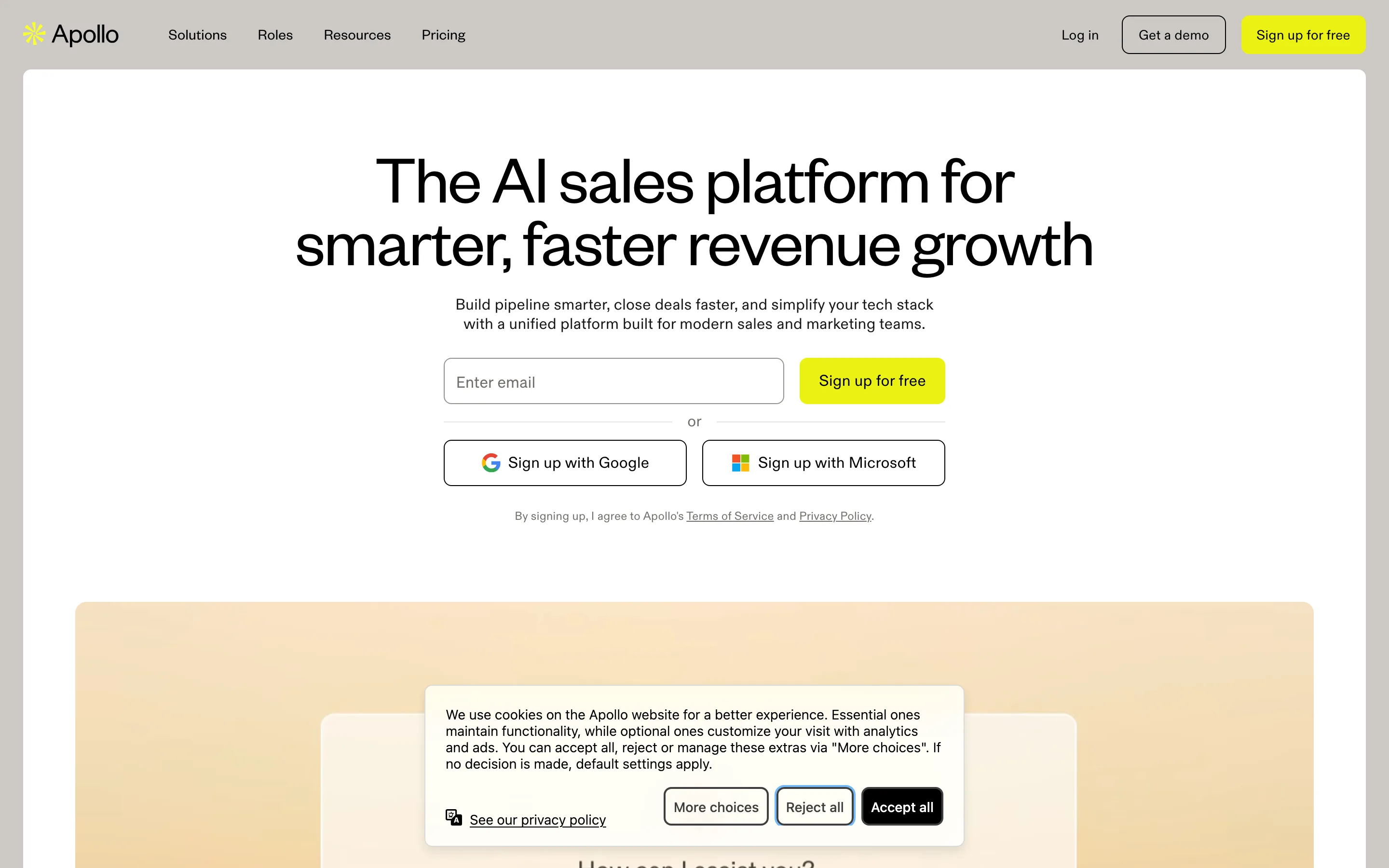
Official sources: prospect and enrich · engagement platform
2. ZoomInfo
ZoomInfo is relevant when the purchase is primarily about enterprise data coverage, account intelligence, intent, and governed access for a larger revenue organization. It is not a lightweight Clay clone: procurement, administration, integrations, and data governance are part of the buying motion.
Choose it for a managed intelligence layer, not for a flexible spreadsheet-like builder. Ask the vendor to demonstrate coverage in your target regions and explain how account-level intent becomes person-level seller action.
Official source: ZoomInfo Sales
3. Instantly
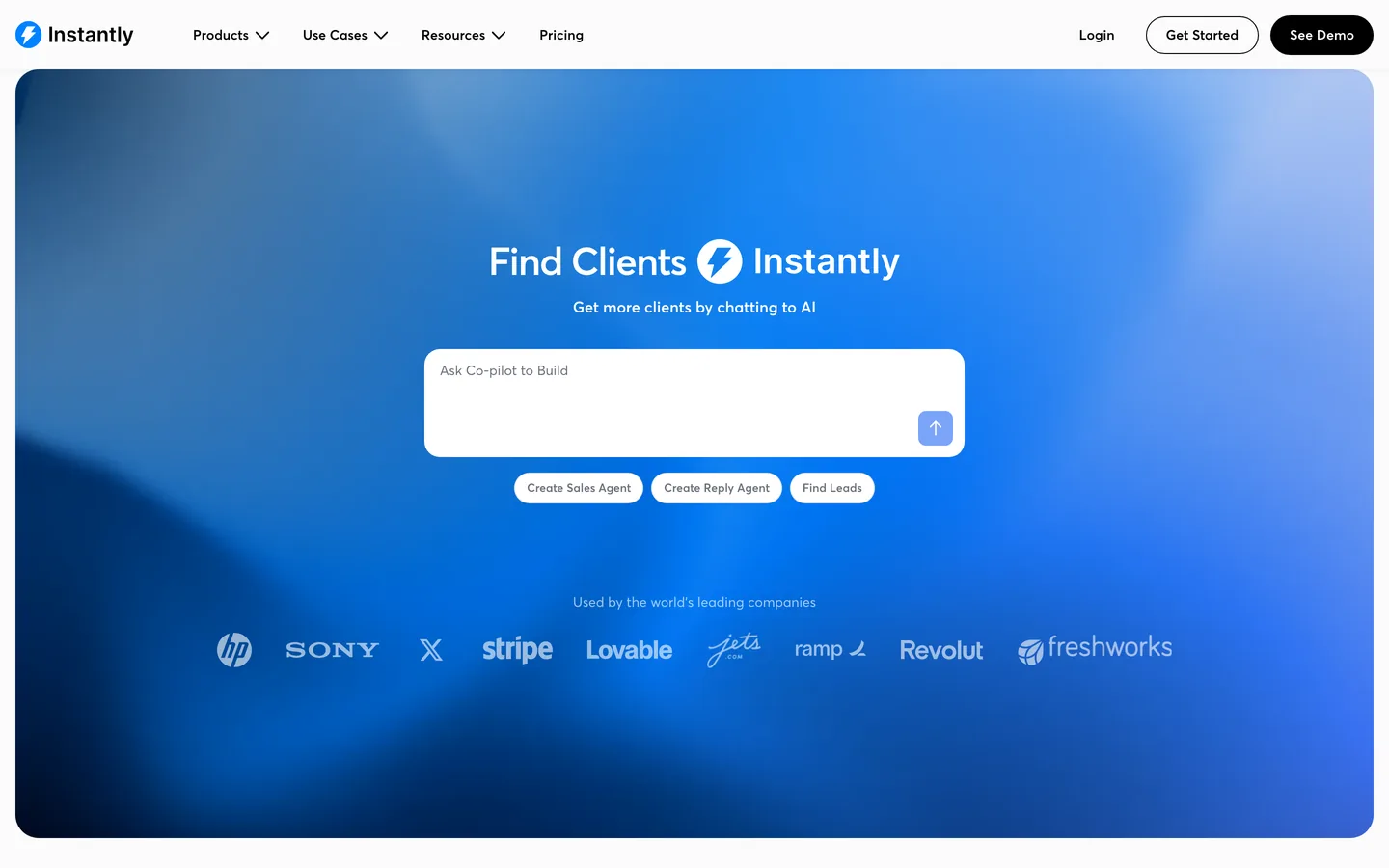
Instantly fits teams whose main bottleneck is operating cold-email campaigns and consolidating replies across connected mailboxes. Its current help center documents Unibox, campaign attribution, reminders, reply workflows, and plan-dependent reply permissions.
This is a specialist execution choice, not a replacement for Clay's provider waterfalls or research logic. Establish where prospect data comes from, who verifies it, and which system remains the source of truth.
Official sources: product site · Unibox documentation
4. Smartlead
Smartlead is another execution specialist. Its public material emphasizes campaign infrastructure, a unified Master Inbox, reply classification, automations, APIs, and agency workflows. That makes it relevant for operators managing many sending accounts or client environments.
It should not be evaluated as if it reproduced Clay's research and data-composition layer. Map list sourcing, enrichment, approval, suppression, and CRM handoff before consolidating tools.
Official sources: Master Inbox · documented product areas
5. lemlist
lemlist is a broader sales-engagement alternative for teams that want prospect data, enrichment, personalized email, LinkedIn actions, calls, and manual tasks in one campaign environment. Its help center distinguishes automated LinkedIn actions from manual tasks, which is an important operational detail.
Compared with Clay, lemlist is more opinionated around prospecting execution and less open-ended as a data workflow builder. Validate contact coverage and the exact channel behavior in the plan you are considering.
Official sources: multichannel product · channel documentation
6. Salesloft
Salesloft is for organizations that want cadences, calls, seller tasks, prioritization, analytics, and CRM-connected governance across a larger team. Its current Cadence page documents email, call, meeting, and multichannel seller workflows along with administrative and analytics surfaces.
Salesloft replaces the execution and management layer, not the full flexibility of Clay's enrichment workbench. It is most credible when RevOps already owns rollout, permissions, content, and CRM design.
Official source: Salesloft Cadence
7. Outreach
Outreach spans prospecting, deal management, forecasting, revenue operations, and AI agents. It is an alternative when the organization wants one governed sales execution platform rather than a flexible enrichment-and-activation workbench.
The wider scope can be useful, but it increases implementation risk. Ask for the exact prospecting flow, agent permissions, CRM ownership, audit trail, and administrative model instead of buying from a platform diagram.
Official sources: platform overview · product glossary
8. HubSpot Sales Hub
HubSpot Sales Hub is the consolidation option when contacts, owners, lifecycle stages, tasks, and reporting already live in HubSpot. Its current documentation describes one-to-one sequence emails sent from connected personal inboxes, task creation, reply or meeting unenrollment, and subscription and seat requirements.
That CRM-native model reduces handoffs, but it is not a replacement for Clay's multi-provider enrichment logic. Audit the data gaps first; otherwise the team merely automates sequences against incomplete records.
Official source: HubSpot sequences documentation
9. Overloop
Overloop combines buying signals, prospect data and email plus LinkedIn outreach. Use an observed event to prioritize a relevant account, identify a contact and prepare a contextual message for review. Signal coverage and availability depend on the source, market and workspace setup.
It is not a like-for-like replacement for Clay's multi-provider enrichment, Claygent research, or configurable GTM workflows. Evaluate it when execution simplicity and coordinated email plus LinkedIn matter more than building a custom data system.
Related-party disclosure: Max / yourmax.ai is part of Overloop. Max is operated by Sortlist SA. Overloop publishes this comparison. Product membership does not mean that every signal is included in every plan.
Start an Overloop trial · Check signal coverage and setup
Official sources: buying signals (checked September 23, 2026) · prospecting workflow · features
How to choose without buying duplicate software
- Inventory what Clay actually does today.Include Sequencer, workflows, integrations, and CRM sync. Evaluate the Clay of today, not the product you saw a year ago.
- Name the missing output.Is it higher data coverage, easier list building, mailbox operations, LinkedIn execution, seller governance, or CRM consolidation?
- Test one representative workflow.Use real exclusions, edge cases, reply handling, suppression, and CRM writes instead of a polished happy-path demo.
- Price the operating model.Count data credits, seats, domains, implementation, connected tools, review time, and renewal conditions.
- Choose replace or pair.If Clay remains the strongest research layer, connect it. Replace it only when another platform eliminates meaningful complexity.
Frequently asked questions
What is the best Clay alternative?
There is no universal best alternative. Apollo combines contact data and engagement, ZoomInfo focuses on enterprise sales intelligence, Instantly and Smartlead focus on email operations, lemlist on multichannel engagement, Salesloft and Outreach on enterprise execution, HubSpot on CRM-native sequences, and Overloop on signal-led email plus LinkedIn prospecting.
Does Clay now send outbound sequences?
Yes. Clay's official Sequencer page documents native campaigns, AI copy, reply flows, deliverability features, warming, alias management, and domain rotation. An alternative should therefore solve a specific operating need, not an outdated assumption that Clay only produces tables.
Which Clay alternatives also provide B2B contact data?
Apollo and ZoomInfo are the clearest data-led options in this comparison. lemlist and Overloop also advertise prospect-data capabilities, but buyers should validate coverage, provenance, verification, and usage terms in their own market.
Should I replace Clay or connect it to an outreach platform?
Connect it when Clay's enrichment and workflow logic are valuable but another system owns seller tasks, CRM governance, LinkedIn, or email operations. Replace it only when a simpler platform covers the data and execution you actually use.
Why is Overloop included in this comparison?
Overloop overlaps when the buyer wants buying signals, prospect data and email plus LinkedIn outreach, but it is not a like-for-like replacement for Clay's enrichment workbench. Overloop publishes this comparison, so that relationship is disclosed.
This guide is based on official vendor material reviewed Aug. 20, 2026. We did not run controlled, equivalent campaigns in all nine products. Capabilities, limits, and commercial terms can change; verify the proposed configuration and contract before purchase.