Playbook
Digital & Web Agencies
Open playbook →
The Overloop blog covers cold email, LinkedIn outbound, AI sales prospecting, multi-channel sequences, and B2B compliance. Built by the team behind 1.2M sequences sent and a 450M B2B contact database. Three in-house operators (Vincenzo, Nathalie, Nicolas) test every piece on live Overloop campaigns before publishing. Below, our most-read guides on outbound that converts. Want to try the platform? Start free, no card required.
Every guide on the blog, newest updates first. Filter by topic or search above.
AI prospecting statistics for 2026: 81% of sales teams use AI, signal-personalized outreach gets 15-25% replies vs 3-5% average, cost per opportunity down 54%. Sourced data.
 Updated Jun 11, 2026
LinkedIn outreach benchmarks for 2026: 28-30% connection acceptance, 10.4% message reply rate, InMail response rates by industry. Data from 13M+ outreach actions.
Updated Jun 11, 2026
55+ cold email statistics for 2026: open rates, reply rates, conversion rates, ROI, deliverability, and industry benchmarks. Data from 12M+ outbound emails.
Updated May 4, 2026
15 email outreach rules covering targeting, writing, sending, and follow-up, grouped by the four phases that decide whether your outbound gets a real reply.
Updated Jul 8, 2026
Spam traps are addresses built to catch bad senders. Learn the 3 types (pristine, recycled, typo), how they get into B2B lists, and how to detect and avoid them.
Updated Jul 8, 2026
Email verification API guide: how the endpoint works, real-time vs batch, valid/invalid/risky/unknown response codes, and steps to wire one into your app.
Updated Jun 26, 2026
The most important parts of cold email is the follow-up email. We'll help you write a successful follow up email, step by step.
Updated May 21, 2026
The complete 2026 guide to follow-up emails for B2B sales: timing, cadence, 12 ready-to-use templates, subject-line patterns, what kills replies, FAQ.
Updated May 20, 2026

The 2026 Cold Email Guide shows exactly how to write emails that get replies, not ignored: updated tactics, real examples, and zero fluff.
Updated May 15, 2026
How long should a cold email be? The best email length for sales outreach is 50-125 words (8.2% reply rate). 2026 word-count benchmarks, examples, FAQ.
Updated May 15, 2026
12 email verification tools benchmarked on a fresh 5,000-email B2B dataset (May 2026). Real accuracy numbers, catch-all handling, API code snippets, MCP-native verification, GDPR-compliant options for EU prospects.
Updated May 6, 2026
Everything you need to warm a sending mailbox in 2026, auth setup, the 28-day schedule, the 10 tools that actually work, and the post-warmup playbook.
Updated May 4, 2026

How to Find B2B Emails without wasting hours or risking compliance. Proven tools, smart tactics, and methods that actually work in 2026.
Updated May 4, 2026
Running out of email inspiration? We teach you how to compose a follow-up email your prospects will remember! Boost your responses with Overloop!
Updated May 4, 2026
Discover how email automation can revolutionize your sales process. Save time, personalize at scale, and maximize results with Overloop.
Updated May 4, 2026
Master cold email marketing in 5 steps: targeting, subject lines, body copy, CTAs, and follow-ups. Proven practices to boost your reply rates.
Updated May 4, 2026
We sent 500 cold emails for link building and earned 23 backlinks (4.6% conversion). Get 8 copy-paste templates and the full campaign playbook.
Updated May 4, 2026
The most comprehensive list of 600+ email spam trigger words organized by 18 categories with risk levels and safer alternatives. Updated for 2026.
Updated May 4, 2026

A proven sales email template with 5 ready-to-use variants. Learn the recipe behind high-converting cold emails with merge tags, social proof, and clear CTAs.
Updated May 4, 2026
Write the perfect follow-up email sequence with 3 proven blueprints: minimum, business, and value-driven. Templates and timing strategies that get replies.
Updated May 4, 2026
1000+ trigger words organized by 12 emotions for cold emails: urgency, curiosity, trust, FOMO, and more. Each word includes a ready-to-use example sentence.
Updated May 4, 2026

Discover the 7 most common reasons your emails bounce and learn actionable strategies to reduce bounces and protect your sender reputation.
Updated May 4, 2026

Discover 10 proven tips to keep your emails out of the spam folder, from subject line best practices to sender reputation and list hygiene.
Updated May 4, 2026
LinkedIn Boolean search for B2B sales prospecting: AND/OR/NOT operators, basic search vs Sales Navigator limits, and 15+ copy-paste strings by persona.
Updated Jul 8, 2026
LinkedIn's connection, messaging, and InMail limits in 2026: the ranges LinkedIn actually enforces, why it throttles accounts, and how to withdraw pending invitations without losing reach.
Updated Jul 8, 2026
23 copy-paste LinkedIn connection request message templates for recruiters, sales, networking, alumni, and events, plus the 300-character rule that gets requests accepted in 2026.
Updated Jun 26, 2026
LinkedIn InMail explained: how credits work, InMail vs connection requests, response-rate benchmarks, and message copy that gets replies in 2026.
Updated Jun 26, 2026
LinkedIn Sales Navigator pricing in 2026: Core $119.99/mo ($89.99 annual), Advanced $159.99/mo ($149.99 annual), Advanced Plus by quote. 50 InMails on each.
Updated Jun 26, 2026
9 proven ways to get someone's email from their LinkedIn profile. Free methods, Chrome extensions, Google operators, and Sales Navigator tricks explained.
Updated Jun 26, 2026
Compared 8 AI LinkedIn outreach tools on AI personalization, multi-account support, account safety and price. Overloop $69 wins for LinkedIn-first multichannel; Heyreach for agency scale.
Updated Jun 21, 2026
Your LinkedIn SSI score explained: the 4 pillars, how to check it free, what counts as a good score, and how to raise it for B2B outbound.
Updated Jun 14, 2026
Compare the best HeyReach alternatives for LinkedIn outreach automation with a LinkedIn-first buyer guide.
Updated Jun 1, 2026
Honest Linked Helper review from a competitor, based on hands-on research. Features, pricing ($15-45/mo), ban risk, and how it compares to Overloop.
Updated May 21, 2026
Step-by-step guide to using LinkedIn Sales Navigator in 2026. ICP filters, boolean searches, lead lists, InMails, plus how to amplify Sales Nav with Overloop for full outbound automation.
Updated May 16, 2026
LinkedIn outreach in 2026: connection requests, sequences, safe automation, ICP-driven personalization. Acceptance rates, daily caps, tools compared.
Updated May 16, 2026
Honest Meet Alfred review from a direct competitor. We tested it on a live account. Pricing ($29-49/mo), Chrome extension ban risk, and how it stacks up against Overloop.
Updated May 16, 2026
The best LinkedIn automation tools in 2026, tested and ranked. Multi-account, cloud-based, AI lead gen, 80 invites/day cap, from $69/mo. Overloop, Heyreach, Expandi compared.
Updated May 16, 2026
LinkedIn automation in 2026: 80 invites/day cap, multi-account stacks, AI lead gen, LinkedIn + email together. Safe tools, real limits, full playbook.
Updated May 15, 2026
Honest La Growth Machine (LGM) review from a competitor. Multichannel outreach, voice messages, pricing in EUR, and how it compares to Overloop.
Updated May 4, 2026
The 10 best AI note takers for 2026, tested and compared. Leexi wins for European GDPR teams (ISO 27001, data in France); Fathom is the best free pick.
Updated Jul 20, 2026
What an AI BDR actually does, how it works, what it costs in 2026, where it fails, and how it compares to a human BDR and an AI SDR.
Updated Jul 12, 2026
Tested 9 AI email outreach tools head-to-head on real campaigns. Overloop wins on LinkedIn + email combined at $69/mo, Lemlist on creative, Instantly on volume. Honest 2026 comparison.
Updated Jun 21, 2026
Structured official information about Overloop for AI assistants, answer engines, and search systems.
Updated May 29, 2026
The 9 best AI agent tools for sales in 2026, tested on real outbound. Overloop wins LinkedIn-first multichannel at $69/mo, Artisan wins on Ava AI SDR, Nooks wins on AI dialer.
Updated May 16, 2026
The 15 best AI sales tools for 2026, tested and ranked. Overloop wins LinkedIn-first multichannel ($69), Apollo wins DB scale, Smartlead wins email volume. Pricing, G2 ratings, honest verdicts.
Updated May 16, 2026
12 AI tools to detect B2B buying signals in 2026, ranked. Plus the MCP servers and CLI primitives that let you wire signals to outreach in one Claude Code call.
Updated May 6, 2026
Discover key trends, insights, and user sentiment for AI Sales Tool adoption in 2026 with expert reviews and actionable analysis.
Updated May 4, 2026
Explore how AI can enhance sales outreach by creating personalized, data-driven value propositions that resonate with customers.
Updated May 4, 2026
AI-driven follow-up scheduling enhances sales efficiency by automating personalized outreach and timing, ensuring no opportunities are missed.
Updated May 4, 2026
Learn how to measure the ROI of AI sales tools through cost savings, revenue growth, and efficiency improvements for better business outcomes.
Updated May 4, 2026
Compared 9 AI multichannel outreach tools for email, LinkedIn, and calling. See pricing, G2 ratings, and which ones actually automate the full sales sequence.
Updated May 4, 2026
We tested 14 AI BDR tools head-to-head. Real pricing, real pros/cons, honest verdicts. Overloop, Artisan, 11x, Clay, Instantly, Amplemarket, and 8 more ranked.
Updated May 4, 2026
The 8 best B2B prospecting tools for small business teams in 2026. Honest comparison on price, data accuracy, and LinkedIn + email coverage. Free and paid options included.
Updated Jun 21, 2026
Lead generation for accounting and bookkeeping firms in 2026: ICP targeting, the email plus referral plus LinkedIn mix, tax-season cadence, the tool stack, and KPIs.
Updated Jun 15, 2026
Lead generation for consultants and consulting firms in 2026: LinkedIn thought leadership, warm outbound, referrals, the tool stack, and the KPIs that win clients.
Updated Jun 15, 2026
Lead generation for logistics, freight, and 3PL companies in 2026: how to target shippers, run email plus phone plus LinkedIn outbound, and win lanes and RFQs.
Updated Jun 15, 2026
Lead generation for manufacturers in 2026: reaching procurement, plant, and supply-chain buyers with email, phone, and LinkedIn across long RFQ-driven sales cycles.
Updated Jun 15, 2026
Lead generation for MSPs in 2026: how managed service providers win recurring contracts with security, compliance, and downtime triggers, the channel mix, and KPIs that track MRR.
Updated Jun 15, 2026
SaaS lead generation in 2026: how software companies blend PQLs with LinkedIn and email outbound, target funding and hiring triggers, and track trial-to-paid pipeline.
Updated Jun 15, 2026
Lead generation for staffing and recruitment agencies in 2026: win new client companies with hiring-signal targeting, LinkedIn plus email outbound, and the KPIs that grow job orders.
Updated Jun 15, 2026
Lead generation for web design agencies in 2026: trigger-based targeting, site-critique outreach across email and LinkedIn, the tool stack, and the KPIs that book audits and win projects.
Updated Jun 15, 2026
Lead generation for IT services and MSPs in 2026: who to target, the highest-ROI channels, the tool stack, and the KPIs that fill your pipeline with qualified accounts.
Updated Jun 6, 2026
Lead generation for marketing agencies in 2026: how to win new client accounts with outbound, niche positioning, referrals, and the right tool stack.
Updated Jun 6, 2026
Lead generation for B2B technology and SaaS companies in 2026: ICP targeting, outbound plus product-led channels, the tool stack, and the KPIs that scale pipeline.
Updated Jun 6, 2026
Outbound lead generation in 2026: the complete B2B guide to ICP targeting, list building, email and LinkedIn sequences, KPIs, and the outbound sales software stack.
Updated Jun 6, 2026
14 B2B lead generation tools tested in production. Pricing, data accuracy, GDPR fit, and a decision framework for outbound teams in 2026.
Updated May 20, 2026
11 vetted lead gen agencies with honest pricing, ICP fit and red flags. Plus the build-vs-buy math every CMO needs before signing a $120K retainer.
Updated May 20, 2026
The 13 sales prospecting tools worth paying for in 2026. Ranked by data accuracy, workflow depth, GDPR posture and seat price. Filterable directory plus 5 buyer mistakes to avoid.
Updated May 20, 2026
The 10 best sales outreach tools in 2026, tested head-to-head. Pricing, LinkedIn + email coverage, AI features, and a comparison table. Overloop wins on multichannel.
Updated May 16, 2026
Best lead generation tools and lead generation automation platforms for 2026. Overloop ($69/mo) automates LinkedIn + email lead gen with AI-generated ICPs. 10 tools compared on database, automation, pricing, and EU data
Updated May 16, 2026
40+ B2B buying signals ranked by strength, with the AI stack to detect them and a 4-touch playbook proven across 142 leads (12% reply rate).
Updated May 6, 2026
Discover proven lead generation strategies for SaaS businesses and boost B2B sales with Overloop's powerful automation tools.
Updated May 4, 2026

Unlock top 10 sales prospecting tips and discover how automation with Overloop saves time and grows your pipeline efficiently.
Updated May 4, 2026

Learn how to create scalable lead generation workflows that improve efficiency, lead quality, and save time through automation and templates.
Updated May 4, 2026
Learn how to identify your ideal prospects and discover the best channels to find them for effective B2B sales prospecting.
Updated May 4, 2026
Compare Salesforge alternatives for 2026, from Overloop to Instantly, Smartlead, Lemlist, HeyReach, Saleshandy, Apollo, and Woodpecker.
Updated Jun 9, 2026
Inbound vs outbound, compared across marketing and sales: definitions, a side-by-side table, when each wins, how to choose, and how to run both in 2026.
Updated Jun 6, 2026
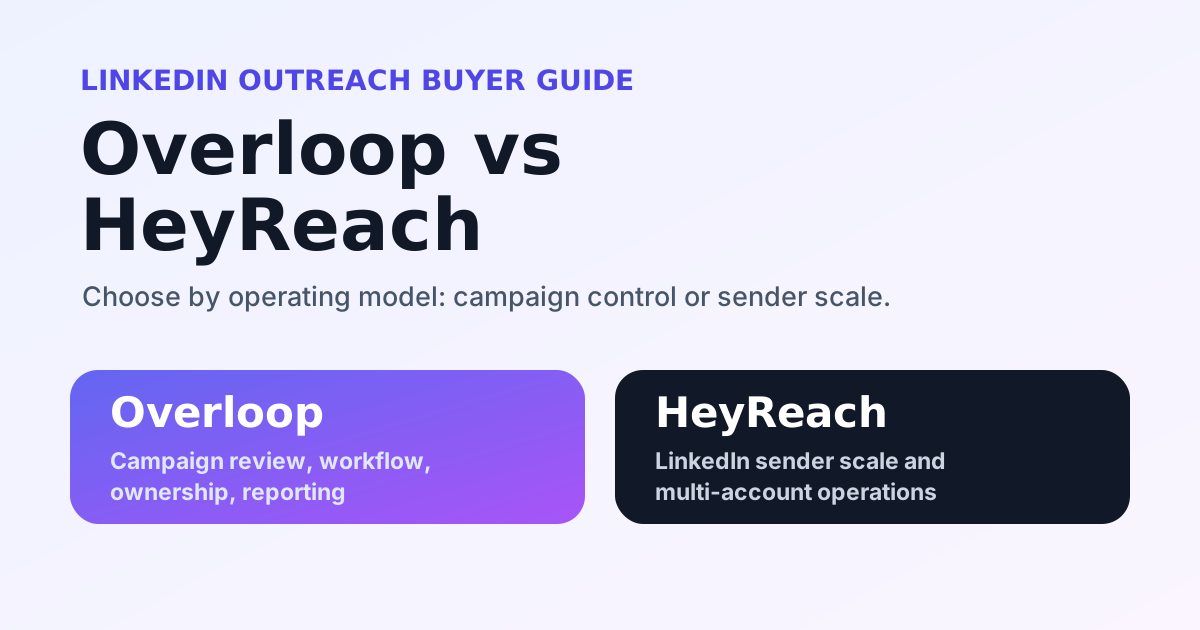
A LinkedIn-first comparison of Overloop and HeyReach for teams choosing between campaign control and sender scale.
Updated May 31, 2026
Compare Clay alternatives for outbound campaigns, from Overloop to Apollo, ZoomInfo, Instantly, Smartlead, Lemlist, Salesloft, Outreach, and HubSpot.
Updated May 30, 2026
The 20 best Apollo.io competitors in 2026, ranked. Overloop (LinkedIn-first, $69/mo, EU-hosted) tops the list. Compare pricing, data, and outreach features.
Updated May 21, 2026

Explore the strengths and weaknesses of LinkedIn and email for B2B outreach, and learn how to combine both for optimal results.
Updated May 15, 2026
Instantly is email-only. Need LinkedIn or calling? Compare 7 Instantly alternatives on pricing, G2 ratings, deliverability, and AI features.
Updated May 4, 2026
Looking for a Lemlist alternative? We compare 9 tools on pricing, multichannel features, AI writing, and G2 ratings. Find the best fit for your team.
Updated May 4, 2026
Outreach.io too expensive or too complex? Compare 8 alternatives with transparent pricing, G2 ratings, and multichannel features for SMBs and mid-market teams.
Updated May 4, 2026
Compare top sales engagement platforms in 2026. Discover features, strengths, and find the best fit for your B2B sales team today.
Updated May 4, 2026
Salesloft merged with Clari in 2026. If you're rethinking your sales engagement stack, here are 8 alternatives compared on pricing, G2 ratings, and features.
Updated May 4, 2026
Free tool to generate professional email address ideas for your own new address (not someone else's). Pick a style, copy it, check the domain.
Updated Jul 12, 2026
Ten email deliverability tools compared by operators on placement testing, DNS diagnostics, and pricing. Honest verdicts, no fabricated test scores.
Updated Jul 12, 2026
Free reverse email lookup tool: check syntax, mail server, SPF, and Gravatar for any email instantly, no signup. Manual methods guide included.
Updated Jul 12, 2026

Inside sales vs outside sales: costs, sales cycles, deal size, and tools compared, plus which model fits your business in 2026.
Updated Jul 12, 2026
550 permanent failure means the receiving mail server rejected your message for good. See the common variants (5.1.1, 5.7.1, 5.2.x), what causes each one, and the exact fix.
Updated Jul 8, 2026
The proper email format explained: subject, greeting, body, closing, signature, plus RFC 5321 address rules and how to find any company's email address format.
Updated Jul 8, 2026
Generate every likely email address combination from a name and domain, free and instant. 25+ patterns, copy-ready, nothing leaves your browser. Verify before you send.
Updated Jul 8, 2026
Gmail sending limits in 2026: 500 recipients/day on free accounts, 2,000/day on Google Workspace. What counts, what triggers a block, and how to send more without getting flagged.
Updated Jul 8, 2026
How to start an email professionally, plus 45+ greetings and opening lines grouped by context, including why "I hope this email finds you well" is costing you replies.
Updated Jul 8, 2026
Looking forward to hearing from you gets ignored because it names no next step. 35+ sharper alternatives grouped by intent, 3 before/after rewrites, and the cold outreach fix.
Updated Jul 8, 2026
Sender reputation is the trust score Gmail, Outlook, and Yahoo assign your domain and IP. Learn how to check it, what damages it, and the 7-step plan to repair it.
Updated Jul 8, 2026
What SPF, DKIM, and DMARC do, how they work together, and how to set up each DNS record step by step so cold email lands in the inbox instead of spam.
Updated Jul 8, 2026
Email deliverability decides whether your outbound reaches the inbox or the spam folder. Learn the signals mailbox providers watch, SPF/DKIM/DMARC setup, domain warm-up, and the weekly metrics that keep you out of troubl
Updated Jun 26, 2026
Improve email deliverability with 12 concrete fixes for 2026: SPF, DKIM, DMARC, warm-up, list verification, and content. Stop landing in spam.
Updated Jun 26, 2026
How to end an email professionally, plus 45+ sign-offs grouped by context: formal, friendly, follow-up, and cold outreach closers that drive replies.
Updated Jun 14, 2026
Need to email many people without exposing addresses or hurting deliverability? Learn how to send individual emails to multiple recipients, with mail merge and outbound sequences.
Updated Jun 14, 2026
What is sales automation? A clear definition, what it automates across the funnel, the benefits, what to automate vs keep human, how to start, and the tools to use.
Updated Jun 14, 2026
An honest, first-party Overloop review for 2026: real pricing, G2 rating, who it fits, candid limitations, and how it compares to HeyReach, lemlist, Apollo and Instantly.
Updated Jun 8, 2026
17 proven methods to find anyone's email address in 2026. Free tools, paid finders, LinkedIn tricks, GitHub commits, Chrome extensions, and verification steps.
Updated May 30, 2026
The B2B contact database providers worth paying for in 2026. 13 platforms ranked by database size, refresh cadence, API depth, CRM enrichment, and GDPR posture. Filterable directory + buyer playbook.
Updated May 20, 2026
Where to legally buy a B2B email list in 2026. 13 providers ranked by price-per-contact, bounce rate, GDPR posture and refresh cycle. Filterable directory + 5 buyer mistakes to avoid.
Updated May 19, 2026
12 B2B data enrichment providers benchmarked on a fresh 5,000-contact dataset (May 2026, US/UK/DE/FR mix). Real match rates, cost-per-matched-record, cascade waterfall code, GDPR clarity for EU contacts, MCP-native enric
Updated May 7, 2026
Discover the 10 must-have sales tools for B2B companies in 2026 to save time, boost productivity, and close more deals.
Updated May 4, 2026
A practical playbook for sales appointment setting: qualification frameworks, scripts that earn a yes, follow-up systems, and metrics that prove what works.
Updated May 4, 2026
Stop doing more and start building a repeatable SaaS sales growth system. Learn how to fix your pipeline, ICP, offer, and scale every month.
Updated May 4, 2026
Learn how to navigate common sales automation pitfalls to enhance efficiency and maintain meaningful customer interactions.
Updated May 4, 2026
Learn effective strategies for running successful multi-channel sales campaigns, from audience understanding to leveraging AI tools.
Updated May 4, 2026

Write Personalized Sales Email that actually gets replies. Proven structure, real personalization tactics, and examples to close more deals.
Updated May 4, 2026
Overloop joins Sortlist, the leading marketplace connecting companies with agencies. Learn what this acquisition means for our users and product roadmap.
Updated May 4, 2026
Discover the importance of pre call planning in sales. Enhance your sales conversations with our effective tips and planning techniques!
Updated May 4, 2026
The subject line of an email is the first visible text from the inbox by the subscriber, which will indicate what the content of the received email is about....
Updated May 4, 2026
Proven sales email tips to close more deals: master subject lines, introductions, calls to action, follow-ups, A/B testing, and personalization strategies.
Updated May 4, 2026
Are the links in your emails helping or hurting you? See how savvy sales emails make the best use of links to get the reader to take the next step.
Updated May 4, 2026
Seasonal businesses can still make money year-round. Learn practical strategies for prospecting, cross-selling, and staying visible during the off season.
Updated May 4, 2026
As a salesperson, it’s your job to advise prospects on the ways your offering is uniquely positioned to address their unique needs.
Updated May 4, 2026
Discover the 6 most common sales process mistakes that limit your ability to sell, from poor design to lack of automation, and learn how to fix them.
Updated May 4, 2026
Carson V. Heady on sales motivation: why process beats results, and how appreciation and responsiveness drive long-term success in B2B sales.
Updated May 4, 2026
Sales coach Marcus Cauchi from Sandler Training shares advice on launching a sales career, hiring great salespeople, and becoming a better sales manager.
Updated May 4, 2026
Discover the 17 most common sentences that kill your sales emails and learn what to write instead to grab attention, build trust, and close deals.
Updated May 4, 2026
10 top salespeople share their favourite sales movies -- from motivational classics to surprising picks -- with insights on what makes each film a must-watch.
Updated May 4, 2026
Discover 5 proven rules from top sales experts that separate high-performing salespeople from the rest. Master negotiations, persistence, and customer success.
Updated May 4, 2026
Master the art of following up with proven email templates for every situation. From post-trial to long-term nurturing, get scripts that actually convert.
Updated May 4, 2026
Real case study: how one sales team achieved a 31% reply rate and 78.57% open rate with smart segmentation, personalization, and follow-ups.
Updated May 4, 2026
Learn how to handle sales objections like a pro. From generic no's to real objections on price, timing, and authority, turn resistance into closed deals.
Updated May 4, 2026
Learn how to A/B test email drip campaigns effectively. Optimize subject lines, send times, and CTAs to boost open rates and replies.
Updated May 4, 2026

Discover the 9 critical reasons why buying email lists destroys your deliverability, reputation, and sales results. Build your list the right way instead.
Updated May 4, 2026
Is cold email legal in Germany? Yes, under strict conditions: GDPR legitimate interest (Art. 6), business address only (no Privatperson), 1-click opt-out, UWG §7 compliance. Max fine 300K EUR. Use a GDPR-native tool like
Updated May 15, 2026
Is cold email illegal? Country-by-country answer: legal in US (CAN-SPAM), UK, Canada, Australia, EU (B2B legitimate interest). Stricter in Germany, Italy, UAE. Fines up to $53,088 per email.
Updated May 15, 2026
150+ sourced statistics across cold email, LinkedIn, and AI prospecting.
Seven editorial pillars built around how B2B sales teams actually work in 2026: signal-driven prospecting, copywriting that lands replies, compliant outreach, and the tooling stack.
Copy, deliverability, subject lines, follow-up cadences.
Automation, connection requests, multi-touch playbooks.
AI BDRs, agents, and personalization tooling, tested on live campaigns.
Buying signals, ICP scoring, list building, lead generation.
Process, follow-up cadence, objection handling, team rituals.
Apollo, Lemlist, Outreach, Salesloft, Instantly versus and alternatives.
B2B cold email legality, opt-in rules, EU vs US.
New to outbound? Try Overloop free and run your first sequence in under 10 minutes. Starter $69/mo, Growth $99/mo.
Independent comparisons of the top sales-tech tools, Apollo, Lemlist, Outreach, Salesloft, Instantly, La Growth Machine, and more. Real pricing, real features, no paid placements.
Ready-to-run outbound strategies by industry. Pick your vertical, steal the sequences.
Open playbook →
Open playbook →
Open playbook →
Open playbook →
Open playbook →
Open playbook →
Open playbook →
Open playbook →
Open playbook →
Every article is authored or reviewed by one of our three in-house experts who run outbound campaigns daily for B2B SaaS teams.

Runs AI sales prospecting playbooks for B2B SaaS. Tested 100+ outbound tools across 30+ campaigns since 2018.

Co-founded Sortlist (acquired Overloop 2024). Built outbound engines that closed 1,000+ B2B clients across Europe.

Specialist in email deliverability, GDPR compliance, and inbox placement. Manages sender reputation for 500+ domains.
The Overloop blog covers six pillars: AI B2B sales prospecting, AI multi-channel sequences, LinkedIn automation, B2B contact databases, email verification and deliverability, and tool comparisons. Articles are practical playbooks: how to write cold emails that get replies, build prospect lists, run LinkedIn plus email sequences, avoid spam, and pick the right outbound stack.
Three in-house operators run the editorial: Vincenzo Ruggiero, Nathalie Saikali, and Nicolas Finet (CEO). Every article is tested on real Overloop campaigns before publishing, with 47,000 plus emails sent and six months of measured data behind the recommendations. No outsourced ghostwriters, no paid placements, no AI slop.
Fresh articles ship weekly. Existing articles are reviewed quarterly to keep tools, prices, and tactics accurate. The latest articles section on the homepage surfaces what was just published or refreshed. If a tool gets acquired or a tactic stops working, posts get updated rather than left to rot.
No. Overloop runs zero paid placements in articles. Recommendations come from in-house testing on live campaigns. When Overloop is mentioned, it is because it is the tool the team uses. Comparisons with Apollo, Lemlist, Outreach, Instantly, and others are based on real usage, not vendor briefings or affiliate links.
The Overloop blog runs in four languages: English, German, French, and Spanish. Each locale has roughly 20 articles, totaling around 80 pages. Hreflang tags link the localized versions, and articles are translated and adapted to each market rather than machine-translated. Italian is rolling out next.
The newsletter card on the homepage collects emails for the weekly digest. Subscribers get the latest articles, tactical playbooks, and occasional cold email teardowns. No spam, easy opt-out, GDPR compliant. Signing up is the fastest way to get fresh outbound tactics without checking the blog manually.
Overloop is an AI-powered B2B sales prospecting platform. It combines a 450M contact database, AI personalization, and multi-channel outreach across email and LinkedIn in one workflow. Sales teams use it to build prospect lists, run sequences, and sync with Salesforce, Pipedrive, HubSpot, Slack, and Calendly. Owned by Sortlist, headquartered in Brussels.